
Home Blog Page 25

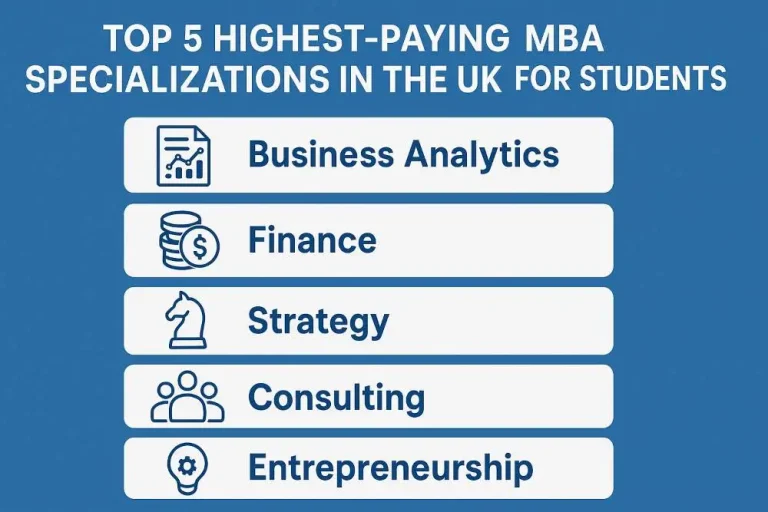
Top 5 Highest-Paying MBA Specializations in UK for Students

Thinking about an MBA in the UK? Youโ€™re not alone. With over 40,000 international MBA students enrolling each year, the UK continues to be a global powerhouse for business education. But which MBA specializations actually pay offโ€”literally?

In this guide, we break down the Top 5 Highest-Paying MBA Specializations in the UK for 2025, complete with salary insights, career scope, and why international students should care.

Why the Right MBA Specialization Matters

Not all MBAs are created equal. Choosing the right track could be the difference between earning ยฃ40,000 or ยฃ100,000 post-graduation. In a competitive job market, specialization gives you the edge to:

  • Command higher salaries
  • Break into niche industries
  • Gain UK visa extensions via skilled work routes

Now letโ€™s get into the UKโ€™s most lucrative MBA specializations this year.

1. MBA in Finance UK

Average Salary (Post-MBA): ยฃ75,000 โ€“ ยฃ110,000
Top Recruiters: Goldman Sachs, JP Morgan, Barclays, Deloitte
Popular Universities: London Business School, University of Cambridge (Judge), University of Warwick (WBS)

Finance remains the gold standard. With London being Europeโ€™s financial capital, an MBA finance UK graduate has a clear runway to roles like:

  • Investment Banker
  • Corporate Finance Analyst
  • Asset Manager
  • Risk Consultant

Fact: According to the Financial Times (2024), 91% of UK finance MBA graduates secure employment within 3 months, often with signing bonuses of ยฃ10,000+.

2. MBA in Healthcare Management UK

Average Salary (Post-MBA): ยฃ55,000 โ€“ ยฃ95,000
Top Employers: NHS, Bupa, AstraZeneca, McKinsey (Healthcare Division)
Popular Universities: University of Manchester (Alliance MBS), Imperial College London, University of Birmingham

As the UKโ€™s healthcare sector digitizes, demand for skilled MBA healthcare management UK graduates is skyrocketing. Career options include:

  • Healthcare Consultant
  • Hospital Administrator
  • Pharmaceutical Project Manager

Insight: The NHSโ€™s long-term workforce plan calls for over 50,000 new leadership and operations professionals by 2030, making this specialization future-proof.

3. MBA in Marketing / Digital Marketing UK

Average Salary (Post-MBA): ยฃ50,000 โ€“ ยฃ90,000
Top Employers: Unilever, Google, Amazon, Ogilvy
Popular Universities: University of Leeds, Durham University, University of Edinburgh

With the UK being a digital-first economy, MBA digital marketing UK and MBA marketing UK grads are increasingly being hired as:

  • Brand Strategists
  • Digital Marketing Managers
  • E-commerce Directors

Trend: According to Hays UK (2025), digital marketing roles are growing at 12% YoY, with the highest demand in London and Manchester.

4. MBA in Supply Chain Management UK

Average Salary (Post-MBA): ยฃ55,000 โ€“ ยฃ85,000
Top Employers: DHL, Amazon UK, GSK, British Airways
Popular Universities: Cranfield School of Management, Aston University, University of Sheffield

Global trade disruptions and Brexit have made MBA supply chain management UK specialists invaluable. Careers include:

  • Logistics Manager
  • Supply Chain Analyst
  • Procurement Head

Stat: A 2024 PwC UK study reveals that companies are increasing logistics salaries by 18% YoY due to skilled labor shortages.

5. MBA in Sports Management UK

Average Salary (Post-MBA): ยฃ45,000 โ€“ ยฃ80,000
Top Employers: Manchester United FC, British Olympic Association, Nike UK
Popular Universities: University of Liverpool, Coventry University, Loughborough University

The UKโ€™s ยฃ40+ billion sports industry is booming. For international students passionate about athletics, MBA sports management UK leads to roles such as:

  • Sports Marketing Manager
  • Club Operations Director
  • Event Manager

Bonus Insight: UKโ€™s sports business sector saw a 9.2% growth in 2024, and global sports brands are investing heavily in local talent pipelines.

Emerging High-Paying MBA Fields in the UK

Besides the top five, here are some fast-rising contenders in 2025:

SpecializationAvg Salary Post-MBAKey Roles
MBA International Business UKยฃ55,000 โ€“ ยฃ90,000Global Business Consultant, Trade Manager
MBA Entrepreneurship UKยฃ50,000 โ€“ ยฃ85,000Startup Founder, Venture Consultant
MBA Project Management UKยฃ52,000 โ€“ ยฃ87,000PMO Lead, Project Director
MBA Leadership UKยฃ60,000 โ€“ ยฃ100,000C-suite roles, Corporate Leadership

Final Thoughts: Which Specialization Should You Choose?

Choosing the right MBA path is more than just chasing a high salary. It’s about aligning your passion with market demand and future-proofing your career. Whether youโ€™re leaning toward MBA finance UK, MBA digital marketing UK, or MBA healthcare management UK, the UK offers robust programs with strong industry connections.

Pro Tip: Use platforms like Prospects.ac.uk, HESA, and official university sites to compare outcomes, alumni data, and employability rankings.

Whatโ€™s Your Dream MBA Specialization?

Comment below or share this with a friend who’s on the same journey.
Bookmark this page for reference before applying!

FAQ

What are the highest-paying MBA specializations in the UK for international students?

The top five highest-paying MBA specializations in the UK are Finance, Healthcare Management, Marketing/Digital Marketing, Supply Chain Management, and Sports Management.

How much can international students expect to earn after completing an MBA in the UK?

Salaries vary by specialization but typically range from ยฃ45,000 to ยฃ110,000 annually, with MBA Finance and Healthcare Management leading the pack.

Which UK universities offer the best MBA programs for international students?

Universities like London Business School, University of Cambridge, Imperial College London, and Cranfield School of Management are highly reputed for MBA specializations.

Is an MBA in healthcare management in the UK a good option for international students?

Yes, the UKโ€™s healthcare sector is growing rapidly, offering excellent post-MBA opportunities and competitive salaries for healthcare management graduates.

What career opportunities are available after completing an MBA in supply chain management in the UK?

Graduates can work as Logistics Managers, Procurement Heads, or Supply Chain Analysts in global companies like DHL, Amazon, and British Airways.

Does an MBA in digital marketing UK offer good job prospects?

Absolutely. Digital marketing is one of the fastest-growing fields in the UK, with increasing demand for skilled MBA graduates in e-commerce, brand management, and social media strategy.

How long can international students stay in the UK to work after completing their MBA?

Thanks to the UK Graduate Route Visa, most international MBA graduates can stay and work in the UK for up to 2 years after graduation.

What is the average cost of pursuing an MBA in the UK for international students?

MBA programs in the UK typically cost between ยฃ25,000 and ยฃ50,000, depending on the university and specialization.

Are there scholarships available for international students pursuing an MBA in the UK?

Yes, many UK universities offer scholarships based on merit, nationality, or specialization to help reduce tuition costs for international MBA students.

Which MBA specialization offers the best return on investment (ROI) in the UK?

MBA Finance and Supply Chain Management generally offer the best ROI, considering the combination of tuition costs, salary prospects, and job availability.


Courses with highest post-study work opportunities UK: Best Guide 2025

Are you an international student aiming to study in the UK and wondering which courses will maximize your chances of employment after graduation? The post study work visa UK scheme, known officially as the UK Graduate Route visa, offers a golden opportunity for graduates to live and work in the UK after completing their studies. But choosing the right course can significantly affect your post-graduation employment prospects.

In this article, weโ€™ll explore the UK courses for international students that offer the best post-study work opportunities, explain the post study visa UK requirements, and break down everything you need to know about the post study work visa UK eligibility and the post graduation work permit process.

What Is the Post Study Work Visa UK?

The post study work visa UK, officially called the UK Graduate Route visa, allows international students who have completed a degree in the UK to stay and work, or look for work, for up to two years after graduation (three years for doctoral graduates). This visa is an excellent chance to gain valuable work experience in the UK job market.

  • Duration: 2 years (Bachelorโ€™s and Masterโ€™s graduates), 3 years (PhD graduates)
  • Eligibility: Students must have completed a degree at a UK Higher Education Provider with a valid Student Route visa
  • Cost: The UK graduate visa cost is ยฃ715, plus the Immigration Health Surcharge

For detailed eligibility and requirements, visit the official UK government website.

Why Choose Courses with High Post-Study Work Opportunities?

Many international students want to study courses that lead directly to jobs after graduation. With the post study work visa requirements in mind, certain disciplines have better employment rates due to UK labor market demand, visa sponsorship opportunities, and skill shortages.

Choosing such courses increases your chance of securing a job within the visa period, boosting your long-term career prospects.

Top UK Courses for International Students with Strong Post-Study Work Prospects

Based on UK government labor market data and employer demand, here are some of the most promising courses for international graduates seeking employment after graduation:

Course CategoryPopular DegreesPost-Study Work Opportunities
Engineering & TechnologyCivil, Mechanical, Electrical, Computer EngineeringHigh demand in infrastructure, manufacturing, and IT sectors. Often leads to sponsored skilled worker visas.
Computer Science & ITSoftware Engineering, AI, Data Science, CybersecurityUK has a tech skills shortage; graduates find opportunities in fintech, software, AI, and cybersecurity.
Healthcare & MedicineNursing, Pharmacy, Public Health, Biomedical SciencesCritical shortages in NHS staff increase demand for healthcare graduates.
Business & FinanceMBA, Accounting, Finance, MarketingStrong job market in London and financial hubs; roles in banking, consulting, and corporate sectors.
Natural & Physical SciencesEnvironmental Science, Physics, ChemistryGrowing sectors related to green energy and R&D offer post-study jobs.
Creative Arts & DesignAnimation, Graphic Design, Film StudiesOpportunities in media, entertainment, and digital content creation industries.

Data Insights: Employment After Graduation in the UK

  • According to the Higher Education Statistics Agency (HESA), about 85% of international graduates secure employment or further study within 6 months of graduation.
  • Fields such as computer science and engineering show employment rates exceeding 90%.
  • The UK governmentโ€™s Shortage Occupation List includes roles commonly filled by graduates in STEM, healthcare, and digital sectors, facilitating easier visa sponsorship beyond the Graduate Route.

Post Study Work Visa UK Eligibility: Key Requirements

To qualify for the post study work visa UK, you must:

  • Have completed a degree or other eligible qualification at a UK university or college licensed by the Home Office
  • Hold a valid Student Route visa at the time of application
  • Apply within the UK before your Student visa expires
  • Provide proof of successful course completion (transcripts, degree certificate)

How Does the UK Graduate Route Visa Work?

  • You can work in any job, full-time or part-time, including self-employment
  • No sponsorship required during this visa period
  • You can switch to other work visas (e.g., Skilled Worker visa) if you find a qualifying employer
  • The visa cannot be extended beyond the set period (2 or 3 years)

UK Graduate Visa Cost Breakdown

ExpenseCost
UK Graduate Route Visa Feeยฃ715
Immigration Health Surcharge (per year)ยฃ624/year (typically ยฃ1,248 for 2 years)
Total Estimated Cost~ยฃ2,000

Countries with Post Study Work Visa Similar to the UK

The UK is one of several countries offering post-study work permits, alongside:

  • Canada: Post-Graduation Work Permit (PGWP)
  • Australia: Temporary Graduate Visa (subclass 485)
  • New Zealand: Post Study Work Visa
  • Germany: Job Seeker Visa for graduates

The UKโ€™s Graduate Route stands out due to its 2-year duration and flexibility.

Tips to Maximize Employment After Graduation in the UK

  • Choose courses aligned with UK labor market demands (STEM, healthcare, business)
  • Gain relevant work experience through internships and placements during studies
  • Network via university career services and professional events
  • Learn about visa transition options, such as switching to a Skilled Worker visa

Conclusion

The post study work visa UK presents an incredible chance for international graduates to gain UK work experience. To maximize this, select courses aligned with UK market needsโ€”particularly in STEM, healthcare, and business fields. Understanding post study visa UK eligibility and planning your career path early can make your UK study and work journey a successful one.

Bookmark this guide, share it with friends planning to study in the UK, and comment your thoughts or questions below!

FAQ

  1. What is the duration of the post study work visa UK?

    The visa allows graduates to stay and work for up to 2 years after graduation (3 years for PhD holders).

  2. Can I apply for the post study visa UK from outside the country?

    No, applications must be made from within the UK before your current Student visa expires.

  3. Which UK courses have the highest chances of job offers after graduation?

    Courses in computer science, engineering, healthcare, and business are among those with the highest employment rates.

  4. What are the post study work visa UK eligibility requirements?

    Completion of a degree at a UK university with a valid Student Route visa and application within the UK before the visa expires.

  5. Can I work full-time during the post graduation work permit period?

    Yes, you can work full-time, part-time, or be self-employed under the Graduate Route visa.

  6. How much does the UK graduate route visa cost?

    The visa fee is ยฃ715 plus an Immigration Health Surcharge of approximately ยฃ624 per year.

  7. Does the post study work visa UK lead to permanent residency?

    The Graduate Route visa itself does not lead directly to settlement but provides work experience that can help transition to visas eligible for permanent residency.

  8. Are there restrictions on the type of job I can do on the post study work visa?

    No, you can work in any sector or job type.

  9. What happens after the post study work visa expires?

    You must either leave the UK, switch to another visa category (such as Skilled Worker visa), or continue your studies.

  10. Can international graduates get sponsored by UK employers after the Graduate Route?

    Yes, many graduates secure Skilled Worker sponsorship if they have skills in demand.

Best Education Loan Options for Students: Study Abroad 2026

Want to live in UK and experience a student life like never before? However, are you worried about the funding for your education? Youโ€™re definitely not alone in this. Every year, students face the challenge of managing lifestyle abroad. Fortunately, education loans bring ease to a student’s life with some reliable solutions. However, choosing the right loan requires some factors to consider such as favorable interest rates, flexible terms, and minimal hassle can be daunting.

Well, while Uninist understand such issues, we bring solutions too just like flexible student accommodation. In this particular blog, we are going to discuss the best education loan options for students who want to study abroad in 2026. So, without any more delay, letโ€™s dive right into it.

Why Use Education Loans for Studying in UK?

Study abroad, especially in UK, involves enormous expenses such as fees, student accommodation, transport, and living costs. On an average, international students can expect to spend ยฃ12,000 to ยฃ15,000 per year, excluding fee costs as estimated by UK Council. For a student from India, taking an education loan for study abroad helps to cover these costs without spending personal savings or family funds.

What Are the Best Education Loan Options for Indian Students?

Public Sector Banks

  • When it comes to education loans with lower interest rates, Public sector banks are the best in India. With government backed subsidies, you can find numerous ways to lower down the interest rates.
  • State Bank of India (SBI) Education Loan offers loans up to โ‚น1.5 crore for studying abroad with minimum interest rates of 8.05% per annum.
  • Whereas, Punjab National Bank Student Loans are available up to โ‚น1 crore loan amount with affordable repayment options and competitive interest rates.
  • Bank of Baroda (BoB) Overseas Education Loan also offers non-collateral loans of up to โ‚น7.5 lakh at rates of about 8.35%-9%.

Pro Tip: The majority of public sector banks offer education loan subsidy plans under the Government of India’s Credit Guarantee Fund Scheme for Education Loans (CGFSEL), making your interest burden lighter.

Private Sector Banks

  • Private banks provide faster processing but at a little more interest. Collateral-free loans are also available for smaller amounts.
  • HDFC Education Loan: The rates of interest range from 9% to 13% with flexible repayment duration.
  • ICICI Bank Education Loan: Offers up to โ‚น50 lakh security-free loans for study abroad.
  • Axis Bank Student Loan: Excellent EMI option and easy documentation.

Non-Banking Financial Companies (NBFCs)

  • NBFCs like Avanse, InCred, and Auxilo exclusively deal in education loans for foreign education. They are lenient about eligibility but charge higher interest rates.
  • Avanse offers education loans of up to โ‚น2 crores at a rate of interest of 10.25% and more.
  • Auxilo offers personalized loans with less documentation.

Understanding Education Loan Interest Rates and Eligibility

What Are Typical Interest Rates?

Institution TypeInterest Rate Range
(per annum)
Notes
Public Sector Banks7.5% โ€“ 10%Subsidies Often Available
Private Banks9% โ€“ 14%Faster Processing, Higher Rates
NBFCs10% โ€“ 15%Flexible Terms, Higher Risk

Who Can Avail Education Loans?

  • Indian national pursuing abroad study in a recognized course.
  • Admission in a good university (say, UK universities) confirmed.
  • Age between 18 to 35 years.
  • Co-applicant (most probably a parent or guardian) with good credit history.
  • Proof of admission, financial papers, and identity proofs.
  • How to Apply for a UK Study Education Loan?

How to Apply for an Education Loan: Step-by-Step Application Process

  • Research and Compare Loans: Use an education loan calculator to determine EMI and total payable values based on loan amount, interest rate, and tenure.
  • Prepare Documents: Principal education loan documents required are letter of admission of UK university, academic certificates and records, Identity and address proofs, income proof of co-applicant, passport and visa details (if applicable).
  • Fill Application Form: Visit the bank or lender’s website and fill out the loan application.
  • Submit Documents: Submit all documents for verification.
  • Loan Sanction and Disbursal: The loan amount is disbursed upon sanction, typically to the university or as necessary.
  • Repayment: EMI payment starts after a moratorium period (course duration + 6 months) in most loans.

What Is the Role of an Education Loan Calculator?

An education loan calculator helps you:

  • Compute EMI monthly on principal, rate, and term.
  • Organize your finances first before making an application.
  • Compare loans from different lenders to obtain less expensive deals.
  • For example, on a โ‚น20 lakh loan for 9% for 10 years, your monthly EMI would be about โ‚น25,500.

Special Focus: Study Loan for MBA in UK

MBA students typically require larger loans since the course charges are expensive. Banks offer specialized products for MBA students with flexible repayment tenure.

  • Loan amount of up to โ‚น2 crores for high-ranked UK business schools.
  • In addition to lenders, some offer scholarship and loan interest subvention to MBA students.
  • Make sure to ask about education loan subsidy schemes offered on professional courses.

Living Costs in UK for Indian Students

It is crucial to know the cost of living in UK for overseas students. In addition to tuition fees, budget for:

  • Student accommodation in UK: ยฃ500-ยฃ800/month
  • Food: ยฃ150-ยฃ250/month
  • Travel: ยฃ50-ยฃ100/month
  • Miscellaneous: ยฃ100-ยฃ200/month

Organizing your loan to cover these is essential for a smooth study life.

Government Education Loan Subsidy Scheme: What You Need to Know

Interest subsidy from the Government of India is available under Central Scheme of Interest Subsidy (CSIS) for abroad studies on loans up to โ‚น7.5 lakh. This involves:

  • No interest is charged for the moratorium period.
  • Applicable for economically backward students.
  • Only from public sector banks that are enrolled under the scheme.
  • Check with your bank about eligibility to avail this concession.

Conclusion

Education loans are not an easy job, yet with apt information and guidance like an education loan calculator, you can avail a suitable loan for your needs. Whether opting for subsidized public sector banks or private banks for faster processing, pre-planning tuition fee and living expenses in UK will make your study abroad smooth sailing in terms of money.

Remember: Start early, weigh your choices, and have your documents in hand. Share your experience or question below – we’re here to help make your UK study dream come true!

FAQ

Which are the private banks that offer education loans?

Private banks that offer education loan for students are:
1. HDFC Education Loan
2. ICICI Bank Education Loan
3. Axis Bank Student Loan
4. Yes bank
5. IDFC First Bank
6. Kotak Mahindra Bank

Which are the public banks that offer education loans?

Public banks that offer education loan for students are:
State Bank of India (SBI) Education Loan
Punjab National Bank (PNB) Student Loan
Bank of Baroda (BoB) Overseas
Canara Bank
Other public/ Regional Banks

Is getting an education loan difficult?

If you have a good credit score then getting an education loan is not difficult, but yes its a long and time taking process and requires a lot of documents. But overall getting an education loan is not difficult.

Navigating the Cost of Living in the UK for International Students in 2025

Studying abroad in the United Kingdom offers a world-class education, vibrant culture, and unparalleled opportunities for personal and professional growth. However, understanding and managing living costs is crucial for international students to ensure a financially stress-free experience. This article provides a comprehensive cost breakdown of UK expenses, tailored to the needs of students, with practical tips for abroad budgeting and insights into the UK lifestyle. Whether you’re planning your student budget or already navigating student living in the UK, this guide will help you make informed financial decisions.

Understanding the Cost of Living in the UK

The cost of living in the UK for international students varies significantly based on location, lifestyle, and study duration. According to the British Council, students can expect to spend approximately ยฃ900โ€“ยฃ1,400 per month, depending on whether they live in London or elsewhere in the UK. London is notably more expensive, with monthly costs averaging ยฃ1,300โ€“ยฃ1,400, while other regions like Northern Ireland or the North East of England are more affordable, ranging from ยฃ900โ€“ยฃ1,300. These estimates exclude tuition fees, which can range from ยฃ11,400โ€“ยฃ38,000 annually for international students.

For visa purposes, UK Visas and Immigration (UKVI) requires students to demonstrate sufficient funds: ยฃ1,483 per month (up to 9 months) for courses in London and ยฃ1,136 per month for courses outside London, as updated in 2025. These figures ensure students can cover essential UK expenses without financial strain.

Below, we break down the key components of monthly costs for student living in the UK, offering actionable advice to optimize your student budget.

Key Components of UK Living Costs

1. Accommodation: The Biggest Expense

Accommodation is the largest contributor to living costs for international students. Costs vary depending on the type of housing and location:

  • University Halls of Residence: These are often the most convenient and budget-friendly option, with rents ranging from ยฃ518โ€“ยฃ880 per month for undergraduates and ยฃ392โ€“ยฃ798 for postgraduates in cities like Newcastle. Bills such as electricity, water, gas, and Wi-Fi are typically included, simplifying abroad budgeting.
  • Private Rentals: Renting a flat or shared house offers more independence but requires careful budgeting. Off-campus rentals outside London cost ยฃ480โ€“ยฃ560 per month, while London rentals can soar to ยฃ2,300โ€“ยฃ2,500. Sharing with roommates can significantly reduce costs.
  • Homestays: Ideal for short-term stays or language programs, homestays cost around ยฃ100 per week in London and less elsewhere.
  • London vs. Other Cities: The National Union of Students (NUS) reports average annual accommodation costs of ยฃ7,373 outside London and ยฃ9,488 in London. Choosing a city like Derby (ยฃ1,038โ€“ยฃ1,282/month) or Glasgow (ยฃ800โ€“ยฃ1,000/month) can make student living more affordable.

Budgeting Tip: Opt for university accommodation in your first year to save on utilities and simplify budgeting. If renting privately, live further from city centers or share with multiple roommates to cut costs. Always inquire about student discounts from landlords.

CityUniversity Halls (ยฃ)Private Rental (ยฃ)Homestay (ยฃ)
London600โ€“1,2502,300โ€“2,500400โ€“600
Manchester500โ€“800500โ€“900300โ€“500
Derby400โ€“700350โ€“1,000250โ€“400
Glasgow400โ€“750400โ€“800250โ€“400

Note: Costs are approximate and vary by specific location and amenities.

2. Food and Groceries

Food and groceries are a significant part of UK expenses, with students spending ยฃ150โ€“ยฃ250 per month on average. Cooking at home is the most cost-effective option, as eating out frequently can inflate your student budget.

  • Grocery Shopping: Low-cost supermarkets like Aldi, Lidl, and Morrisons offer affordable options, with weekly grocery costs ranging from ยฃ20โ€“ยฃ30. Buying in bulk or shopping at farmersโ€™ markets can further reduce expenses.
  • Dining Out: A meal at a mid-range restaurant costs ยฃ15โ€“ยฃ25, while a takeaway coffee or pint of beer averages ยฃ3โ€“ยฃ5. Budgeting for occasional dining is advisable, but frequent eating out can strain your finances.
  • On-Campus Meals: Many universities offer subsidized meal plans, which can be a cost-effective alternative to cooking, especially for students in catered halls.

Budgeting Tip: Plan meals in advance and shop at budget supermarkets. Sign up for loyalty programs at stores like Tesco or Asda to access discounts. Avoid luxury or imported goods to keep costs low.

3. Transportation

Transportation costs depend on your location and travel frequency but are generally affordable, especially with student discounts.

  • Public Transport: In London, a Student Oyster Card offers 30% off tube and bus fares, costing ยฃ80โ€“ยฃ120 per month. Outside London, monthly bus passes range from ยฃ40โ€“ยฃ60.
  • Walking or Biking: Living close to your university or using bike-sharing programs can eliminate transportation costs entirely.
  • Travel Cards: Railcards or regional travel passes provide additional savings for students traveling frequently.

Budgeting Tip: Invest in a Student Oyster Card or regional travel pass for discounted fares. Walk or bike for short distances to save money and stay active.

4. Utilities and Miscellaneous Expenses

Utilities and miscellaneous costs can add up quickly if not managed properly.

  • Utilities: For private rentals, utilities (gas, electricity, water, broadband) cost ยฃ50โ€“ยฃ150 per month. These are often included in university halls, reducing your monthly costs.
  • Mobile and Internet: A prepaid mobile plan starts at ยฃ5 per week, while broadband costs ยฃ20โ€“ยฃ40 per month.
  • Entertainment and Leisure: Socializing, such as cinema tickets (ยฃ8), concerts, or dining out, averages ยฃ50โ€“ยฃ100 per month. Free or discounted student events through university unions can help you enjoy the UK lifestyle on a budget.
  • Health and Insurance: International students pay an Immigration Health Surcharge (ยฃ624 per year) for NHS access. Dental and optical treatments may require additional private insurance.

Budgeting Tip: Use budgeting apps like Blackbullion or spreadsheets to track expenses. Take advantage of student discounts through TOTUM, UNiDAYS, or Student Beans for entertainment and shopping.

Additional Costs to Consider

  • Visa and Health Surcharge: A UK student visa costs ยฃ490, with an additional ยฃ624 annual Immigration Health Surcharge for courses longer than six months.
  • Study Materials: Books, stationery, and course-specific materials can cost ยฃ100โ€“ยฃ300 per year, depending on your program.
  • Emergency Fund: Unexpected expenses, like phone repairs (ยฃ150) or medical bills, require a buffer of ยฃ200โ€“ยฃ300.

Budgeting Tips for International Students

To thrive in the UK lifestyle while managing living costs, consider these expert strategies:

  1. Leverage Student Discounts: Use a TOTUM card, UNiDAYS, or Student Beans for discounts on transport, shopping, and entertainment. Always ask retailers about student offers.
  2. Work Part-Time: International students can work up to 20 hours per week during term time, earning approximately ยฃ1,000 per month to offset UK expenses. Check visa restrictions and explore on-campus or retail jobs.
  3. Apply for Scholarships: Many UK universities offer scholarships that cover tuition or living costs. Check eligibility through your institution or platforms like Yocket.
  4. Cook at Home: Preparing meals in bulk and shopping at budget supermarkets can save hundreds annually compared to eating out.
  5. Choose Affordable Locations: Study in cities like Derby, Leicester, or Newcastle, where living costs are lower than in London.
  6. Track Spending: Use budgeting tools like Save the Studentโ€™s calculators or Blackbullion to monitor your monthly costs and adjust as needed.

Sample Monthly Student Budget with Calculations

Hereโ€™s a sample student budget for an international student in Manchester (outside London), with detailed calculations to illustrate how the total is derived:

CategoryCost (ยฃ)Calculation Details
Accommodation (Shared)500Shared private rental with 2 roommates, assuming ยฃ1,500 total rent รท 3. Includes utilities in some cases.
Food and Groceries200Weekly grocery shopping at Aldi/Lidl (ยฃ40 ร— 5 weeks) + occasional dining out (ยฃ20).
Transportation (Bus Pass)50Monthly bus pass for Greater Manchester, student rate.
Utilities and Internet100Broadband (ยฃ30) + mobile plan (ยฃ20) + utilities (ยฃ50, split with roommates).
Leisure and Miscellaneous150Cinema tickets (ยฃ8 ร— 2) + social outings (ยฃ50) + miscellaneous (e.g., toiletries, ยฃ84).
Total1,000Sum of all categories: ยฃ500 + ยฃ200 + ยฃ50 + ยฃ100 + ยฃ150 = ยฃ1,000.

Note: Costs are approximate and assume shared accommodation and frugal habits. Adjust based on personal lifestyle and specific location.

Why Budgeting Matters for International Students

Proper abroad budgeting ensures you can focus on your studies and enjoy the UK lifestyle without financial stress. The UKโ€™s high-quality education, multicultural environment, and post-study work visa (allowing two years of work after graduation) make it a top destination for study abroad. However, rising living costs, as noted in a 2022 NUS survey where 57% of students reported a ยฃ20+ weekly increase, underscore the need for careful planning.

By prioritizing affordable accommodation, leveraging student discounts, and exploring part-time work, you can manage UK expenses effectively. Resources like the British Councilโ€™s Study UK website and university financial aid offices provide additional guidance.

FAQ

  1. How much money do I need to live in the UK as an international student?

    Youโ€™ll need approximately ยฃ900โ€“ยฃ1,400 per month, depending on your location. London requires ยฃ1,483/month for visa purposes, while other areas require ยฃ1,136/month, as per UKVI guidelines. This covers accommodation, food, transport, and miscellaneous expenses but excludes tuition fees.

  2. Is it cheaper to live in university halls or private rentals?

    University halls are often cheaper and more convenient, with costs of ยฃ400โ€“ยฃ880/month (including utilities) compared to private rentals (ยฃ350โ€“ยฃ2,500/month, depending on location and sharing arrangements). Halls simplify budgeting for first-year students.

  3. Can international students work to cover living costs?

    Yes, international students can work up to 20 hours per week during term time and full-time during holidays, earning around ยฃ10โ€“ยฃ15/hour. This can yield ยฃ800โ€“ยฃ1,000/month, helping offset UK expenses. Check visa restrictions before starting.

  4. How can I save money on food and groceries?

    Shop at budget supermarkets like Aldi or Lidl (ยฃ20โ€“ยฃ30/week), cook in bulk, and avoid frequent dining out. Join loyalty programs and look for student discounts at supermarkets to reduce costs.

  5. Are there scholarships to help with living costs?

    Many UK universities offer scholarships that cover tuition or living expenses. Check your universityโ€™s website or platforms like Yocket for opportunities. Apply early, as deadlines are often months before the academic year.

  6. Is London worth the higher cost for international students?

    London offers unparalleled cultural and career opportunities but comes with higher living costsย (ยฃ1,300โ€“ยฃ1,400/month). Cities like Manchester or Glasgow (ยฃ800โ€“ยฃ1,000/month) provide similar academic quality at lower costs, depending on your priorities.

  7. What are the hidden costs of studying in the UK?

    Hidden costs include the Immigration Health Surcharge (ยฃ624/year), visa fees (ยฃ490), study materials (ยฃ100โ€“ยฃ300/year), and emergency expenses (ยฃ200โ€“ยฃ300 buffer). Plan for these in your student budgetย to avoid surprises.

Authored By
Mohammad Yawer Qadri

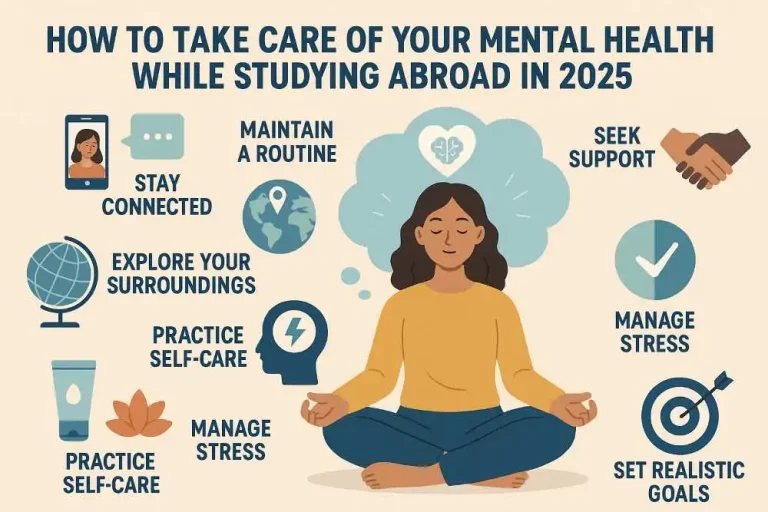
How to Take Care of Your Mental Health While Studying Abroad in 2025

Studying abroad is an exciting opportunity for international studentsย to immerse themselves in new cultures, gain world-class education, and build lifelong connections. However, the transition to a new country can bring challenges that impact mental health, such as homesickness, academic pressure, and cultural adjustment. Prioritizing student wellnessย is essential for a fulfilling study abroadย experience. This article offers a comprehensive guide to self-care, stress management, and emotional support, with practical wellbeing tipsย to help you thrive in student lifeย abroad. Whether you’re preparing to move or already navigating life in a new country, these expert-level insights will empower you to maintain mental wellness.

Understanding Mental Health Challenges for International Students

Moving abroad for studies can be both exhilarating and overwhelming. According to a 2023 study by the Journal of International Students, over 60% of international students report experiencing stress, anxiety, or loneliness during their studies, often due to cultural shock, language barriers, or academic demands. These challenges can affect mental health, making proactive self-care crucial.

Common stressors include:

  • Homesickness: Missing family, friends, and familiar routines.
  • Cultural Adjustment: Navigating new social norms and expectations.
  • Academic Pressure: Adapting to different teaching styles or higher workloads.
  • Financial Stress: Managing student lifeย expenses in a new economy.
  • Social Isolation: Difficulty forming connections in an unfamiliar environment.

By recognizing these challenges and implementing wellbeing tips, you can build resilience and enjoy a rewarding study abroad experience.

Strategies for Maintaining Mental Wellness Abroad

1. Build a Support System

A strong emotional support network is vital for mental health. Connecting with others helps combat loneliness and fosters a sense of belonging.

  • Join University Clubs and Societies: Most universities offer student organizations, from cultural groups to sports clubs. For example, the University of Manchesterโ€™s Student Union hosts over 400 societies, providing opportunities to meet like-minded peers.
  • Engage with International Student Services: Universities often have dedicated offices for international students, offering counseling, social events, and cultural integration programs. Check your universityโ€™s website for resources like workshops or peer mentoring.
  • Stay Connected with Home: Schedule regular video calls with family and friends to maintain emotional ties. Apps like WhatsApp or Zoom make this affordable and accessible.

Wellbeing Tip: Attend university welcome events during orientation week to form early connections. Even one or two close friends can significantly boost your mental wellness.

2. Practice Self-Care Routines

Self-care is a cornerstone of student wellness, helping you recharge and manage stress. Small, consistent habits can make a big difference.

  • Physical Health: Regular exercise, such as a 20-minute walk or yoga, reduces stress hormones and improves mood, according to the NHS. Many universities offer free or discounted gym memberships.
  • Sleep Hygiene: Aim for 7โ€“9 hours of sleep nightly. Create a bedtime routine, avoid screens before bed, and keep your sleep environment calm.
  • Nutrition: Eating balanced meals supports mental health. Shop at budget-friendly supermarkets like Aldi or Lidl to maintain a healthy diet without straining your finances.
  • Mindfulness: Practices like meditation or journaling can reduce anxiety. Apps like Headspace or Calm offer guided sessions tailored for students.

Wellbeing Tip: Dedicate 10โ€“15 minutes daily to a self-care activity, such as journaling or stretching. Consistency is key to sustaining mental wellness.

DayActivityDurationPurpose
Monday20-min walk on campus20 minsBoost mood and physical health
TuesdayGuided meditation (Headspace)10 minsReduce stress and improve focus
WednesdayJoin a university club meeting1 hourBuild social connections
ThursdayCook a healthy meal30 minsSupport nutrition and creativity
FridayJournal about your week15 minsReflect and process emotions
SaturdayVideo call with family30 minsMaintain emotional ties
SundayFree time (e.g., reading, hobby)1 hourRecharge for the week ahead

Note: Adjust activities based on your schedule and preferences.

3. Master Stress Management Techniques

Effective stress management is critical for navigating the demands of student life abroad. Academic and cultural pressures can feel intense, but structured approaches can help.

  • Time Management: Use tools like Google Calendar or Notion to organize assignments and deadlines. Break tasks into smaller steps to avoid feeling overwhelmed.
  • Seek Academic Support: Universities offer resources like writing centers or study skills workshops. For example, Kingโ€™s College London provides free academic skills sessions for international students.
  • Cognitive Behavioral Techniques: Challenge negative thoughts by reframing them. For instance, instead of thinking, โ€œIโ€™ll never understand this lecture,โ€ try, โ€œI can ask for help and improve with practice.โ€
  • Breathing Exercises: Practice 4-7-8 breathing (inhale for 4 seconds, hold for 7, exhale for 8) to calm anxiety during stressful moments.

Wellbeing Tip: Set aside 5 minutes daily to plan your tasks. This small habit can reduce stress and increase productivity, supporting your mental health.

4. Access Professional Emotional Support

If stress or anxiety becomes overwhelming, professional emotional support can make a significant difference. Most UK universities offer free or low-cost counseling services.

  • University Counseling: Services like those at the University of Edinburgh provide confidential sessions with trained counselors, often tailored for international students.
  • NHS Mental Health Services: International students who pay the Immigration Health Surcharge (ยฃ624/year) can access NHS mental health support, including therapy or crisis services.
  • Helplines: Organizations like Nightline (a student-run listening service) or Samaritans (116 123) offer 24/7 support for urgent needs.
  • Online Resources: Platforms like Student Minds or Kooth provide free mental health resources specifically for students.

Wellbeing Tip: Donโ€™t hesitate to reach out early. Booking a counseling session before stress escalates can prevent burnout and support student wellness.

5. Navigate Cultural Adjustment

Cultural differences can impact mental health, but embracing the study abroad experience with curiosity can ease the transition.

  • Learn Local Norms: Take time to understand cultural practices, such as British communication styles (e.g., indirectness or humor). Universities often offer cultural orientation sessions.
  • Engage with the Community: Participate in local events, festivals, or volunteer opportunities to feel more connected. For example, joining a local charity run can foster a sense of purpose.
  • Language Support: If English isnโ€™t your first language, enroll in free language classes offered by universities to boost confidence and reduce anxiety.

Wellbeing Tip: Keep a โ€œcultural journalโ€ to reflect on new experiences. Writing about challenges and successes can help you process emotions and adapt to student life.

Additional Considerations for Mental Wellness

  • Set Realistic Expectations: Understand that adjustment takes time. Itโ€™s normal to feel homesick or overwhelmed initially, but these feelings often fade with proactive self-care.
  • Limit Social Media: Constantly comparing your experience to others online can harm mental health. Focus on your unique journey instead.
  • Financial Management: Financial stress can exacerbate mental health challenges. Create a budget to manage expenses, as outlined in resources like Save the Student, to reduce anxiety.

Why Mental Health Matters for International Students

Prioritizing mental wellness allows you to fully embrace the study abroad experience, from academic success to cultural exploration. A 2024 report by Student Minds found that students who actively manage their mental health report higher satisfaction with their studies and social life. By building a support system, practicing self-care, and seeking emotional support when needed, you can navigate challenges and thrive in the UKโ€™s vibrant, multicultural environment.

FAQ

What are the signs I should seek help for my mental health?

Look for persistent feelings of sadness, anxiety, or fatigue, difficulty concentrating, changes in sleep or appetite, or withdrawal from social activities. Contact your universityโ€™s counseling service or NHS for support.

How can I cope with homesickness while studying abroad?

Schedule regular calls with family, join student clubs to build new connections, and create familiar routines (e.g., cooking a favorite dish). Reflecting on your goals for studying abroad can also help.

Are mental health services free for international students in the UK?

Yes, most universities offer free counseling, and the NHS provides mental health support for students who pay the Immigration Health Surcharge (ยฃ624/year). Check your universityโ€™s website for details.

How do I manage academic stress while studying abroad?

Break tasks into manageable steps, use time management tools, and seek academic support from your universityโ€™s writing or study skills centers. Regular self-care, like exercise or mindfulness, also helps.

What apps can support my mental health?

Apps like Headspace (meditation), Calm (sleep and relaxation), and Moodpath (mood tracking) are great for stress management. Many are free or offer student discounts.

How can I make friends in a new country?

Attend orientation events, join university clubs, or participate in local community activities. Be open to small talk and ask peers about their experiences to build connections.

Authored By
Mohammad Yawer Qadri

Part-Time Job Options for International Students in the UK and How to Find One

Studying in the United Kingdom is a dream come true for many international students. The country is home to prestigious universities, a diverse cultural environment, and an educational system that encourages independent thought and critical analysis. However, with all its benefits, the cost of living in the UKโ€”particularly in cities like London, Manchester, and Edinburghโ€”can be a significant financial burden. Tuition fees, rent, transport, food, books, and personal expenses add up quickly. To bridge the financial gap and gain valuable work experience, many international students explore the option of working part-time during their studies.

This blog serves as a comprehensive guide for international students in the UK, detailing all major aspects of part-time job, including work rights, types of jobs, job search platforms, application methods, and tips for balancing work and study. Whether you’re trying to save up for rent, build your professional profile, or simply explore British culture from a localโ€™s perspective, this guide covers everything you need to know.

Why Work Part-Time as an International Student?

Balancing academic responsibilities and personal expenses is no easy feat, especially for international students who may be adjusting to a new environment, culture, and academic system. Part-time work offers a practical solution. With tuition fees averaging between ยฃ10,000 and ยฃ25,000 per year, part-time jobs can help ease the financial pressure by contributing to daily living costs, leisure activities, or even tuition.

However, the benefits go beyond money. Part-time work provides real-world experience in the UK job market, which can be incredibly valuable when applying for internships or full-time roles. It builds soft skills like time management, customer service, communication, and adaptability. These experiences boost self-confidence and help students feel more integrated into the local community.

For students whose first language is not English, working part-time also enhances fluency and comprehension of workplace language, easing communication and increasing confidence in both academic and professional environments.

Understanding Your Work Rights in the UK

Before beginning a job search, it’s crucial to understand your legal rights as an international student.

Permitted Work:

  • During term time: Up to 20 hours per week across all jobs.
  • During official university vacations: Full-time work allowed.
  • On placements: Permitted if it is part of your course and formally approved.

Restrictions:

  • No self-employment or freelancing.
  • No running a business or working as a professional sportsperson or entertainer.
  • Medical roles like doctor or dentist in training require enrollment in recognized programmes.

Always refer to your E-Visa documentation or Biometric Residence Permit (BRP) and speak to your universityโ€™s international student office to verify specific permissions.

Types of Part-Time Jobs Available

The UK job market offers a wide variety of part-time roles suitable for students. These differ in working hours, responsibilities, and required skills.

1. Campus Jobs

Often ideal due to location and flexibility:

  • Library assistants
  • IT support
  • Cafรฉ staff
  • Student ambassadors
  • Research/lab assistants

Campus jobs are competitive. Apply early and check university career portals frequently.

2. Retail Jobs

Widely available and typically flexible:

  • Cashiers
  • Stockroom assistants
  • Sales associates
  • Holiday sales staff

Retail jobs offer evening/weekend shifts that fit around academic schedules.

3. Hospitality and Catering

A major source of part-time work:

  • Waitstaff
  • Kitchen assistants
  • Bar staff
  • Hotel receptionists and cleaners

These jobs often offer flexible shifts and opportunities to earn tips.

4. Tutoring

Great for academically strong students:

  • Subject tutoring (Math, Science, English)
  • Language teaching
  • Peer tutoring

Tutoring can be high-paying and rewarding, especially if you enjoy teaching.

5. Customer Service and Admin

Many companies hire part-time support staff:

  • Call centre representatives
  • Data entry assistants
  • Front desk support

These roles often require basic computer and communication skills.

6. Seasonal/Event Work

Temporary roles during busy periods:

  • Event crew
  • Festival assistants
  • Holiday warehouse staff

These jobs are excellent for earning extra during breaks.

Top Platforms to Find Part-Time Jobs

Online job portals are key resources for job seekers. Here’s a breakdown of the most widely used platforms in the UK:

1. Indeed UK

Indeedย is the UKโ€™s most comprehensive job search engine. It aggregates postings from multiple websites and offers filters by job type, location, and salary.

How to Apply:

  • Create a free account
  • Upload your CV
  • Set job alerts
  • Apply directly through the site or external links

2. StudentJob UK

Tailored specifically for students, StudentJob UKย offers part-time, holiday, and internship roles.

How to Apply:

  • Register and create a profile
  • Browse student-specific job categories
  • Apply with your uploaded CV and personal details

3. E4S (Employment 4 Students)

E4Sย is another student-friendly portal with part-time, seasonal, and gap year jobs.

How to Apply:

  • Use filters to search by city or type
  • Upload your CV and apply directly through listings

4. Reed.co.uk

While not student-exclusive, Reedย lists thousands of jobs including entry-level and part-time roles.

How to Apply:

  • Register and upload your CV
  • Search using filters like “part-time” or “weekend”
  • Apply via the portal or company site

5. TotalJobs

A leading UK job board, TotalJobsย offers numerous part-time listings across industries.

How to Apply:

  • Create a profile
  • Save jobs to your dashboard
  • Apply directly via site or employerโ€™s application form

Alternative Job Search Strategies

Some of the best jobs aren’t online. Use these offline approaches:

Walk-In Applications

Print 10โ€“15 CVs and visit local businesses like cafรฉs, restaurants, shops, and small offices. Ask politely if theyโ€™re hiring and leave your CV. Many places hire based on in-person impressions.

Shop Window Ads

Small shops and eateries often place โ€œStaff Wantedโ€ signs in their windows. Keep an eye out while walking around your local high street or university area.

University Career Services

Check your universityโ€™s internal job board. Many positions are advertised exclusively for students. Attend job fairs and workshops to improve your application skills.

Student Unions and Societies

Student unions may hire for their cafรฉs, bars, or events. Being involved in societies can also help you hear about informal job openings.

Networking

Let friends, flatmates, tutors, and classmates know youโ€™re looking for a job. Referrals are often the fastest route to employment.

How to Build a Great CV for Part-Time Jobs

Essential Tips:

  • Keep it to one page
  • Include a short, relevant personal statement
  • List transferable skills (teamwork, punctuality, communication)
  • Add any experience: volunteering, internships, past jobs
  • Mention your visa type and availability (e.g., “Eligible to work 20 hours/week on Student Visa”)

Tailor your CV and cover letter to each job by using relevant keywords from the listing.

Balancing Study and Work

Maintaining academic performance while working part-time requires planning:

  • Use a planner or digital calendarย to organize study, work, and rest time
  • Limit work to 15โ€“18 hours/weekย to avoid burnout
  • Communicate proactivelyย with your employer about exams or deadlines
  • Choose jobs with fixed schedulesย or that allow shift-swapping
  • Practice self-careย to stay physically and mentally well

Pay and Benefits

As of April 2025:

  • ยฃ11.44/hourย (ages 21 and over)
  • ยฃ8.60/hourย (ages 18โ€“20)

Higher wages may be available in London or for weekend shifts. Hospitality roles often offer tips, while retail positions may come with employee discounts.

Final Thoughts

Part-time work is a gateway to personal and professional growth. From improving your communication skills to building your resume and meeting new people, the benefits are wide-reaching. Whether you land a job through a platform like Indeed or walk into your local cafรฉ with a printed CV, youโ€™re taking a step toward independence and real-world experience.

Stay within your visa restrictions, aim for balance, and choose roles that enrich your UK journey. With determination and the right approach, you’ll find a part-time opportunity that works perfectly for you.

Authored By
Rijuka Jain

FAQ

  1. Can international students in the UK work more than 20 hours per week during term time?

    No, international students on a Student visa are legally restricted to a maximum of 20 hours per weekย during academic term time. This applies regardless of how many jobs you have. Breaching this rule can jeopardize your visa and your ability to stay in the UK.

  2. What documents do I need to start a part-time job in the UK as a student?

    To legally work in the UK, you typically need the following:
    1. Your Biometric Residence Permit (BRP) / E-Visa
    2. A National Insurance Numberย (you can start working while your application is in process)
    3. A UK bank accountย to receive your wages.
    4. Proof of student status, which your university can provide

  3. How soon can I start applying for part-time jobs after arriving in the UK?

    You can begin your job search as soon as youโ€™re enrolled and have your BRP/E-Visa. Some campus jobs are advertised before classes begin, so keep an eye on your university job board. For off-campus roles, start visiting local businesses with printed CVs or apply online within your first few weeks.

  4. Can I switch part-time jobs during the academic year?

    Yes, as long as you stay within the 20-hour weekly limit during term timeย and the job complies with visa conditions. You are not restricted to one employer and can change jobs freely. Always inform new employers of your visa type and working hour limit.

  5. Is it possible to get a job without any prior experience in the UK?

    ย Absolutely. Many part-time jobs, especially in retail, hospitality, and on campus, are designed for students with little or no prior work experience. What matters most are soft skills like communication, punctuality, willingness to learn, and a positive attitude. A well-written CV and enthusiastic approach go a long way!

Fully Funded Scholarships for Indian Students to Study Abroad 2025: A Complete Guide

Studying abroad is a transformative experience, but the cost can be a significant hurdle, especially for Indian students aspiring to study in top international destinations like the UK. Fortunately, numerous fully funded scholarships for Indian students in 2025 are opening doors to world-class education without financial strain. This article dives deep into the best study abroad scholarships, focusing on opportunities in the UK and other top countries, helping Indian students realize their dreams.

Why Consider Fully Funded Scholarships for Indian Students?

International education offers exposure to diverse cultures, advanced research facilities, and a globally recognized degree. However, the cost of studying abroad often includes tuition, living expenses, travel, and more. Fully funded scholarships cover most, if not all, expenses, making them highly competitive and sought after.

Benefits of Fully Funded Scholarships:

  • Tuition fees waived completely
  • Monthly stipend for living expenses
  • Travel allowance to and from the host country
  • Health insurance and other miscellaneous expenses
  • Networking and academic support from scholarship bodies

Best Countries to Study Abroad for Indian Students in 2025

While the UK remains a favorite destination, several other countries offer lucrative scholarship options for Indian students.

CountryScholarship OpportunitiesPopular Universities
UKChevening, Commonwealth, GREAT ScholarshipsUniversity of Oxford, UCL, Imperial College London
CanadaVanier Canada Graduate Scholarships, Trudeau ScholarshipsUniversity of Toronto, McGill University
GermanyDAAD Scholarships, Heinrich Bรถll FoundationTechnical University of Munich, Humboldt University
AustraliaAustralia Awards ScholarshipsUniversity of Melbourne, ANU

Top Fully Funded Scholarships in the UK for Indian Students 2025

1. Chevening Scholarships

  • Coverage: Full tuition fees, monthly stipend, travel costs, and more.
  • Eligibility: Indian students with leadership potential and a minimum of two years work experience.
  • Deadline: Usually November annually.
  • Application tips: Strong SOP and leadership experience crucial.

2. Commonwealth Scholarships

  • Coverage: Tuition, living allowance, airfare, and other expenses.
  • Eligibility: Indian citizens pursuing a masterโ€™s or PhD in the UK.
  • Deadline: Typically December-January.
  • Special notes: Focus on candidates who will contribute to their home countries after studies.

3. GREAT Scholarships

  • Coverage: Partial to full tuition fee waivers from UK universities partnered with the GREAT campaign.
  • Eligibility: Indian students enrolling in eligible UK institutions.
  • Deadline: Varies by university.
  • How to apply: Apply for admission to partner universities and then for the scholarship.

4. University-specific Merit Scholarships

Many UK universities offer university merit scholarships for Indian students, covering tuition fees partially or fully. Examples include:

Other International Scholarships for Indian Students

Scholarships for Indian Students in Canada

  • Vanier Canada Graduate Scholarships for PhD candidates
  • Lester B. Pearson International Scholarship at the University of Toronto

Scholarships for Indian Students in Germany

  • DAAD scholarships for postgraduate and PhD studies
  • Konrad-Adenauer-Stiftung Scholarships for research

Scholarships for Indian Students in Australia

  • Australia Awards Scholarships covering tuition, airfare, and living expenses
  • Destination Australia Scholarships for regional university studies

How to Apply for Fully Funded Scholarships: Key Steps

Step 1: Research & Shortlist

Identify scholarships based on your academic level, field, and preferred country.

Step 2: Check Eligibility

Review detailed requirements like academic scores, work experience, language proficiency, and nationality.

Step 3: Prepare Application Materials

  • Academic transcripts and certificates
  • Statement of Purpose (SOP) highlighting your goals and suitability
  • Letters of recommendation
  • English language test scores (IELTS/TOEFL)
  • CV or resume

Step 4: Submit Applications On Time

Meet deadlines carefully and keep track of required documents.

Step 5: Prepare for Interviews

Some scholarships involve interviewsโ€”practice common questions and confidently present your achievements.

Tips for Indian Students to Maximize Scholarship Success

  • Start Early: Scholarships are highly competitive. Begin research and preparation at least 6-8 months in advance.
  • Focus on SOP: Your Statement of Purpose is key to telling your story compellingly.
  • Highlight Leadership: Scholarships like Chevening value leadership and community impact.
  • Use Scholarship Databases: Websites like ScholarshipPortal and the British Council offer updated lists.
  • Consult Education Experts: Seek guidance from study abroad consultants for tailored advice.

Common Questions Indian Students Have About Fully Funded Scholarships

QuestionBrief Answer
What are fully funded scholarships?Scholarships that cover tuition, living costs, travel, and sometimes additional expenses.
Can undergraduate students apply?Yes, but most fully funded scholarships target postgraduate or PhD studies.
Are work experience and leadership important?Yes, especially for prestigious scholarships like Chevening and Commonwealth.
How competitive are these scholarships?Extremely competitive; thousands apply yearly for limited slots.
Do I need IELTS to apply?Generally yes, unless waived by the scholarship or university based on your prior education.
Can Indian students apply for scholarships in UK?Yes, many scholarships specifically target Indian students for studies in the UK.
How to find scholarships without essay requirements?Some scholarships have simpler applications; use dedicated search platforms for easy finds.

Conclusion

For Indian students aiming to study abroad in the UK and beyond in 2025, fully funded scholarships offer unmatched opportunities to pursue quality education without financial stress. Whether through government-backed programs like Chevening and Commonwealth scholarships or university-specific awards, these opportunities can transform academic and professional trajectories. Start early, prepare meticulously, and leverage every resource to secure your place among the scholars.

FAQ

  1. What are the top fully funded scholarships for Indian students in the UK?

    Chevening, Commonwealth, GREAT Scholarships, and university-specific merit scholarships are the leading options.

  2. Can I apply for multiple scholarships simultaneously?

    Yes, but carefully manage deadlines and eligibility criteria.

  3. Are these scholarships only for postgraduate studies?

    Most are for postgraduate (masterโ€™s and PhD), but some undergraduate scholarships exist.

  4. How much do these scholarships cover?

    Most cover full tuition, living expenses, travel, and sometimes health insurance.

  5. How important is the Statement of Purpose (SOP)?

    SOP is critical as it showcases your motivation, goals, and fit for the scholarship.

  6. What documents are required for scholarship applications?

    Academic transcripts, letters of recommendation, SOP, proof of English proficiency, and sometimes a research proposal.

  7. Can Indian students study abroad without scholarships?

    Yes, but scholarships significantly reduce financial burden.

  8. What is the eligibility for Commonwealth scholarships?

    Indian nationals pursuing masterโ€™s or PhD in eligible fields with a commitment to development goals.

  9. Are scholarships renewable each year?

    Many scholarships are for the duration of the course, but renewal depends on performance and terms.

  10. How to stay updated about new scholarships for Indian students?

    Follow official scholarship portals, university websites, and education consultancy channels.

Commonwealth Scholarships for Indian Students 2025: A Complete Guide

The Commonwealth Scholarships remain one of the most prestigious and sought-after opportunities for Indian students aiming to pursue higher education in the UK. In 2025, these scholarships continue to offer incredible support, particularly for those pursuing postgraduate studies such as master’s and PhD scholarships for Indian students. If you are an aspiring international student wondering how to apply for Commonwealth Scholarship, this comprehensive guide will walk you through everything you need to knowโ€”from eligibility and requirements to application tips and benefits.

What are Commonwealth Scholarships?

The Commonwealth Scholarship is a UK government-funded program designed to promote international development by offering scholarships to talented students from Commonwealth countries, including India. These scholarships enable students to study at UK universities, covering tuition fees, living expenses, travel costs, and more. The scheme encourages academic excellence and fosters collaboration across the Commonwealth.

Why are Commonwealth Scholarships Important for Indian Students?

For Indian students, the Commonwealth Scholarships 2025 represent an opportunity to access world-class education at some of the UK’s top universities with significant financial support. These scholarships not only alleviate the financial burden but also enhance career prospects and global exposure.

  • They cover full tuition fees and living expenses.
  • Enable access to top-ranked UK universities.
  • Foster international networks with scholars worldwide.
  • Enhance employability with globally recognized qualifications.

Types of Commonwealth Scholarships for Indian Students

Commonwealth Masters Scholarships

  • For Indian students pursuing a full-time taught masterโ€™s degree.
  • Covers tuition fees, airfare, living allowance, and other expenses.
  • Popular courses include STEM, social sciences, arts, and health sciences.

Commonwealth PhD Scholarships

  • For those aiming to pursue doctoral studies in the UK.
  • Covers tuition, living allowance, airfare, and research expenses.
  • Supports research in areas critical to Commonwealth countries’ development.

Commonwealth Split-site Scholarships

  • For PhD candidates enrolled in universities in their home country.
  • Supports research time spent at a UK university (usually 12 months).
  • Covers travel and some living costs.

Commonwealth Distance Learning Scholarships

  • Supports part-time masterโ€™s degree through distance learning.
  • Covers tuition fees only.

Commonwealth Scholarship Eligibility for Indian Students

To qualify for these scholarships, applicants must meet specific criteria:

  • Must be a citizen of a Commonwealth country, such as India.
  • Be a resident in India.
  • Have a first degree of at least upper second-class (2:1) honours standard or a professional qualification.
  • For PhD applicants, must have relevant academic qualifications and research proposals.
  • Meet the Commonwealth Scholarship requirements related to age, health, and character.
  • Must not be already pursuing a PhD in the UK or have previously studied in the UK with a Commonwealth Scholarship.

Note: Some scholarships may have specific requirements based on the university or course.

How to Apply for Commonwealth Scholarships 2025

Step-by-Step Guide:

  1. Check Eligibility and Find a Suitable Course
    • Use official portals to identify UK universities participating in the Commonwealth Scholarship scheme.
    • Choose courses aligned with your career and academic interests.
  2. Prepare Your Application Documents
    • Academic transcripts and certificates.
    • Personal Statement or SOP emphasizing your goals and relevance of the course.
    • Research proposal (for PhD applicants).
    • Two references or recommendation letters.
    • Proof of residency and citizenship.
  3. Submit Application via National Nominating Agency
    • In India, applications are generally submitted through the Commonwealth Scholarship Commission India or the official university portal.
    • Pay attention to deadlines, usually between September and November.
  4. Shortlisting and Interviews
    • Eligible candidates may be shortlisted for interviews or further assessments.
  5. Offer and Acceptance
    • Successful applicants receive scholarship offers and instructions for visa applications.

Scholarship Benefits and Coverage

  • Full Tuition Fee: Covers all university tuition costs.
  • Monthly Stipend: Helps with living expenses, varying by UK location.
  • Travel Costs: Includes economy airfare to and from the UK.
  • Arrival and Departure Allowance: Covers initial and final travel expenses.
  • Thesis/Dissertation Allowance: For research-based programs.
  • Study Materials: Limited funding for books and materials.

Tips to Strengthen Your Commonwealth Scholarship Application

  • Write a compelling Statement of Purpose (SOP) emphasizing how your course will contribute to Indiaโ€™s development.
  • Highlight leadership, academic excellence, and community service.
  • Tailor your research proposal to align with Commonwealth priorities.
  • Secure strong recommendation letters from academic or professional references.
  • Begin the application process early to gather all required documentation.

Conclusion

The Commonwealth Scholarships for Indian students 2025 offer a fantastic opportunity to study at world-class UK universities with full financial support. Understanding the Commonwealth scholarship eligibility, application process, and benefits will greatly improve your chances of success. Start preparing your application early, focus on your academic and leadership strengths, and tailor your documents carefully to secure this prestigious award.

FAQ

  1. What is the Commonwealth Scholarship for Indian students?

    A prestigious UK government-funded scholarship program offering full financial support for masterโ€™s and PhD studies in the UK for students from Commonwealth countries like India.

  2. How do I apply for a Commonwealth Scholarship?

    Applications are usually submitted online through the Commonwealth Scholarship Commission India or respective university portals. Ensure you meet eligibility and prepare necessary documents.

  3. What are the eligibility criteria for Commonwealth Scholarships?

    Applicants must be citizens of Commonwealth countries, have a minimum academic standard (usually a 2:1 degree), and meet specific program requirements.

  4. Are Commonwealth Scholarships fully funded?

    Yes, most Commonwealth Scholarships cover full tuition, living expenses, travel costs, and study materials.

  5. Can I apply for both Masterโ€™s and PhD Commonwealth Scholarships?

    Yes, there are dedicated scholarships for both Masterโ€™s and PhD programs.

  6. When is the Commonwealth Scholarship application deadline for 2025?

    Deadlines vary by country and scholarship type but generally fall between September and November 2024.

  7. Are there Commonwealth scholarships available for arts students?

    Yes, art scholarships for Indian students are included, with support for courses in creative arts and humanities.

  8. Do Commonwealth Scholarships cover part-time or distance learning?

    Some scholarships, like the Commonwealth Distance Learning Scholarship, cover part-time distance learning masterโ€™s programs.

  9. How competitive are Commonwealth Scholarships?

    They are highly competitive, with rigorous selection based on academic merit, leadership potential, and alignment with development goals.

  10. Can I apply for multiple Commonwealth Scholarships?

    Applicants can only accept one Commonwealth Scholarship at a time and must declare any other funding sources during the application process.

We Would Love To Help You

Our accommodation expert will contact you at the earliest

By proceeding you agree to our T&C and Privacy Policy