
Home Blog Page 31

United Kingdom Postgraduate Application Process for International Students

The United Kingdom (UK) has long been a global hub for academic excellence, drawing international students from all corners of the world. For those aspiring to pursue postgraduate studies, the UK offers numerous opportunities for advanced learning and research. The application process for international students, however, can appear complex at first glance. Understanding the steps involved can significantly enhance your chances of a successful application.

In this article, we will guide you through the UK postgraduate application process for international students, including how to apply for a master’s degree in the UK, key deadlines, writing your Statement of Purpose (SOP), and tips for securing scholarships.

Understanding the UK Postgraduate Application Process

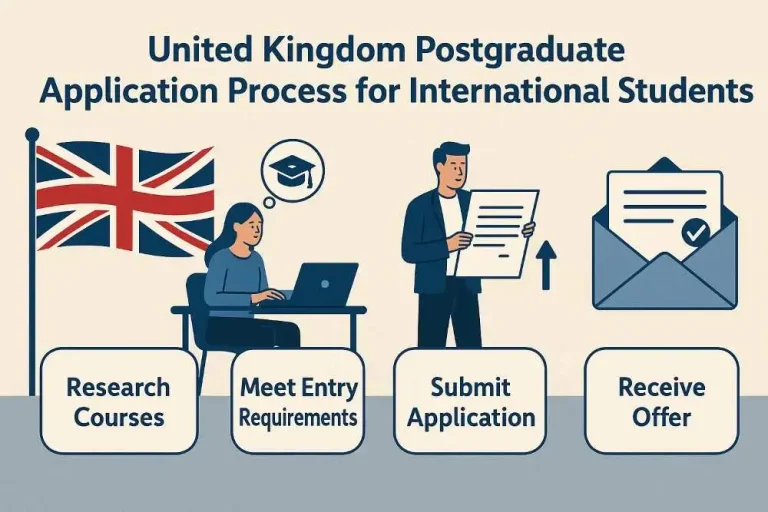
The UK postgraduate application process involves several stages, each requiring attention to detail and preparation. Here’s an overview of the process:

Step 1: Research and Choose Your Program

Before you begin the application process, it’s essential to identify the right postgraduate program for you. UK universities offer a wide range of master’s and doctoral programs across various fields, including engineering, medicine, business, arts, and more.

  • Choose a university: Consider factors such as location, reputation, faculty, and course content. Websites like UCAS and individual university websites provide detailed information on available postgraduate programs.
  • Course details: Ensure that the program you choose aligns with your career goals, and check the entry requirements, such as prior qualifications and English proficiency scores.

Step 2: Understand the Entry Requirements

Each postgraduate program in the UK will have specific entry requirements, which may include:

  • A bachelor’s degree or its equivalent from an accredited institution.
  • A minimum grade point average (GPA) or academic standing.
  • Proof of English language proficiency (IELTS, TOEFL, or equivalent).
  • Relevant work experience (especially for business and professional courses).

Tip: Always check the specific entry requirements of the program you are applying to, as they can vary by university and course.

Step 3: Start Your UK Postgraduate Application

Once you’ve chosen a program and reviewed the requirements, it’s time to begin your application. Most UK universities now use an online application system. Here’s what to prepare:

  1. Academic Transcripts: Official transcripts from your undergraduate studies.
  2. References: Academic or professional references supporting your application.
  3. Personal Statement: A compelling narrative explaining why you want to pursue the program and how it aligns with your academic and career goals.
  4. CV/Resume: Highlighting your academic achievements, work experience, and any other relevant skills or extracurricular activities.
  5. English Language Proficiency Test Scores: If required by your program.
  6. Application Fee: Many UK universities charge a non-refundable application fee, ranging from £20 to £100, depending on the institution.

Tip: Some programs may require additional materials such as a portfolio (for arts courses), or GRE/GMAT scores (for certain business programs).

Step 4: Write Your Statement of Purpose (SOP)

One of the critical components of your application is the Statement of Purpose (SOP). This essay allows you to showcase your passion, motivation, and suitability for the course.

  • Structure your SOP: Introduce yourself, explain your academic background, highlight why you’re interested in the program, and how it fits with your career aspirations. Be sure to mention why the specific university appeals to you.
  • Focus on your achievements: Include academic accomplishments, work experiences, and any research or projects relevant to the course you are applying for.
  • Tailor your SOP: Customize your SOP for each university, demonstrating that you have researched the program and understand what it offers.

Step 5: Submit Your Application

Once you’ve completed your application and gathered all necessary documents, submit your application via the university’s online portal. You may also need to pay the application fee during this stage.

Tip: Submit your application well in advance of the deadline to ensure all materials are received on time.

Step 6: Interview or Further Assessments

Some postgraduate programs, particularly those in fields like business, law, or medicine, may require an interview or further assessments as part of the selection process. Prepare for these by practicing common interview questions and reviewing your application.

Step 7: Await the Admission Decision

After your application is submitted and any interviews or assessments have been completed, you’ll receive an admission decision. If successful, you’ll be offered a place on the program.

Scholarships for International Students in the UK

Studying in the UK can be expensive, but there are numerous scholarships for international students in the UK. Some well-known scholarships include:

  • Chevening Scholarships: Fully funded scholarships for postgraduate students from over 160 countries.
  • Commonwealth Scholarships: Aimed at students from low and middle-income countries, these scholarships cover tuition fees and living expenses.
  • University-specific Scholarships: Many UK universities offer scholarships to international students based on academic merit, financial need, or country of origin.

Tip: Always check the eligibility criteria and application deadlines for scholarships before you apply.

UK Postgraduate Application Deadline

Deadlines for postgraduate applications vary by university and program, but there are some general guidelines:

  • Autumn intake: Most UK universities have their application deadlines between January and March, with classes starting in September or October.
  • Spring intake: Some universities offer a spring intake with deadlines around October to November for January start programs.

Be sure to check the UK postgraduate application deadline on the university’s website for the most accurate dates.

UK Student Visa Application Process

If you’re applying for a UK postgraduate program, you’ll need to apply for a UK student visa. Here’s a general overview of the process:

  1. Confirmation of Acceptance for Studies (CAS): Once accepted by a university, you’ll receive a CAS, which is required for your visa application.
  2. Apply online: Submit your visa application via the UK Government website.
  3. Documents required: Passport, CAS, proof of financial support, and English language proficiency.
  4. Visa fee: The standard UK student visa fee is £348, with an additional health surcharge of £470 per year.
  5. Visa processing time: It usually takes around 3 weeks to process a UK student visa.

Tip: Ensure you apply for your visa well in advance to avoid delays.

Tips for Successful UK Postgraduate Applications

  • Research thoroughly: Understand the program, university, and application requirements to avoid mistakes.
  • Prepare documents early: Collect all necessary documents ahead of time to avoid last-minute stress.
  • Meet deadlines: Submit your application before the deadline to ensure it’s processed on time.
  • Be clear in your SOP: Make your statement stand out by clearly demonstrating your passion and future goals.
  • Consider funding: Research scholarships, grants, and financial aid options to ease the financial burden.

Conclusion

The UK offers a world-class education system with diverse opportunities for international students seeking postgraduate qualifications. By understanding the UK postgraduate application process, including the essential requirements, deadlines, and visa procedures, you can navigate the journey with confidence. Planning ahead, preparing your documents meticulously, and researching scholarships are key to a successful application. With the right approach, studying in the UK can be a transformative experience that opens doors to global career opportunities and personal growth.

Start your application early, stay organized, and ensure you meet all necessary deadlines to set yourself up for success. Best of luck in your academic journey to the UK!

FAQ

  1. How do I apply for a master’s in the UK?

    Apply through the university’s online portal by submitting required documents like transcripts, CV, personal statement, and references.

  2. When is the deadline for UK postgraduate applications?

    Deadlines vary but typically range from January to March for the autumn intake. Be sure to check your university’s website.

  3. What is the UK student visa application process?

    Apply online with your CAS from the university, proof of finances, and necessary documents. You will also need to pay a visa fee.

  4. How do I write a Statement of Purpose (SOP) for UK universities?

    Write a compelling essay that highlights your academic achievements, professional experience, and why you want to study the program at the particular university.

  5. What scholarships are available for international students in the UK?

    Scholarships include Chevening, Commonwealth, and university-specific awards based on merit or need.

  6. What are the entry requirements for postgraduate courses in the UK?

    Requirements typically include a relevant bachelor’s degree, good academic standing, English proficiency, and sometimes work experience.

  7. How much does student finance cost for postgraduate studies in the UK?

    Tuition fees vary by program and university, ranging from £10,000 to £30,000 per year. Additional living expenses need to be considered.

  8. What are the visa requirements for international students?

    You will need a Confirmation of Acceptance for Studies (CAS) from your university, proof of finances, and proof of English language proficiency.

  9. Can I work while studying in the UK as a postgraduate?

    Yes, student visa holders can work up to 20 hours per week during term time.

  10. What is the UK postgraduate application process?

    The process involves choosing a course, meeting entry requirements, applying through the university’s portal, and attending interviews if required.

Oxford Cambridge Boat Race 2025: Best Guide

Introduction

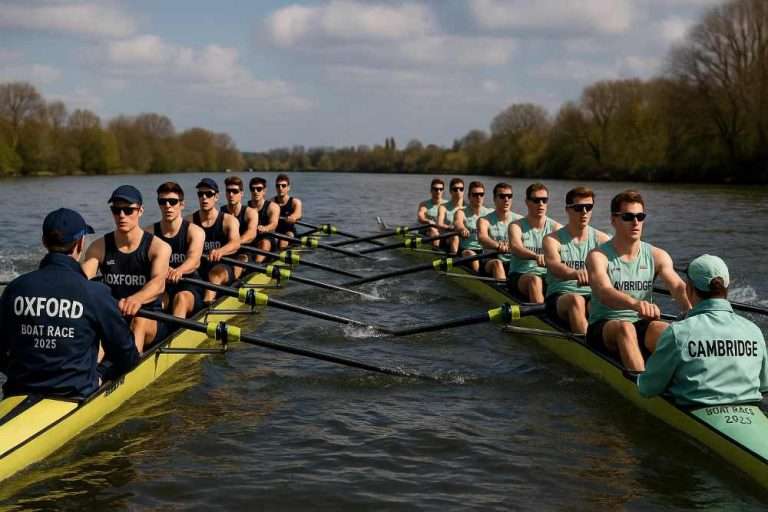
The Oxford Cambridge Boat Race 2025 is one of the most anticipated sporting events in the UK, drawing thousands of spectators to the banks of the River Thames each year. Scheduled for 2025, the iconic race between the rowing teams of the University of Oxford and the University of Cambridge will continue its legacy of fierce competition, tradition, and history. The Oxford-Cambridge rivalry has been running for over 180 years, and the 2025 race promises to be as thrilling as ever.

In this article, we will explore the history of the Oxford Cambridge Boat Race, provide insights into the 2025 edition, and delve into the teams, training, and strategies behind one of the most prestigious rowing events in the world.

What Is the Oxford-Cambridge Boat Race?

The Oxford Cambridge Boat Race is a 4.2-mile (6.8 km) rowing competition that takes place on the River Thames in London every year, usually in late March or early April. It features two eights (eight rowers and a coxswain) from the University of Oxford and the University of Cambridge, competing against each other in a race that has become synonymous with British sporting tradition.

The race is often seen as a symbol of academic and athletic excellence, as both universities boast world-renowned rowing programs. The event is also widely followed by international audiences, and it is one of the UK’s most significant annual sporting spectacles.

History of the Oxford-Cambridge Boat Race

The first race took place in 1829, and it has been held annually (with a few exceptions during wartime) ever since. The rivalry between Oxford and Cambridge extends beyond sports, with both universities competing in academics, culture, and various other domains. However, the boat race has become one of the most iconic symbols of this rivalry.

Over the years, the race has seen remarkable achievements, including close finishes, dramatic upsets, and some memorable moments that have gone down in history. With each passing year, the excitement surrounding the event grows, with students, alumni, and supporters from both universities showing fierce loyalty to their teams.

Oxford vs. Cambridge: The 2025 Boat Race

Race Date and Location

The Oxford Cambridge Boat Race 2025 is set to take place in early April on the River Thames. The official date will be confirmed closer to the event. The race will be streamed live across various platforms and is expected to attract tens of thousands of spectators along the riverbank.

The racecourse runs from Putney to Mortlake, taking rowers through a historic stretch of the Thames. The race is divided into two halves: the first section is relatively calm, while the second half presents the iconic “Chiswick Eyot” bend, where teams often push themselves to the limit.

Teams and Training

Both Oxford and Cambridge have long histories of success in the Boat Race. Oxford’s team, known for their formidable strength and aggressive rowing style, have won the race many times, but Cambridge has been a strong contender, winning numerous times as well.

Each team typically consists of eight rowers and one coxswain, with members selected based on their performance in trials. Both universities start their training early, with months of preparation leading up to the event. Rowing sessions are held on the Thames, often followed by intense weight training and fitness drills to ensure peak performance on race day.

Oxford Rowing Team

The Oxford rowing team has consistently been one of the most successful teams in the history of the event. Known for their discipline and technique, Oxford’s athletes spend countless hours in training, ensuring that they are ready for the grueling competition. The team has a significant number of talented rowers, many of whom come from elite rowing backgrounds.

Cambridge Rowing Team

Cambridge’s team is just as fierce, with a long history of success in the Boat Race. The Cambridge Rowing Team’s strategic rowing style and focus on teamwork give them a competitive edge. Their performance in the 2024 race was remarkable, and they aim to continue their dominance in 2025.

Key Factors Affecting the Oxford-Cambridge Boat Race 2025

Several elements contribute to the outcome of the Boat Race, including the rowers’ fitness, the weather conditions, and tactical decisions made by the teams during the race. The following factors will play a crucial role in the 2025 edition:

Rowing Technique and Training

Both universities emphasize rigorous training schedules to ensure that their rowers are in peak physical condition. This training includes endurance rowing, strength building, and on-water drills.

The Coxswain’s Role

The coxswain is crucial in steering the boat and directing the rowers. Their ability to maintain a strong and steady rhythm, especially during the more challenging turns, will be critical in determining the outcome of the race.

Weather and Water Conditions

The unpredictable nature of the Thames river and the weather on race day can influence the boat’s speed and maneuverability. Any changes in wind speed, water currents, or even rain can impact the race’s outcome.

Strategy and Tactics

Both teams closely analyze each other’s previous performances, studying their strengths and weaknesses. Coaches and coxswains make split-second tactical decisions that could determine who crosses the finish line first.

Oxford-Cambridge Boat Race 2025: The Rivalry Continues

The Oxford Cambridge rivalry in rowing is not just about the race—it’s about honor, tradition, and fierce competition. The Boat Race embodies the spirit of both universities, and for the rowers, it’s a once-in-a-lifetime event.

As both teams prepare for the 2025 edition, expectations will be high. Will Oxford secure another victory to add to their impressive record, or will Cambridge continue their dominance? The 2025 Oxford Cambridge Boat Race promises to be an unforgettable event.

Conclusion

The Oxford Cambridge Boat Race 2025 promises to be a thrilling continuation of one of the oldest and most celebrated rivalries in sports history. Both teams will bring their best to the water, battling not just for victory but for the pride of their respective universities. Whether you are an avid rowing fan, a supporter of one of the teams, or simply someone who loves a good rivalry, the 2025 Boat Race will be an event to remember. Be sure to stay tuned for updates, as the anticipation builds toward race day!

FAQ

When is the Oxford Cambridge Boat Race 2025?

The race will take place in early April 2025. The official date will be confirmed closer to the event.

How can I watch the Oxford Cambridge Boat Race 2025?

The event will be streamed live on various platforms, and tickets will be available for spectators along the River Thames.

How long is the Oxford Cambridge Boat Race?

The race covers a distance of 4.2 miles (6.8 km) from Putney to Mortlake on the River Thames.

How many times has Oxford won the Boat Race?

Oxford has won the race 85 times as of the 2024 edition.

What is the history behind the Oxford Cambridge rivalry?

The rivalry dates back to 1829, making it one of the oldest sporting rivalries in the world. It symbolizes both universities’ competitive spirit in academics, sports, and culture.

Can anyone participate in the Boat Race?

No, only rowers from Oxford and Cambridge are eligible to compete in the Boat Race. They are selected through trials and extensive training.

What is the coxswain’s role in the Boat Race?

The coxswain steers the boat, sets the pace, and directs the rowers, making it a crucial position in the race.

How do the Oxford and Cambridge rowing teams train for the Boat Race?

Both teams undergo rigorous training for months before the race, including rowing drills, strength conditioning, and tactical rehearsals.

Where can I watch the Oxford Cambridge Boat Race live?

Spectators can view the race along the banks of the River Thames or through live broadcasts on TV and online platforms.

What is the significance of the Oxford-Cambridge Boat Race?

The race represents a long-standing tradition of academic and athletic rivalry between the two prestigious universities and is an iconic event in British sport.

Google AI Exchange Program 2025: Best Guide for 2025

Google’s AI Exchange Program 2025 is an innovative program that aims to facilitate the creation and use of artificial intelligence (AI) tools all over the world. With the collaboration of universities, research institutes, and high-tech industries. The program intends to develop more in-depth awareness of AI technologies, stimulate innovative projects, and establish an ecosystem in which AI solutions may be built and applied toward the industries effectively.

In this blog, we are going to discuss all the necessary details regarding Google AI Exchange Program 2025. Whether it’s finding student accommodation or providing useful guides for students, Uninist has your back. So, keep on reading to find a comprehensive guide on Google AI Exchange!

What is Google’s AI Exchange Program?

The Google AI Exchange Program is an international program that aims to provide students, scholars, and professionals the chance to work with some of the sharpest minds in artificial intelligence (AI) today. Google AI Exchange Program provides exposure to Google AI tools, Google AI services, and exposure to Google’s latest research in artificial intelligence arenas such as machine learning, natural language processing (NL), and computer vision.

The program is aimed at fostering an inter-disciplinary culture that promotes innovation and research in AI and provides hands-on exposure to practical usage of AI in daily life to its participants. Untold possibilities in AI would translate for UK in the program, catering to UK’s desire to remain at the forefront of innovations in data science and AI.

What Are the Important Details of Google AI Exchange Program 2025?

Access Capability for Google AI Products and Tools

Among the key advantages of the Google AI Exchange Program is Google AI tool and product access. Participants will gain access to Google’s cloud platform in AI, which includes:

  • Google AI Assistant: An all-in-one tool that is utilized in daily use, from small voice commands to sophisticated questions that aid in daily life.
  • Google AI Cloud Platform: A scalable platform for business and research companies to implement Google’s AI models in their own environment.
  • Google AI Projects: Joint working on AI projects that span industries, e.g., healthcare, education, and retailing.

Collaboration with Leading Experts

Participants in the Google AI Exchange Program will interact with the best-in-class practitioners in the artificial intelligence industry. Interaction may occur in the form of co-research engagements, artificial intelligence hackathons, and internships and gain access to Google AI research teams and the opportunity to work on transformative Google AI products that influence billion users across the globe.

Networking Opportunities

The Google AI Exchange Program encourages networking for professionals, researchers, and developers in the fields of artificial intelligence from all over the globe. It assists members in forming connections that may result in working on future artificial intelligence research projects together or even long-lasting job opportunities in artificial intelligence and technology.

Diversity and Difference Conceptual Framework

The program is dedicated to fostering an inclusive culture in which all members contribute equally despite differences in background. This is particularly the case when designing AI, such that the widest breadth of perspectives leads to the most ethical, just, and beneficial-for-everyone technologies.

Skill Development and Training

Apart from research, the program gives members hands-on training in Google AI tools use. These involve exposure to Google’s machine learning models, Google’s AI for developers, and even the use of artificial intelligence in data analytics. This program enables both students and professionals to develop their expertise and use such skills in real-world settings.

How to Apply for Google AI Exchange Program?

It is simple to submit for the Google AI Exchange Program. You ought to do the following:

  • Fill in Application Form: Prospective applicants should make their applications using the Google AI Exchange Program official website. They will be required to specify their academic credentials, their existing exposure to artificial intelligence, and their interest in participating in the program.
  • Eligibility Criteria: Candidates should have specified eligibility, e.g., enrollment in an established program at university or past professional experience in the conduct of research on AI. Eligibility for individual UK students will differ and will be provided in the application process.
  • Duration of the Programme: It is normally from several months to one year, depending on the level of involvement. Students may participate part-time in academic semesters or in summer holidays on a full-time basis.
  • Interview Process: After applying initially, shortlisted candidates are called for an interview, wherein they show their familiarity with AI, discuss their interest in tech, and show any projects in AI that they have accomplished in the past.

Why UK Needs to Implement the Google AI Exchange Programme

The UK is itself innovative in artificial intelligence, and initiatives such as the Google AI Exchange Program only make it more so. Here’s why in particular the program is important for UK:

Progressing in AI Research and Development

The Google AI Exchange Programme is likely to increase the research potential of UK, and it will motivate the professionals and students in artificial intelligence to develop projects that expand the frontiers of machine learning and applications of artificial intelligence.

With UK’s focus on artificial intelligence research in healthcare, banking, and education, this Google Exchange Programme will do its part to support UK’s entire artificial intelligence growth.

Participating in the UK’s Vision for AI

UK government has promised to become the world leader in AI by 2030, and Google’s AI Exchange program goes hand in hand with that picture. As part of it, UK students and researchers have exposure to best-in-class infrastructure and access to shape the future of artificial intelligence in both UK and the world at-large.

Boosting AI Talent Pool

With exponential growth in artificial intelligence, highly qualified professionals in the field have never been more sought after. Google’s AI Exchange program upskills UK students with practical hands-on experiences to make their mark in the competitive job market in artificial intelligence. Google’s program also contributes towards building the talent in artificial intelligence that is key in taking forward UK economy in artificial intelligence.

Artificial Intelligence in UK: Google AI Role in Its Future

With the rising potential of AI, Google AI solutions and services will play a critical part in developing the future of UK industries. From AI-driven healthcare solutions to revolution in AI-driven education systems, Google and UK organizations in partnership will develop a more intelligent, more connected world.

Also, with Google AI cloud platform and other AI tools, UK organizations have been able to implement scalable AI solutions in enhancing their operations and customer services besides enhancing business competitiveness and addressing social issues through innovation.

Conclusion

The Google AI Exchange Program 2025 is more than just a chance for professionals to upskill in the rapidly expanding field of AI, it is an investment in the promise of technology and society for the years ahead. For UK, it is the perfect resource and partnership opportunity, in alignment with the desire of the nation to be at the cutting-edge in research and innovation in AI. If you are passionate about the technologies of AI, being selected in the Google AI Exchange Program may prove to be your ticket to revolutionary innovation and job opportunity.

FAQ

Is learning AI important?

Yes, in this fast paced environment learning about AI is very important and if you are a computer science major student then for you it will be more important.

Is Google AI Exchange Program free?

Yes, the Google AI Exchange is free for the participants.

Does AI boost talent?

Yes, learning about AI can boost your talent and help you in career growth.

Student Finance Deadline 2026: Your Exclusive Guide to Success

The process to apply for student finance in UK is significant for many students intending to pursue their further studies. It is not just a case of funding your tuition fees, but obtaining the funds needed to meet up with living costs. Moreover, there are times, student need financing for non-academic needs like textbooks, transport, and student accommodation. However, applying for student finance is intimidating with deadlines and complex requirements for eligibility.

Today, we have compiled this blog to discuss everything related to the student finance deadline in 2026. From applying for student finance to financial support, we have covered everything in this blog. Plus, we will clarify student loans, grants, and repayment for you in great detail. After all, this is why Uninist is here. So, we believe it’s time to dive into the blog now!

What is Student Finance?

Student finance is also defined as the financial assistance that is given by the government to support the students in financing their education. Student finance comprises student loans, student grants, and scholarships. Student finance in UK is also offered by government entities like Student Finance England, Student Finance Wales, Student Finance Northern Ireland, and Student Finance Scotland.

It is available to undergraduate and postgraduate students equally, with different terms according to your study destination and study level. They are indeed integral to the accessibility of university studies given ever-increasing levels of tuition fee, living allowances, and other incidental costs.

What is the Deadline of 2026 Student Finance: Key Dates

It is imperative that you meet the 2026 student finance deadline if your studies are to be funded on time. Key deadlines for applying for 2026 student finance are as follows:

UK Student Finance Deadline

  • Student Finance England Deadline: The student finance England deadline is typically in the month of May for new students. You are, however, urged to submit your applications early enough to ensure that your application is addressed at the appropriate time.
  • Student Finance Wales: Applications for Welsh students must be submitted by May, with a preference to submit applications earlier to prevent any form of delay.
  • Deadline for Student Loan: Student loan deadlines for continuing students will also differ based on year and territory. So, a specific deadline is necessary.

These deadlines are also crucial in receiving the funds in time for your education. You risk experiencing a delay in obtaining your student loan if the deadline is not met, and this can affect your capability to pay your tuition fee or meet living allowances.

How to Apply for Student Finance in UK?

It is a straightforward and simple procedure to make an application for student finance. Here is how you must apply to get it right in the first try:

  • Register with a Student Finance Account: You will initially register with the appropriate student finance agency (e.g., Student Finance England, Student Finance Wales).
  • Complete the Student Finance Application Form: You will have to enter your personal information, your course information, and financial information to fill out the form. Make sure that you have the following documentation prepared, e.g., proof of income and proof of identity for your family.
  • Complete Your Application Form on Time: Complete your application form and submit any requested document by the mentioned deadline. Maintain a check on your application status through the student finance monitoring system.
  • Include Other Documents: If necessary, attach any further paperwork such as proof income or your university offer letter. A photocopy is typically required to confirm your entitlement to a grant or loan.
  • Wait for Approval: After we process your application, we will extend a definitive offer containing information about the amount of financial aid that you are eligible to receive.

What Are the Types of Student Financial Aid

There are several types of student financial assistance that are awarded to the students in UK. This includes:

  • Student Loans: These are the most popular means of student finance and are maintenance loans and tuition fee loans. Your tuition fee loans pay your tuition fees, and maintenance loans are used to pay living costs like accommodation, food, and transport.
  • Student Grants and Bursaries: Certain students also become eligible for student bursaries and grants, non-repayable grants given by universities or the government to cover supplementary expenditures. They are usually awarded based on a family income.
  • Scholarships for Studying Abroad: There are particular study abroad scholarships available for students intending to study abroad that will ease the financial burden. There are scholarships awarded to universities and government organizations that are exclusively dedicated to study schemes abroad.

Eligibility to Access Student Finance in UK

You will also be required to satisfy specific student finance requirements, and they are based on where you are living and the type of finance that is involved. The common needs for the access include:

  • Nationality: If you want to access student finance in UK then you have to be a UK citizen, an EU national, or a settled status.
  • Course Level: You have to be in an undergraduate or postgraduate degree of a higher education course.
  • Residency: You are a resident of UK for at least 3 years before the start of the course.
  • Age: There can be age requirements for some loans or grants.

How to Repay the Loan?

The best part about the student loan is that you have to pay after you finish your studies. The payment amount will depend on your income at the time of graduation. Here are few points you should know:

  • Repayment Threshold: You will not have to begin repaying your loan until your income is at a particular level. As a guide, in 2026 this level will be about £27,000 per year.
  • Interest Rates on Student Loans: The interest on UK student loans is linked to inflation and your income. The interest can be anything between 0% and 6.3% depending on them.
  • Repayment Period: The loan is usually repaid after 25 to 40 years, depending on the scheme that you are under. You will have the loan canceled if you do not repay by the time that the term ends.

Conclusion

Finance is a major part of any student’s life and understanding about loans, grants, etc is very important. If you are a student who wants to take out a loan or a grant then we believe you should understand everything related to it like repayment, interest, etc. This is why Uninist has come up with this blog, understanding and knowing the deadline in advance frees you from the last-minute chaos.

FAQ

Is student loan safe?

Yes, taking out a loan for studies from a credible source is safe. As long as you repay the amount it will not harm you at all.

Which is a better option – loan or scholarship for students in UK?

Scholarship is better than a student loan because a scholarship is awarded. Plus, there is no need to repay it. It is granted to a student who is deserving enough. So, a scholarship is better than a student loan.

How to get a scholarship in UK?

Almost all the UK universities conduct scholarship tests or give scholarships on the basis of income of the family. So, if you want to gain a scholarship you have to apply for it and score good marks in the test.

UCAS Deadline 2025: Key Dates & How to Apply Successfully

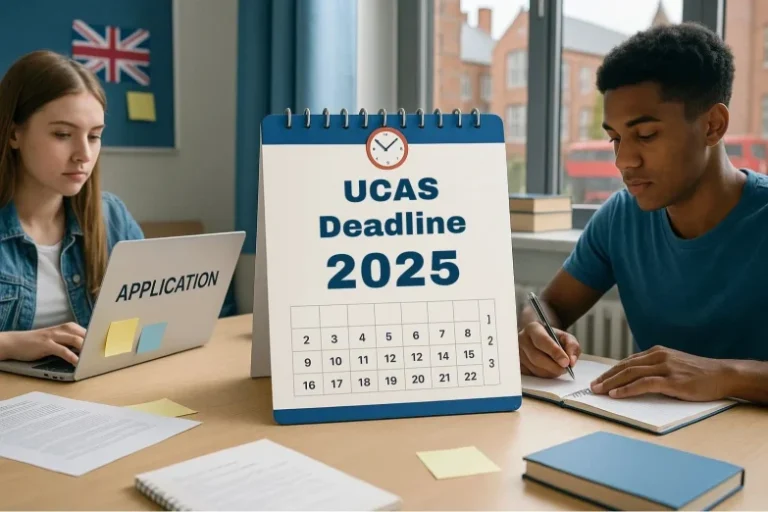
Are you someone who is going to submit their application to UK universities in 2025? Then this blog is just for you and you only. To timely submit the application, you need to understand the UCAS deadline. Missing the important dates can ruin your plan to live in UK.

The Universities and Colleges Admissions Service, or UCAS, is strictly timetable driven and controls the entire UK applications process for universities. As an expat, these deadlines can appear intimidating when you also need to consider fulfilling deadlines for your own country of residence education system.

That’s why this blog revolves around the important deadlines, key dates regarding UCAS 2025 deadline and other important aspects of UCAS application as well. After all, it is Uninist’s duty to help as many students as they can in the UK and we take our job very seriously, from finding suitable student accommodation in UK to providing guidance on UCAS deadlines, we take care of everything. So, without any more let’s jump into it right away.

What Are the Important Dates of UCAS Deadline 2025?

It is important to understand the key dates of UCAS and the deadline as well. Here are the important dates and deadlines regarding UCAS 2025:

Early Decision Dates: October 2024
15 October 2024, 18:00 in UK time. Closing of application for:

  • Oxford and Cambridge Universities.
  • Courses in Medicine, Veterinary Medicine/Science, and Dentistry in all British universities.
  • Most music courses at conservatoires.

These early deadline courses remain very competitive with acceptances of as low as 15-20% for medicine course applications and for applications for Oxbridge. If we look at the UCAS statistics, you will get to know that around 21000 students have already applied for medicine in the previous cycle.

Principal UCAS Equal Consideration Deadline (January 2025)

  • 15 January 2025, 18:00 according to the UK time: Equal consideration deadline for most undergraduate courses.

This is the key deadline that is used in most of the undergraduate programs. Those applications that are submitted by that time are guaranteed equal attention by the universities, particularly for such competitive programs that fill quickly.

Other UCAS Important Deadlines

  • 25 February 2025: The UCAS Extra opens for students who have used all five choices and who have received no offers.
  • 30 June 2025, 18:00 in UK time: Application deadline prior to Clearing starting.
  • 4th July 2025: UCAS Clearing available to eligible applicants.
  • August 2025: Results day for A-levels (date tbc.) and Clearing main action commences.
  • September 2025: Final deadline for 2025 application.

UCAS Application Timeline Understanding: Month-by-Month Breakdown

UCASs additional assistance in planning your process of application, following is a month-to-month in-depth timeline of all that you need to achieve before these deadlines:

September to October 2024

  • Being your UCAS application.
  • Research the universities and degrees well.
  • Organize campus visits and participate in open days.
  • Start writing your personal statement.
  • Request academic references.

PRIORITY TASK: By 15 October, make applications for Oxford, Cambridge, medicine, veterinary science, and dentistry.

November to December 2024

  • Full course select for typical applications.
  • Finish and proofread your personal statement.
  • Secure your academic references.
  • See all necessary admissions exams.
  • Prepare for possible interviews (particularly for candidates who submitted their applications by the October deadline).
  • Begins to seek placement opportunities as Uninist is providing.

Early January 2025

  • Check your application carefully prior to submission.
  • Verify all personal information, qualifications, and course selections.
  • Apply by the deadline of 15 January.

PRIORITY TASK: Make sure that your application is submitted before 15 January.

February to May 2025

  • Go for university interviews and assessment days.
  • Receive offers from your desired universities.
  • Compare deals and visit university offer holder days.
  • Apply for student finance and scholarships.

PRIORITY TASK: Accept offers by personal deadline in UCAS applications.

June-August 2025

  • Retrieve exam results.
  • Activate your seat if you qualified for offer terms.
  • Enter Clearing if applicable.
  • Full Accommodation Preparation.
  • Make sure to meet all the pre-enrollment requirement of your university.

What are the Course-Specific UCAS Deadlines?

It is not necessary that all the courses follow the usual UCAS application cycle. You need to take note of the following course deadlines:

  • For Medicine the deadline is 15 October 2024.
  • The Dentistry deadline is 15 October 2024.
  • Veterinary Medicine is due 15 October 2024.
  • Nursing and Midwifery standard deadline is 15 January 2025.
  • Allied Health Professions deadline is 15th January 2025 deadline.

Art and Design Classes

There are some art and design programs that run with a later deadline through Route B applications:

  • 24 March 2025: Some art and design course equal consideration dates.
  • Always check with individual institutions as some still use the January deadline.

Conservatories of Music

  • Most conservatoire applications use the UCAS Conservatoires application system.
  • Application due date typically corresponds with the 15 October early due date.
  • Conservatoires may have varying dates of audition deadlines.

UCAS Deadline 2025 for International Students

If you are an international student then you should put some extra effort into your UCAS application. Here are some things you should keep in mind:

Visa Processing Timescales

  • Application for student visa normally requires about 3-4 weeks for processing.
  • You must have a Confirmation of Acceptance for Studies (CAS) from your college prior to applying.
  • Apply for your visa at least 3 months prior to your course commencement date.

Qualification Equivalency

  • Research comparably your qualifications to UK requirements beforehand.
  • Other universities also ask for extra tests or proof.
  • Use of NARIC for comparison of qualifications service.

Application Advice for International Students

  • Begin your application process 1-2 months prior to domestic students
  • Arrange for translation of formal papers when necessary.
  • Find out if your potential universities’ foreign students’ deadlines are earlier than yours.
  • Start your search for national scholarships early.

What to do if You’ve Missed a UCAS Deadline?

Missing your UCAS deadline is not very ideal, but there is still some chance. Here are some points you should know:

After the October Deadline

  • You can still make applications for the majority of courses by January deadline.
  • But you would not be eligible for Oxbridge or most medical qualifications until the following cycle.

After the January Equal Consideration Deadline

  • Universities still take you in if they still have slots open.
  • Your application shall, in turn, be processed in a first-come, first-served fashion.
  • Research the universities and programs that still offer openings.

After the June Deadline

  • You’ll also get Clearing access automatically.
  • Clearing starts from early July up until October.
  • There are still opportunities at lots of top universities in Clearing.

As the UCAS figures showed, over 73,000 students secured university positions in clearing in the recent cycle, demonstrating it can be an effective means of entering university.

How to Boost Your UK University Acceptance Odds?

Apart from meeting deadlines, these strategic hints shall make your UCAS application more robust:

Personal Statement Excellence

  • Emphasize illustrating your love for the topic.
  • Emphasis on relevant experience and skill.
  • Show how you’ve surpassed your curriculum.
  • Use concrete examples instead of blanket statements.
  • Proofread thoroughly and ask instructors for responses.

Academic Reference Help

  • Inform your referee of your course choice at university.
  • Share them information about your achievements and activities outside of class.
  • Give them enough time so they can write a thoughtful review.

Interview Prep

  • Research common test questions for your course.
  • Practice with practical interviews.
  • Develop diplomatic and insightful questions to pose to interviewer.

Student Accommodation Considerations While Meeting UCAS Deadlines

Worrying about your application is very normal, but don’t forget to divert from another important factor which is student housing. Here are a few points you should know.

Major Accommodations Timeline

  • January-March 2025: Subject selection.
  • April-May 2025: University halls of residence application (dates vary with institution).
  • June-July 2025: Look into Uninist, an off-campus and flexible student accommodation in UK, in case university halls sell out.

Choosing the Appropriate Student Accommodations

When researching accommodation options, consider:

  • Location: Campus access and facilities.
  • Budget: The max amount you are willing to spend and whether it includes bills and extra charges or not.
  • Facilities: which facilities/amenities are included or not like gym, laundry, etc.
  • Length of Contract: Duration of contract like one academic year or full-yearly contract.
  • Safety Features: Controlled access, CCTV, patrol by staff.

Online portals like Uninist offer accredited student accommodations in many regions of the UK, including-affordably-priced shared residences and luxurious studio flats that cater to students of all requirements and tastes.

Your UCAS Applicant Success Plan

If you are prepared in advance then the chances of error decreases. So, it is important to know the timetable.

Key takeaways:

  • This early deadline (15 October 2024) is relevant for Oxbridge, medicine, dental, and veterinary applications.
  • The key equal consideration deadline (15 January 2025) is for most bachelor degrees.
  • International students must plan earlier still in order to fit in visa proceedings.
  • Missed deadlines aren’t ideal but there are options, such as UCAS Extra and Clearing.
  • Make early planning for your placement terms to achieve the best living conditions.

Conclusion

The best way to beat the competition is to be prepared in advance and UCAS application is like a competition. If you miss the deadline then you have to wait one complete year which can mess up your career planning. We covered everything in this blog, from UCAS deadline to how to book accommodation. Just don’t forget to complete your application before the deadline.

FAQ

Can I apply to UCAS if I miss the deadline?

If you fail to timely submit your UCAS application then don’t worry, things have gotten tough but it is not the end. You can still apply after the October deadline, January equal consideration deadline, and the June deadline. But the later you submit, the chances of not getting a spot increases.

Why is submitting the UCAS before the deadline important?

It’s very obvious that filling out the application form before the deadline is important. If you miss the deadline you will not be able to apply again and even if you can apply your chances of getting into the college decreases.

If I miss the first deadline of UCAS application and fill my form before the second deadline will I get a spot?

This depends on the course, university, and availability of the seat. You can get a spot even if you miss the first deadline if the course or university has some spot available. But it is not 100% sure, so it is important to fill the application before the deadline.

Why do UK visas get rejected? Your Exclusive Guide 2026

Are you visiting the almighty UK for tourist or study purposes? No matter what your reason is to come here, getting a UK visa is the first step of the journey. However, the application process can be scary at times, and the truth is that many people who apply for a visa are turned down for a variety of reasons. Knowing why UK visa applications are turned down and how to avoid common mistakes will help you secure your visa.

In this blog, we are going to discuss the reasons why the UK visas get rejected and how you can make your application better if you have faced the UK visa rejection once. Uninist makes sure to help as many students as we can and that is why we come with topics like these. From dealing with UK visa rejection to helping students find suitable student accommodation, leave it to us. So, let’s start this insightful blog.

What is a Visa for UK?

A UK visa is a legal paper that lets you enter, remain in, or work in the UK. The type of visa you need depends on why you are going. Are you going to study, work, or just visit? To apply for a UK visa, you need to send in the right documents, go to interviews (if needed), and pay the fees.

Different Kinds of UK Visas

Some of the several kinds of UK visas are:

  • UK Visitor Visa (Tourist Visa): For people who want to visit the UK for tourism or to see family.
  • Student Visa (Tier 4): For people who want to go to school in the UK.
  • Work Visa: For people who want to work in the UK.
  • Business Visa: For people who want to start a business, investors, and entrepreneurs.
  • Spouse or Family Visa: For people who want to join family members in the UK.

There are different rules and ways to apply for each sort of visa. And you should be aware of them to avoid the UK visa rejection.

You May Also Like – UK Student Visa: Checklist of Documents You’ll Need

Top Reasons for a UK Visa to be Denied

Even if you have a good cause to go to the UK, your UK student visa application still can face rejection . Here are the most typical reasons why you can face UK visa rejection:

An application form that is not filled out correctly or completely

One of the most typical causes for a UK visa rejection is an application form that is missing information or is filled out incorrectly. Sometimes when you are filling the application, you might be inconsistent which leads to being automatically rejected. Always check your application form again to make sure that all the relevant fields are filled out and that all the information is correct.

Answer:

  • Before you send in your application, read it over carefully.
  • Fill out your form on the official UK visa application website.
  • Make sure that all of your personal information matches the documents you are sending.

Not meeting financial requirements

One of the most important UK visa criteria is proof that you can pay for your own stay. Most of the time, applicants don’t show that they have enough money to pay for their living expenses, tuition, and travel. This means not only displaying bank statements, but also proof of financial support from sponsors, if it applies.

Answer:

  • To avoid UK visa rejection send in new bank statements that show the needed balance. For students in London, for example, this is normally at least £1,334 every month.
  • If someone else is paying for your trip, send them a sponsorship letter along with their financial papers.

Not having proof of ties to your home country

Visa officers need to be sure that you will go back to your native country after your trip to the UK. Your application could be turned down if you don’t prove significant ties to your home country, like a job, family, or property. This is right for those who often visit the United Kingdom as tourists or go to school there.

Answer:

  • You can show proof with letters, LOR, employment letter, and other documents that show you to be a part of the nation.
  • Also, include your travel plans such as date of return, reservations, and much more.

Not having enough supporting documents

Not sending the right documents or incomplete documentation may lead to rejection in UK visas. This could mean not having all the pages in your passport or not presenting the necessary proof of education or finances.

Answer:

  • To avoid UK visa rejection, be sure about the documentation that you have all the paperwork.
  • Make a list of all the documents you need, such as your passport, visa application form, proof of financial stability, travel schedule, and so on.
  • Look over the official UK visa rules again to make sure you have the right documentation for your visa type.

Your Journey Starts Here – Fill The Form Today!

Not enough proof of why you are visiting

If you can’t show why you want to go to the UK, your application will probably be turned down. This includes not saying why you want to go to a certain school or take a certain class, or how the trip will help you grow as a student or in your job.

Answer:

  • In your visa application, make it clear why you are going.
  • Tell students why you chose that university and subject.
  • Please include a letter from your school outlining why the training is important for your career.

Not meeting health or character requirements

People who want to get a visa must meet certain health and character standards. This means that having a medical condition that needs public health help or a criminal past could cause you to be turned down.

Answer:

  • Make sure you get the medical tests you need, such tuberculosis testing in some countries.
  • If necessary, give police clearance certificates.

A visa interview that didn’t convince them

If you have to go to an interview for your visa application, how you do can affect the decision. People may be worried if they don’t have confidence, don’t answer questions clearly, or give responses that don’t match, this can lead to your UK visa being rejected.

Answer:

  • Get ready for your UK visa interview by practicing how to answer typical questions.
  • Be honest and stick to what you say.

Paying the wrong or invalid visa fee

You have to pay your visa fees appropriately and on time. Your application will be denied if you don’t pay the fee or if there is a mistake with the payment method.

Answer:

  • Use the official methods to pay the visa fee.
  • Keep a record of the transaction as proof that you paid.

Also Read – Top 40 Interesting Facts About UK

How to Get a Visa for the UK Successful?

When you apply for a UK visa, you need to pay close attention to the details. Here is a step-by-step method to help you get your application accepted:

  • Pick the Right Type of Visa: Choose the right sort of visa based on what you want to do (travel, study, employment, etc.).
  • Fill out the Visa Application Form: Make sure to fill out the form completely and accurately.
  • Pay the fee for the visa: Make sure that the visa fee is paid in the right way.
  • Send in the necessary papers: Send in all the necessary paperwork, such as proof of income, acceptance letters, medical records, and so on.
  • Go to the Interview: If you have to, go to the interview and be ready to answer questions regarding your trip.
  • Wait for a choice: It usually takes 15 days to process a UK Visa, but this can change depending on the type of visa and where you are.

What to Do Next After Getting a UK Visa Denial?

Don’t worry if your visa is turned down. You can either appeal or apply again. Here are some things you can do:

  • Look over the letter of rejection: Know why they said no.
  • Fix the Problems: Take care with the problems that were listed in the rejection, such as sending in missing papers or making your financial proof stronger.
  • Think about reapplying: If you think you can fix the problems, you can apply for a visa again.

Conclusion

We know it is frustrating to face UK visa rejection, but that is not the end. There are still chances to improve your application by following rules, providing correct information, and addressing any possible chances of visa getting rejected. Make sure you give clear information and the reasons for your study, visit, and work.

FAQ

Can I apply again if I have already faced visa rejection from the UK once?

Yes, you can apply for the UK if you have already faced UK visa rejection once.

How can I avoid UK visa rejection?

The best ways to avoid UK visa rejection are:
1. Filling out the application form correctly.
2. Meeting the financial requirements.
3. Having proofs that tie you to your home country.
4. Giving enough supporting documents.
5. Proof of your visit.
6. Meeting the health and character requirement.
7. Giving the visa interview properly.
8. Paying the right visa fee.

Can anyone get banned from getting a UK visa?

Yes, the UK holds the power to ban someone from getting a visa.

25 Top Fast Food Restaurants in UK: Your Ultimate Guide

The UK has many food spots which are loved by students and the tourists as well. Being a famous city, the UK brings prominent universities, mouthwatering food, and endless job opportunities. And, today we have got you something different as we are going to discuss the best 25 fast food restaurants in the country. After all, Uninist not just bring student accommodation but help students as much as possible. So, presenting the top 25 fast food restaurants!

The Fish House – London

  • Best for: Fish and Chips
    For fish and chips, head to The Fish House in London. It offers golden fried fish and fries out of responsibly sourced seafood. It’s the real deal for those seeking the classic British fast food dish.
  • Why It’s Popular:
    Classic fish and chips with a twist.
    Friendly spot at the heart of London.
    Highly rated for quality seafood and polite staff.

Honest Burgers

  • Best For: Premium Burger
    Honest Burgers is a well-known UK chain, favored for homemade burgers and locally grown produce. There are lots of options to choose from at this burger joint, including the favorite Honest Burger or some more adventurous ones such as the “Henrietta” with cheese and fried onions.
  • Why It’s Popular:
    Fresh foods with a focus on sustainability.
    Good sides, including rosemary salted fries.
    London, Manchester, and other areas.

Five Guys – National

  • Best For: American-Style Fast Food
    Five Guys introduces American-style burgers to Britain by offering masses of toppings and hand-cut fries. It’s a casual environment, and you can top the burger how you want.
  • Why It’s Popular:
    Huge portions and unlimited toppings.
    Famed for its fresh, hand-cut fries.
    Excellent customer service.

Pizza Express – National

  • Best For: Italian Pizza
    A British institution, Pizza Express serves up hot-off-the-press pizzas and pasta lunches. A favourite of its thin crust pizzas, the chain has built a loyal following on the grounds of quality and consistency. It’s also appropriate for casual and group eating.
  • Why It’s Popular:
    Great food all the time and fantastic pasta lunches.
    Vegan and vegetarian choices.
    Ideal for family dinner.

Barburrito – Several Locations

  • Best For: Mexican Fast Food
    For those who enjoy Jim’s food, Pret A Manger offers a healthy and convenient alternative. Tacos, burritos, and quesadillas are made fresh to order using quality ingredients.
  • Why It’s Popular:
    Quick service and customization.
    Ideal for grabbing lunch or dinner in a rush.
    Veggie and vegan options.

Pret A Manger – Nationally

  • Best For: Healthy Fast Food
    Pret A Manger is a healthier alternative to regular fast food. With knowledge of fresh, organic ingredients, Pret soups, salads, and sandwiches are quick but healthy to eat.
  • Why It’s Popular:
    Extensive selection of healthy and organic fast food.
    Practical locations across the UK.
    Superb vegan and vegetarian options.

Shake Shack – London

  • Best For: Fast-Casual American Burger Experience
    Shake Shack’s put its mark on British fast food, doling out delicious burgers, fries, and shakes. Replicated from the original New York City Shake Shack, this spot is perfect for a spontaneous guilty pleasure dinner.
  • Why It’s Popular:
    British twist on American fast food.
    Renowned for flavorful ShackBurger and crinkle-cut fries.
    Hip, relaxed vibe.

Leon – Nationwide

  • Best For: Healthy Fast Food UK
    Leon is all about “fast food, but not as you know it.” Fresh, Mediterranean-style menus focus on fresh ingredients, and they offer everything for every dietary choice, from gluten-free to vegan.
  • Why It’s Popular:
    Healthy and fresh options for those who desire healthy fast food.
    Perfect for individuals with dietary problems.
    Found in many locations such as London and Manchester

Franco Manca – Nationwide

  • Best For: Sour dough Pizza
    Red due to its sourdough origins, Franco Manca is a pizza lover’s favorite now. Fresh vegetables and traditional methods of preparation are used while making their pizzas, hence adding a unique flavor to fast food.
  • Why It’s Popular:
    Traditional sour dough pizza prepared with vegetables in accordance with the season.
    Several UK locations.
    Vegetarian dishes available on the menu.

Dishoom – London

  • Best For: Indian Fast Food
    If you’re craving Indian street food, Dishoom is the place to go. The menu features a range of delicious options like lamb kebabs, chicken tikka, and tasty vegetarian meals. Its relaxed atmosphere is perfect for a quick but flavorful meal.
  • Why It’s Popular:
    Excellent traditional and modern Indian dishes.
    Unique dining experience with an inviting atmosphere.
    Locations in London and other major cities.

Wahaca – London

  • Best For: Mexican Street Food
    Wahaca brings vibrant Mexican flavors to Britain through delicious tacos, quesadillas, and burritos. The restaurant features authentic dishes and fresh produce.
  • Why It’s Popular:
    Delicious contemporary Mexican cuisine in a welcoming, relaxed environment.
    Vegan and vegetarian food options.
    Great cocktails and fresh margaritas.

The Real Greek – Nationwide

  • Best For: Greek Fast Food
    The Real Greek has quick, healthy, and affordable Greek food. Eat their renowned hummus, souvlaki, and grilled meats, with plenty of veggie choices.
  • Why It’s So Popular:
    Healthy Greek grub with plenty of choices.
    Veggie and vegan options.
    Cozy restaurant ambiance.

Burgers & Cocktails – London

Best For: Trendy Burger Destination
As the name indicates, Burgers & Cocktails is all about pairing gourmet burgers with perfectly crafted cocktails. The hip London restaurant has the ideal fast food experience.

  • Why It’s Popular:
    Gourmet burgers made with great ingredients.
    Great cocktail list.
    Ideal for a quick yet indulgent meal.

Busaba – London

  • Best For: Thai Fast Food
    For Thai food enthusiasts, Busaba offers a trendy but relaxed atmosphere, serving speedy Thai comfort food such as Pad Thai, green Thai curry, and excellent curries.
  • Why It’s Popular:
    Speedy Thai comfort food with fresh ingredients.
    Can hold its own when it comes to great atmosphere and service as well.
    London chain restaurants.

Pizza Hut Express – Nationally

  • Best For: Fast Pizza Delivery
    Pizza Hut Express offers quick and fine pizzas, pasta, and salads. Ideal for individuals who need to grab something without compromising on taste.
  • Why It’s Popular:
    Affordable prices for the pizzas.
    Easy locations all over the UK.
    Swift delivery services.

Yo! Sushi – Nationwide

Best For: Sushi Fast Food
Yo! Sushi is a popular fast food chain outlet offering sushi and Japanese food-inspired items for sale. Perfect for hungry individuals looking for fresh sushi, tempura, and miso soup.

Why It’s Popular:
A unique sushi dining experience.
Healthy quick service.
Retail outlets across key UK cities.

Taco Bell – Nationwide

  • Perfect For: Mexican Fast Food
    Taco Bell is a quick-food favorite of UK customers who love Mexican food. From tacos to burritos, something is available at this restaurant for inexpensive, fast meals.
  • Why It’s Popular:
    Fast Mexican-flavored food.
    Custom orders.
    Vegetarian meals.

Zizzi – Nationwide

  • Best For: Italian Fast Food
    To offer an Italian-themed quick meal, Zizzi has a variety of pizzas, pasta, and salads. The atmosphere is cozy and warm, perfect for casual dining.
  • Why It’s Popular:
    Yummy Italian cuisine at budget price.
    Warm ambiance.
    Vegan and vegetarian meals.

Greggs – UK

  • Best For: Bakery Fast Food
    A popular British bakery chain, Greggs offers diverse baked foods, sandwiches, and salads. It’s renowned for its sausage rolls and freshly made sandwiches.
  • Why It’s Popular:
    Value-for-money, freshly made food.
    Perfect for a quick lunch or breakfast.
    Favorite due to its veggie options.

The Chicken Shop – London

  • Best For: Chicken Options
    Chicken Shop offers finger-licking, easy fried chicken, which is great for a quick delicious meal. The fries and coleslaw are the sides that complete the meal.
  • Why It’s Popular:
    Easy delicious fried chicken.
    Affordable prices.
    Perfect for a quick on-the-go meal.

Franco Manca – UK

  • Best For: Sourdough Pizza
    A UK fast food element, Franco Manca offers sourdough pizzas with delicious pizzas that have quirky toppings.
  • Why It’s Popular:
    Real sourdough pizza with fresh toppings.
    Delicious and cheap.
    Great for a quick pizza fix.

Leon – Throughout the UK

  • Best For: Healthy Food UK
    Healthy food hunters in need of healthy fast food, Leon delivers healthy food with a Mediterranean touch. The options include a range of salads, wraps, and hot pots.
  • Why It’s Popular:
    Healthy fast food choices.
    Organic food and Mediterranean flavors.
    Vegetarian and vegan friendly.

Nando’s – Throughout the UK

  • Best For: Peri-Peri Chicken
    Nando’s flame-grilled peri-peri chicken and innovative fast food eating experience. Treat yourself to the range. Savor the array of chicken deals, like wraps, burgers, and platters.
  • Why It’s Popular:
    Delicious peri-peri chicken with heat adjustment.
    Awesome sides and dips.
    Experience the eatery fun.

Boparan Restaurant Group – Nationwide

  • Best For: Traditional Fast Food
    Serving up great comfort food and fried chicken, Boparan Restaurant Group is renowned for speedy service and delicious fried food.
  • Why It’s Popular:
    Best fried chicken and comfort food.
    Affordable prices.
    Fast, casual meals.

Pizza Pilgrims – London

  • Best For: Artisan Pizza
    Pizza Pilgrims provides first-class, authentic Italian pizza with an innovative twist. The pizzas are baked in wood-fired ovens, that additional crispy crust.
  • Why It’s Popular:
    First-class, authentic pizza.
    Wood-fired to produce a crunchier crust.
    London favorite for quick meals.

Conclusion

There are numerous fast food outlets to be found all over the UK with something to cater for everyone, from a healthy meal through to comforting food, international food, and more. From good old-fashioned fish and chips through to Michelin-starred restaurants and burger eateries, the restaurant scene in the UK is an ever-changing, multicultural one. Browse these top fast food outlets and enjoy a quick, tasty meal, wherever you find yourself in UK.

FAQ

Why are Nandos so popular?

Nandos has gained popularity in the UK because of their delicious peri-peri chicken, top notch service, and immaculate vibes.

Which is a good pizza spot in the UK that students can try?

Good pizza spots in the UK which students should try are pizza pilgrims, pizza express, pizza hut express, and many other famous spots like dominos.

Top 10 Hardest University Degrees in UK

Are you considering your university options and wondering which UK degrees will truly challenge you? Selecting from the hardest university degrees in UK requires careful consideration of your academic strengths, career goals, and readiness for intensive study.

In this blog, we are going to discuss the degrees which are hardest to get in and also tell you why certain degrees are more challenging than others. This is what Uninist does for students in UK, from finding suitable student accommodation to discussing top 10 hardest degrees, we cover it all! So, without any more delay, let’s get right into it.

Why Certain UK Degrees are More Challenging than Others?

Entering our top 10 hardest university degrees in UK countdown without having some notion why some courses are tougher than others would be useful:

  • Contact Hours: Some courses require 25+ hours per week in lecture contact, laboratories, and seminars.
  • Independent Study: A study argues that rigorous courses entail 30+ hours per week devoted to independent study.
  • Method of Assessment: Programmes that involve regular tests, practical tests, and projects instill depth.
  • Conceptual Difficulty: Abstract thinking and advanced problem-solving define several demanding degrees.
  • Failure Levels: As per HESA (Higher Education Statistics Agency), some subjects tend to demonstrate greater levels of non-completion consistently.

In these reflections, it will now prove useful to look at the highest academically demanding degree courses from UK university system.

Which are the 10 Most Challenging University Degrees in UK

Medicine (MBBS)

Medicine is never one of the easiest courses at university in UK, combining advanced scientific knowledge with learning practical skills in the clinic.

Why It’s Hard:

  • 5-6 year program with about 25-30 contact hours per week.
  • Includes in-depth coverage of anatomy, physiology, and pharmacology.
  • Includes rotations through clerkships with variable hours.
  • Includes high-stakes OSCE (Objective Structured Clinical Examination) tests.
  • According to General Medical Council, average drop out rate is nearly 3.8%.

Study Requirements:

  • Normally requires AAA at A-Level, together with Chemistry and Biology.
  • UCAT or BMAT entrance test.
  • Long interview process.

The British Medical Association reports that students spend roughly 60-70 hours per week studying in joint fashion and through clinical practice.

Architecture (BA/BSc + M.Arch)

It is one of UK’s most time-consuming degree courses and entails creative and technical expertise.

Why It’s Hard:

  • 7-year qualification route (3+2 years and professional experience).
  • Studio-based learning with 35+ weekly hours.
  • Annual reviews and critiques of portfolio.
  • Incorporation of artful design with fundamental laws of engineering.
  • According to RIBA (Royal Institute of British Architects), students spend roughly £1,000 per annum on materials alone.

Notable Coursework:

  • Architectural design studios.
  • Structural engineering principles.
  • Construction technology and materials science.
  • Urban planning and environmental studies.

The Architects Registration Board also observes that about 20% of students studying architecture drop courses after one’s first year.

Chemical Engineering (M.Eng)

Chemical Engineering requires advanced mathematics, chemistry, and process design and is therefore one of the most academically rigorous University Degrees in UK.

Why It’s Hard:

  • Strong mathematical and scientific background.
  • Laboratory practice along with theory studies.
  • 20-25 contact hours per week + lengthy independent learning.
  • Challenging design projects from multiple disciplines.
  • Engineering Council statistics reveal a 12% rate of non-completion.

Main Study Topics:

  • Process thermodynamics and fluid mechanics.
  • Reaction engineering and separation techniques.
  • Designing plants and fine-tuning process.
  • Safety and environmental regulations.

Chemical engineers at Imperial College London are reported to spend up to 20 hours per week in laboratories.

Veterinary Science (B.VSc/BV.MS)

Veterinary Science requires proficiency in more than one species’ anatomy, physiology, and disease therapy.

Why It’s Hard:

  • 5-year program with intense practical exposure.
  • Comprehensive coverage of various animal species and their unique physiologies.
  • Clinical rotations with weekend and night responsibilities.
  • High practical assessment standards.
  • Statistics from Royal College of Veterinary Surgeons reflect near 90-95% pass rates despite the intensity.

Study Components:

  • Animal handling and restraint techniques.
  • Operative ability in certain species.
  • Pharmacology and therapy management.
  • Preventative medicine and public health.

Glasgow University Veterinary School notes that students undertake more than 38 weeks of clinical placements throughout their degree.

Physics (BSc/M.Phys)

UK undergraduate physics degrees are famous for mathematical rigour and conceptual fine-tuning.

Why It’s Hard:

  • Higher math such as differential equations and linear algebra.
  • Abstract theoretical ideas needing good visualizing skill.
  • Lab work and data analysis diligently.
  • Approx. 18-22 contact hours per week with comprehensive problem sets.
  • Institute of Physics statistics show a 15% per capita drop out rate.

Core Subject Areas:

  • Particle physics and quantum mechanics.
  • Electromagnetism and thereof.
  • Relativity and cosmology.
  • Computational physics and modeling.

Manchester university physics students report they work 25 more hours per week on problem sets.

Law (LLB)

Law degrees require strong memory, analytic ability, and communicative skill.

Why It’s Hard:

  • In-Depth Case Law Reading (Approx. 50+ cases per module).
  • Technical terms and doctrines of law.
  • Critical thinking and constructing argumentation.
  • 10-15 contact hours with more than 30 hours of self-study reading.
  • Law Society statistics record a 7% rate of non-completion.

Major Assessment Tools:

  • Problem questions needing law principles application.
  • Moot cases and mock court proceedings.
  • Legal research projects.
  • Closed book test on recalling statute and precedents.
  • Oxford University Law Faculty indicates that their students read about 50-60 pages per day of highly dense legal text.

Mathematics (BSc/M.Math)

Mathematics courses demand advanced abstract thinking and problem-solving ability.

Why It’s Hard:

  • Incremental difficulty with each year on top of previous knowledge.
  • Non-abstract concepts that engage visual and logical thinking.
  • Proof-based learning through rigorous logical thinking.
  • Approx. 15-18 contact hours with numerous proficiency demonstrations.
  • In this context, from the London Mathematics Society, roughly 10% of students change courses in the beginning years.

Intermediate Topics Covered:

  • Correctness
  • Abstract algebra and number theory.
  • Real and complex analysis.
  • Topology and differential geometry.
  • Probability theory and statistics.

Cambridge Mathematics Tripos is said to be one amongst the hardest undergraduate mathematics courses globally.

Dentistry (BDS)

Dentistry involves knowledge regarding medicine as well as subtle movements and practical precision.

Why It’s Challenging:

  • 5-year program with early exposure to practice.
  • Needs to refine fine motor skill along with theory knowledge.
  • Approx. 25-30 contact hours per week.
  • Theory tests and practical examination.
  • General Dental Council has a 4% rate of dropouts.

Practical Requirements:

  • Preclinical simulation instruction on dental manikins.
  • Preparation for crown and bridge cases.
  • Oral surgical procedures.
  • Patient care and communication skills.

Students at King’s College London Dental Institute get close to 1,500 hours of clinical experience when they graduate.

Electrical and Electronic Engineering (M.Eng)

Electrical Engineering combines abstract theoretical electromagnetics with practical programming and circuit design.

Why It’s Hard

Unification of physics, mathematics, and computer science.
Lab exercises with attention to precision and problem-solving skills.
20-25 contact hours with time spent on projects outside.
Assign group design projects with practical applications.
Statistics from the Engineering Council reflect a median 11% non-completion rate.

Detailed Topics Covered:

  • Analog and Digital Circuit Design.
  • Signal processing and control systems.
  • Electromagnetic Field Theory.
  • Power plants and transmission networks.

Southampton university students studying engineering spend nearly 15 hours per week in well-specialized laboratories.

Pharmacy (M.Pharm)

Pharmaceutical courses entail advanced scientific knowledge coupled with ethical and clinical knowledge.

Why It’s Hard:

  • 4-year integrated masters program.
  • Pharmaceutical chemistry, pharmacology, and coverage for patient care.
  • Approx. 20-25 contact hours with lab sections.
  • Pivotal tests and dispensing tests.
  • General Pharmaceutical Council reports 6% drop out rate.

Study Components:

Medicinal chemistry and drug formulation.
Pharmacology and toxicology.
Clinical pharmacy practice.
Pharmacy law and ethics.

University College London School of Pharmacy students achieve an average of 600 hours of placement experience throughout their degree.

How to Pass Challenging University Degrees in UK Courses?

If one such strenuous degree is something that appeals to you, it would behoove you to include these measures:

Build Good Study Habits: Adopt regular study habits and accept active learning practices.
Build Support Networks: Establish study groups and keep in touch with tutors.
Master Time Management: Make use of online planning tools to juggle academic and personal responsibilities.
Take Advantage of University Resources: Make use of tutoring and academic support services.
Incorporate Self-Care: A British Journal of Educational Psychology study finds out that students with physical exercise regimes are top-achievers in studies.

Conclusion

Getting into a difficult subject or a subject which demands high academics is very tough, but not difficult and with the right approach. A degree or program which has a high applicant rate and requires high academic knowledge will always be tough to get in. So, you have to prepare in a way that you are competing with thousands of students who want the same course as you and you have to defeat them.

FAQ

Which degrees have a high applicant rate?

Degrees which have a high applicant rate are:
1.
Medicine (MBBS)
2. Law (LLB)
3. Dentistry (BDS)
4. Pharmacy (MPharm)
5. MBA
6. MIM
7. Engineering

What is BDS in medicine?

BDS stands for Bachelor of Dental Surgery, an undergraduate professional degree program that prepares students to become dentists by teaching them the diagnosis, prevention, and treatment of oral diseases.

We Would Love To Help You

Our accommodation expert will contact you at the earliest

By proceeding you agree to our T&C and Privacy Policy