

Home Blog Page 47

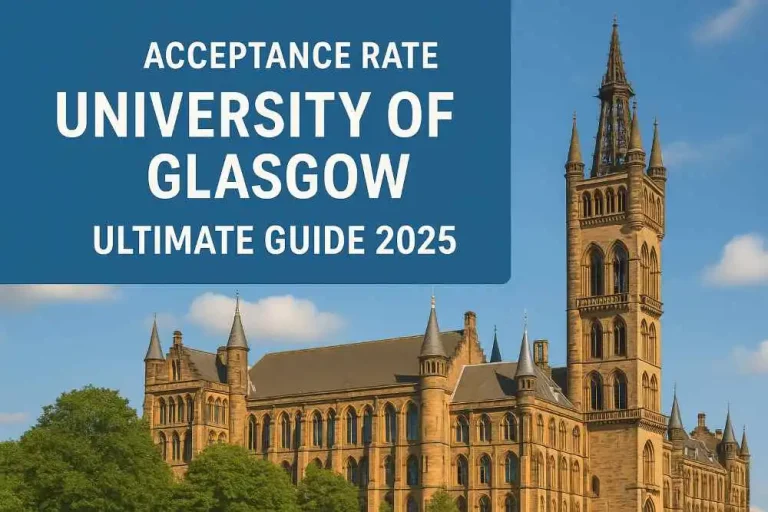
Acceptance rate University of Glasgow: Ultimate Guide 2025

Dreaming of studying at one of the world’s most prestigious universities? The University of Glasgow, with its stunning architecture and rich academic heritage, attracts thousands of ambitious students from around the globe each year. If you’re considering applying, you’re probably wondering about your chances of getting in. Let’s break down everything you need to know about acceptance rates and the admissions process.

The Real Story Behind Glasgow’s Acceptance Rates

The University of Glasgow acceptance rate varies depending on the program you apply to. For example, the University of Glasgow law acceptance rate tends to be more competitive than some other courses. Overall, the glasgow uni acceptance rate for international students is slightly lower than for domestic applicants, due to additional language and academic requirements. If you’re wondering about the uni of glasgow acceptance rate for your desired course, it’s always a good idea to check the university’s official admissions pages or contact the admissions team for the most current data.

For undergraduates, competition is particularly fierce, with acceptance rates typically ranging from 55-65%. If you’re looking at postgraduate programs, you might have slightly better odds, with acceptance rates between 75-85%. For international students specifically, the acceptance rate typically hovers around 60-70%, reflecting the additional requirements like English proficiency tests and visa regulations.

Why Glasgow Stands Out for International Students?

What makes thousands of international students choose Glasgow each year? First off, let’s talk rankings – the university sits at an impressive 81st place in the QS World University Rankings 2024. But rankings only tell part of the story.

Imagine walking into a classroom where your classmates come from over 140 different countries. That’s the kind of diverse, vibrant community you’ll find at Glasgow. With more than 600 programs across various fields, you’re bound to find a course that matches your interests and career goals.

University of Glasgow Acceptance Rates for International Students

For international students, the University of Glasgow acceptance rate reflects both the university’s high standards and the diverse applicant pool. On average, the university of glasgow acceptance rate international students ranges between 60-70%, but this varies by course. Competitive programs like law have a lower acceptance rate, requiring stronger academic credentials and English proficiency. Despite this, Glasgow offers many support services to help international students meet these requirements and succeed.

What Really Matters in Your Application?

Getting into Glasgow isn’t just about having good grades (though they certainly help!).

Here’s what the admissions team really looks at:

Your academic record needs to speak for itself. For undergraduate programs, you’ll typically need strong A-levels or equivalent qualifications from your country. If you’re applying for a postgraduate program, aim for at least a 2:1 in your bachelor’s degree.

English language skills are non-negotiable. You’ll need to prove your proficiency through tests like IELTS (minimum 6.5 overall) or TOEFL iBT (minimum 90). But don’t just aim for the minimum – stronger English skills will help you thrive once you’re there.

If you’re aiming for a law degree, keep in mind that the University of Glasgow law acceptance rate is more selective, so demonstrating strong academic performance and relevant experience is crucial.

Your Statement of Purpose can make or break your application. This is your chance to show who you are beyond the grades. The admissions team wants to understand your passion for your chosen field and why Glasgow is the right fit for you.

Making Your Application Stand Out

The application process might seem daunting, but breaking it down makes it manageable. Start by thoroughly researching your chosen program on Glasgow’s website. Make sure you understand the specific requirements – they can vary significantly between courses.

For undergraduate applications, you’ll apply through UCAS. Postgraduate applicants can apply directly through the university’s website. Either way, give yourself plenty of time – rushing your application is a common mistake that’s easily avoided.

Important Dates to Remember

Mark these dates in red on your calendar:

  • Undergraduate UCAS applications close on January 15, 2025.
  • Postgraduate programs have rolling admissions but apply at least 6 months before your program starts.
  • Scholarship deadlines vary, so check specific opportunities early.

Making It Affordable: Scholarships and Support

Don’t let finances hold you back. Glasgow offers several scholarship opportunities for international students:

The International Leadership Scholarship offers £10,000 to exceptional students showing leadership potential. If you’re from a Commonwealth country, look into the Commonwealth Shared Scholarship – it covers all your costs. The Postgraduate Talent Scholarship (£5,000) rewards academic excellence.

Life Beyond the Classroom

Your university experience extends far beyond lectures and seminars. Glasgow offers various accommodation options, from the affordable Murano Street Student Village to the modern Kelvinhaugh Residences. Expect to pay between £500 and £700 monthly for housing.

The campus itself is a blend of historic architecture and modern facilities. You’ll have access to libraries housing over 2.5 million books, state-of-the-art sports facilities, and more than 300 student societies. This rich campus life helps create the full Glasgow experience that students remember long after graduation.

Remember, getting into Glasgow is about more than just meeting the minimum requirements. It’s about showing that you’re ready to contribute to and benefit from this diverse, academically rigorous environment. Start your preparation early, put your best foot forward, and you might just find yourself walking through the historic gates of one of Britain’s most prestigious universities next year.

FAQs

  1. What is the overall acceptance rate at the University of Glasgow?

    The University of Glasgow has an overall acceptance rate of approximately 74.3%, indicating that about 74 out of every 100 applicants are admitted.

  2. Is the acceptance rate different for undergraduate and postgraduate programs?

    Yes, the acceptance rate varies: undergraduate programs have an acceptance rate of around 70%, while postgraduate programs have an acceptance rate of approximately 52%.

  3. Which postgraduate programs have the highest acceptance rates?

    Programs such as MSc Veterinary (89%), MSc Psychology (79%), and MSc History (73%) have higher acceptance rates.

  4. Which postgraduate programs have the lowest acceptance rates?

    Programs like the MBA (28%), MSc Economics, Banking, and Finance (44%), and MSc Chemistry (45%) have lower acceptance rates, indicating higher selectivity.

  5. How competitive is admission to the University of Glasgow?

    While the university has a moderately high acceptance rate, admission can be competitive, especially for certain programs. Strong academic performance and a well-rounded application are essential.

  6. Does the acceptance rate differ for international students?

    The rates for international students is similar to the overall rate, but specific requirements and competitiveness can vary by program.

  7. What factors influence the acceptance rate for different programs?

    Factors include the number of applicants, program capacity, and the academic qualifications of applicants. Programs with limited seats or higher entry requirements tend to have lower acceptance rates.

  8. Has the acceptance rate at the University of Glasgow changed over time?

    Rates can fluctuate yearly based on application volume and university admission policies. Recent data suggests a moderately selective admission process.

  9. What are the minimum academic requirements for admission?

    Undergraduate applicants typically need a minimum of 75% in their high school studies, while postgraduate applicants should have at least a 60-75% average in their undergraduate degree, though requirements can vary by program.

  10. How can prospective students improve their chances of admission?

    Prospective students should maintain strong academic records, meet or exceed program-specific requirements, submit compelling personal statements, and provide strong letters of recommendation.


Hybrid Learning Models: Balancing Online and In-Person Classes Abroad

International education is redefining the traditional means of education. Be it education or student accommodation, studying abroad is not what it used to be. As we already know the education industry is evolving by the day and hybrid learning models have become a key part of it. With hybrid learning models becoming popular, students find peace between virtual and physical classrooms. 

This balance focuses on reshaping the way we think about academics while offering new advantages as well as challenges. These models are gaining popularity for their flexibility and accessibility, and they cater to different learning styles. Our blog will help you understand every aspect of hybrid learning models while studying abroad. Let’s explore the benefits, challenges and key considerations of hybrid learning models. 

Understanding Hybrid Learning for International Students

Hybrid learning, a.k.a blended learning, is an educational approach to blend online and in-person components. This unique opportunity allows several students to experience social, cultural and educational aspects while being flexible. This learning model includes pre-recorded classes, online exercises, live demonstrations and more. Moreover, hybrid learning has enabled students, especially international students, to choose learning from the comfort of their student rooms. As a result, this ensures education is more accessible and fun. 

Key Features of Hybrid Learning

Hybrid learning presents a unique opportunity to learn with ease. Some of the key features of hybrid learning include:

  • Enhances Flexibility: Be it domestic or international students, you can have easy access to study materials and assignments at your convenience. Plus, you can manage your schedule effectively, offering flexibility to balance academics and part-time work.
  • More Accessibility: While being flexible, has turned a new page of accessibility as well. Through online or pre-recorded classes, students can have access to material anytime they want. For instance, if you work part-time and miss a live session, you can simply revisit the portal to have access to pre-recorded lectures. Thus, you can create a pattern of learning as per your requirements. 
  • Interactive Learning: While hybrid learning offers a balance between online and in-person classes, you can have access to various interactive tools. For instance, you can explore video lectures, discussion forums, and virtual labs to enhance your learning experience. 
  • Cost-Effective: One of the most important features of hybrid learning is cost-effectiveness. Students living in off-campus student housing can avoid frequent campus visits and learn from their comfort. 

Challenges International Students Face in Hybrid Learning Model

While it learning hybrid has several advantages, it also presents certain challenges, especially for students studying abroad. Some of the challenges are:

  • Limited In-Person Interaction: With hybrid learning, you might face fewer face-to-face interactions with faculty and peers. International students might feel isolated in their student apartments and not be able to experience cultural exchange.   
  • Connectivity: Reliable internet and connectivity is essential when it comes to hybrid learning. So, if you find yourself in a position where the internet is not available, it can put you in a position. Moreover, make sure to find student housing in an area where internet connectivity is good. 
  • Time Zone Management: International students studying from their home country might face difficulties attending live sessions due to different time zones. These time zone differences can lead to exhaustion and disrupt sleep schedules. 
  • Self-motivation: When you get out of your student accommodation and interact with people, you remain active. However, with hybrid learning, students often get lethargic and less self-motivated. Hence, it is necessary to tackle this by being active and managing time well to avoid feeling overwhelmed. 
  • Less Access to Campus Resources: University life is altogether another kind of experience every student should experience. However, with hybrid learning, you might have less access to campus resources like libraries, mental health support and more. This detachment can make you feel various emotions which can’t be good during your academic life. 

How to Offer an Effective Hybrid Learning Model?

To offer a space and build a successful and effective learning model, universities need to address every challenge for international students. Some of the key considerations that can enhance these models are as follows:

  • Flexible Scheduling and Time Zone Considerations: Universities offering hybrid learning models should make sure that they design the program with all learning elements. With flexible scheduling and considering time zone differences, your learning model should include recorded lectures, flexible submission deadlines and more. In addition, institutions should have different virtual office hours to offer better support for students. 
  • Customized Peer Support: To address the different requirements of students, universities can focus on offering personalized peer support. For instance, remote academic counselors, mental health experts and career counseling services. As a result, many students can have access to virtual support from their student accommodation itself. 
  • Online Student Community: One student can understand what another student is going through. In short, universities should ensure to build a space online for students to open up and communicate well with their peers. Virtual groups, online study groups and virtual social events can be a few ways to engage students online. 

Future of Hybrid Learning Models

As hybrid learning is gaining immense popularity, this is likely to become a staple for international students. To realize its full potential, universities abroad should focus on innovating and improving their learning approaches. Starting from flexible schedules to creating digital resource platforms, these models can meet every requirement. 

In the near future, you can also expect digital advancements in hybrid learning models with AI and VR integration. For instance, with VR, a history student can take a virtual tour of iconic landmarks. 
Simply put, hybrid learning models are on their way to a transformative approach in international education. With flexible classes, online submissions and time-zone management, students can earn a degree from the comfort of their student accommodation.

Why is Birmingham the Perfect City for International Students?

Spending some of the most crucial years of your student life should be in a city that speaks for it. From student accommodation to social life, you must experience everything. When we think of international education, the UK has always been the top priority. However, if you get a chance to choose a city in the UK, which one would you go for? Have you considered Birmingham for higher education? 

Luckily, if you are exploring the UK for further studies, we are here to answer all your questions. Be it top-quality education, diverse cultures, or endless career opportunities, this city is all about giving the best to students. Besides education, there are other reasons why Birmingham is the perfect city for international students. Let’s explore the top reasons and know why you should definitely plan your life in UK. 

About Birmingham

You won’t believe it, as the second-largest, Birmingham has everything to offer. You name it, this city has it for you. This city offers a perfect blend of learning, living, and leisure. Speaking of the wonders of the 18th century, you will find yourself between England’s West Midlands region. 

With its convenient location and great connectivity, you can experience a subtle yet convenient life. In addition, this city offers affordable living, modern & flexible student accommodation, and a lively lifestyle. In short, there is no leaf unturned when in this city. 

Top Reasons Why Birmingham is the Perfect City

Studying abroad is a perfect opportunity to live a life on your own terms. As perfect as it sounds, there are plenty of reasons to shift to Birmingham. Some of the top reasons to choose this city as an international student include:

World-Class Education 

The United Kingdom, especially Birmingham, is home to some of the top-rated universities, including the University of Birmingham, Aston University, etc. Every university offers a wide array of programs across various disciplines. In short, as an international student, you can explore courses from all academic interests, suiting your needs. Along with diverse courses, each institution also has top-notch faculty and research centers, fostering an amazing academic environment. 

Live in Affordable Student Accommodation in Birmingham

After finalizing college, the next step is to find an affordable place to live in the city. Compared to other cities in the UK, Birmingham offers both long-term and short-term student accommodation. You can expect to find various kinds of student apartments. Whether you prefer a vibrant city vibe or quieter countryside, Birmingham has it for you.

Types of Student Housing in Birmingham

  • University student halls: Ideal for first-year students as it offers convenience and opportunity to explore the city. 
  • Private Student Rooms: There are plenty of student accommodation providers offering private and fully furnished rooms with modern amenities. As a result, this kind of housing is ideal for students looking for independence. 
  • Shared Houses or Homestays: Students who prefer to live in a group can opt for this option and can also save money. 

Thriving Career Prospects

Over the years, Birmingham has transformed itself into a hub for business and industry. With its strong economy, you can explore multiple opportunities in companies like PwC, HSBC and more. Not only big companies & MNCs but other industries like tourism, finance and more are evolving rapidly. Plus, you can explore part-time as well as remote working options as companies prefer young professionals. 

Diverse Yet Inclusive Environment  

Every year thousands of students come to Birmingham from across the world. Being famous as the most multicultural city in the UK, everyone celebrates diversity. International students can quickly feel at home, thanks to many student communities and the city’s welcoming atmosphere. Besides this, you will also be able to explore international food markets, cultural festivals and more. 

Dive into the Quirky and Vibrant Lifestyle

Top-notch academics, many career opportunities and flexible student accommodation in Birmingham are enough. This city not only offers great things but also a vibrant lifestyle. International students can simply take advantage of almost everything. 

Besides this, the student community also tries to create an atmosphere where one can adapt well to the lifestyle. Birmingham also doesn’t disappoint when it comes to nightlife and rich cultural scenes. Areas like Broad Street and the Jewellery Quarter are quite famous for pubs, music venues and more. 

Well-Connected Transportation Network

Another significant reason to prefer Birmingham is the public transportation system. With well-connected network lines, you can easily commute anywhere in the UK. Students who love to travel can explore and experience an exciting life in Birmingham. Buses, trains and tramps are available all around the city. Plus, you can reach anywhere in the city, typically costing around £2 to £3.

If you are looking for intercity travel, some of the top destinations to explore around Birmingham include:

  • London- 1 Hour 20 minutes
  • Liverpool – 1 hour 35 minutes
  • Manchester- 1 Hour 45 minutes
  • Oxford – 1 hour 10 minutes
  • Stratford-upon-Avon – 45 minutes
  • Bath – 1 hour 50 minutes

To simply sum up, we can say Birmingham is the perfect city for international students. From world-class education to excellent student accommodation, the city has something for every international student. Plus, Birmingham ensures a comfortable life for students from around the globe. Choosing this city will definitely allow you to embrace a lifestyle filled with opportunities and personal growth. So, if you are looking for your next destination, Birmingham should undoubtedly be at the top of your list!

Cultural Intelligence: Why It’s the Most Important Skill for 2025 Study Abroad Students

The life of a student abroad is different in many aspects. Not limited to education but student accommodation, lifestyle, culture, skills, etc everything has its own predefined rules. As studying abroad offers endless opportunities to experience a new life in a new country, it also broadens perspectives. 

Every country is connecting with other countries on a broader level. Simply put, universities are welcoming students from all corners of the world. Under all this, every international student should have one skill to stand out in the crowd which is cultural intelligence. However, you might be wondering what this cultural intelligence is, isn’t it? And how to develop this skill. Well, to clarify every aspect regarding cultural intelligence, we have put together this blog. This blog will help you understand everything about cultural intelligence in today’s globalized world. Let’s see what to know!

Decoding Cultural Intelligence

Before we get into the technicalities, you must know what we mean by cultural intelligence. In simple terms, cultural intelligence, or CQ is an ability to effectively navigate and understand different cultural contexts. 

This specifically includes the skills of being flexible, adaptable, and having empathy. As you adapt to cultural nuances, the experts have divided CQ into four major components. These components include:

  • Action: Often referred to as Behavioral CQ, it means to adapt and fit into the cultural norms. Simply put, this means adjusting your communication styles, body language, styling, and more as per society. 
  • Strategy: Also called Metacognitive CQ, this refers to the ability to be mindful of cultural interactions. This will help you to plan and monitor interactions and see how it works.   
  • Drive: This component addresses an individual’s willingness and interest in learning about different cultures. And, it is also referred to as Motivational CQ.  
  • Knowledge: The last component means understanding the differences and similarities between two cultures, including values, beliefs, and social norms. In addition, this component is called Cognitive CQ

Significance of Cultural Intelligence for International Students

When you live in student housing away from your home country, you have to adjust according to the surroundings. In other words, you can understand this as global mobility rises, campuses are becoming diverse. Inviting students from different corners of the world also allows universities to be more aware of different cultural backgrounds. 

For students studying abroad or planning to study in new surroundings in 2025, CQ plays an essential role. This will help you navigate, adapt, and succeed in a new environment. Here are some crucial aspects of why CQ will be more significant than ever in 2025:

  • Enhance academic success
  • Reduce cultural shock
  • Boost employability
  • Facilitates social integration 
  • Better adjustment to student accommodation
  • Promotes cross-cultural understanding and empathy, and more. 

How to Develop Cultural Intelligence?

Now that you are aware of what CQ is and its importance, let’s discuss how to develop CQ. Here is a step-by-step guide:

  • Engage with different cultures: CQ begins with an interest in knowing about other cultures. While you live in long-term or short-term student accommodation, you should know a little about the community. You can either attend mixers and cultural events or join clubs to engage with different people across the world. Both universities and student housing often host events to break the ice between students. This early exposure will help you to build a foundation and adapt properly. 
  • Learn the Language: Communicating in the local language can be beneficial to create long-term relationships. It is often seen that people with the same language communicate better than others. This happens because they feel their comfort zone. Hence, it is better to know the local language of the city you are going to. For instance, if you are coming to the United Kingdom, English is the primary language. 
  • Be Aware of Cultural Self-Reflection: Cultural intelligence is not only about understanding each other but also about knowing yourself. As a result, self reflection helps students to understand their own cultural assumptions. This awareness makes it easy to approach different cultures with an open mind. You can even create a journal to jot down your experiences and identify the areas of growth, if required. 
  • Don’t be embarrassed to Ask: Peer support is a crucial part of developing these skills. Almost all universities provide mentorship programs which help international students to connect with localities. These programs allow you to provide insights about your own culture and learn about social expectations. Plus, engaging with peers who have already been in the same position as you can offer their insights. This way you can navigate the challenges but with a better perspective. 
  • Embrace Curiosity: Being curious about different cultures is one of the crucial aspects of cultural intelligence. In short, when you study abroad, you will have access to a wide range of experiences which will require adaptability. Hence, rather than seeing it as cultural differences, be humble and embrace the change. You can do this by asking genuine questions and maintaining a humble attitude. 

As we move towards 2025, cultural intelligence is becoming more than a quality but a necessity among students. You will find different cultures in both universities and student accommodation. Besides this, when you take a step forward into cultural landscapes, CQ helps in adapting well. As a result, you can adapt well to student apartments, integrate socially and enhance your professional network. In addition, by understanding and accepting cultural differences, you can turn every challenge into an opportunity to grow. Plus, this journey of cultural discovery will enrich your academic journey and prepare you to be thoughtful in this multicultural world!

Weekend Getaways from Leeds: Top Destinations for Students

0

Are you planning to spend your weekend of student life in student accommodation? If yes, then mark our words, you will be making a huge mistake. Living and studying abroad brings endless opportunities to explore life beyond classrooms. Every city has something unique to offer in the United Kingdom. Speaking of which, if you are studying in Leeds or planning to study in Leeds, we have got you a perfect list to explore. 

Leeds is a beautiful city offering a lively social life, top-notch education and beautiful experiences. However, it is important to leave your monotonous life and a quick escape from the city is always useful. Be it scenic countryside or green spaces, there is something for everyone to explore. Luckily, we are penning down the best places to explore from Leeds for your next weekend. So, have a read and plan your next weekend away from your student housing. 

Top Places To Explore Away From Your Student Accommodation

There are several destinations to explore for the perfect weekend getaway. Here are some top places to unwind, recharge and create endless memories.

Experience History at York

Spending weekends away from student apartments and learning about history is a perfect way to know the city. York is a historical gem only a 30-minute train ride away which makes it perfect for a weekend getaway. 

You can explore the legacy of heritage through medieval streets. This place has one of the most stunning cathedrals, York Minster and York Castle Museum. Besides this, history enthusiasts can also explore the JORVIK Viking Centre and more. You can reach York through a train ride or bus which usually takes only 30 minutes

Indulge in Greenery at the Yorkshire Dales

As we said earlier there is something for everyone. If you are a nature lover, you cannot miss out on the Yorkshire Dales. Yorkshire Dales National Park is the ultimate weekend retreat. This place offers scenic views, dramatic cliffs and amazing hiking trails. You can head to Malham Cove to explore limestone cliffs or head to Aysgarth Falls to enjoy the place. Moreover, this place is quite fascinating to get away from the city’s hustle and bustle. So, leave your student housing, get in a car and reach this place within an hour. 

Relax at Harrogate

Do you have a thing for Turkish Baths? If yes, Harrogate is the perfect place to offer relaxing and Turkish vibes. Dip into the aroma of authentic Victorian relaxation. After unwinding in the baths, you can explore the breathtaking views of RHS Garden Harlow Carr. This place truly offers a Victorian vibe with Betty’s Tea Room to taste classic British treats. Just a 45-minute train ride away from your long-term or short-term student accommodation to experience a leisurely weekend. 

Shop All You Want at Manchester

If you are in the mood to take a break, you can head to Manchester. This city is full of art, culture, lively nightlife and endless shopping. Being just an hour away, you can head to the Northern Quarter, Manchester Art Gallery, Science and Industry Museum, and more.  The city is also great when it comes to music and nightlife. As a result, you can shop all you want while enjoying a vibrant lifestyle. 

Hike Your Way to Peak District

The Peak District is a haven for nature lovers. Offering stunning landscapes, this place is perfect for hiking, cycling and climbing. Chatsworth House is one of the highlights of this place to enjoy gardens and an impressive art collection. For hikers, you can visit Mam For Trail to enjoy panoramic views. Plus, the quaint village of Bakewell is also famous for Bakewell Tarts. So, get out of your student accommodation and experience beautiful sunrises. 

Explore Hidden Caves in Knaresborough

This lesser-known gem is just an hour away from Leeds. Knaresborough is full of riverside views, quirky attractions and more. You can head here for a day trip to explore Mother Shipton’s Cave, Petrifying Well, River Nidd and more. Famous as a place which turned to stone over time, Knaresborough Castle is perfect for picnic or photography. 

How To Plan a Weekend Getaway From Your Student Housing?

Planning a weekend away from your student accommodation can be a refreshing break from your student life in Leeds. You can start planning your getaway by finalizing the place, travel mode and more. 

  • First, explore and check public transportation options for your convenience. 
  • Next, decide on the activities you can explore like visiting historical sites or shops. 
  • Make sure you pack accordingly to the place. For instance, if you are going on a hike, pack light with comfortable shoes. 
  • Book in advance to save time and money. 
  • Always carry your student ID cards as many places offer good deals and discounts. 
  • Lastly, share your plans with your friends and family to ensure safety. Plus, always keep extra money for unexpected expenses. 

Whether you are in search of experiencing social scenes or unveiling history, find what suits you the best. With a bit of planning, you can take a fun and refreshing break from your usual routine of classrooms and student accommodation. So, explore and make the best of your student life in Leeds!

The Best Budget-Friendly Travel Options for Students in Birmingham

0

Are you bored of living in your student accommodation in Birmingham? We know studying abroad is not only about academics but beyond that, isn’t it? While you spend your time juggling between classes, assignments, and part-time jobs, it is also important to live a little. Student life gives you the perfect opportunity to explore and experience things in a budget-friendly way. 

Living in Birmingham is beyond textbooks. Being in the most diverse city in the UK, you get an opportunity to experience rich history, cultural mix and lively social scenes. Students, especially international students, can easily enjoy everything on a budget. Fortunately, Birmingham offers a wide array of travel options that are easy on the wallet for students. Our blog revolves around the best budget-friendly travel options for students in Birmingham. Let’s explore and find many cost-effective ways to discover the city without overspending. 

Top Budget-Friendly Travel Options from Student Accommodation in Birmingham 

While you experience half of your student life juggling between classrooms and student housing, why not do it on budget? Here are some of the best budget-friendly travel options you can opt to be easy on your student wallet.

Public Transportation

Traveling through public transportation is one of the top choices among students. Birmingham offers plenty of options in public transportation, starting from buses to trains. The West Midlands Network is an integrated transport system which includes trams, trains and buses. Spanning across the city, you can travel to any corner with a Swift card in your wallet. 

International students can enjoy hassle-free travel at discounted rates through swift cards. You can load the card weekly, monthly or term passes. If you are an occasional rider, you can also opt for the pay-as-you-go option. 

Besides this, there is the NXBus service that offers discounts for students. Further, trams are another great option to travel like a local with similar fares as buses. If you are coming to Birmingham for the first time, explore the city through Hop-On Hop-Off bus tours. You can get discounted tickets to dive into the city’s history and social scenes. 

Walk Around Birmingham and Burn Some Calories 

There is a saying that nothing beats walking. Another budget-friendly travel option in Birmingham is walking. The city is designed in a manner to offer you a compact and walkable path. In short, you can take a walk from your student apartments and explore plenty of attractions, cafes and shops. This also allows you to gain a unique perspective and better ways to explore the city’s hidden gems.

Birmingham also promotes walking tours with local guides who share everything about the city, art and culture. Some of the most popular areas for walking tours are:

  • Digbeth Street Art
  • Jewelry Quarter and more. 

You can also download self-guided tour applications and digital maps to explore every neighborhood, vibrant street, etc at your convenience. 

Bike Around the City

If you are a fitness fanatic, Birmingham is the ideal city for you. Offering great paths and amazing weather, you can explore the city on a cycle. One of the most eco-friendly and budget-friendly ways is to cycle around the city. Over the years, the Birmingham Cycle Revolution has added multiple cycling lanes. There are many bike sharing options through which you can also rent a bike for as little as £5. You can even invest in second-hand bikes and some shops offer discounts on new & used bikes. 

Carpooling and Ride Sharing

If you are someone who prefers cars over public transportation but traveling every day by car can be expensive. Birmingham has multiple ride-sharing applications like Liftshare, BlaBlaCar, etc through which you can travel on budget. Many universities also offer carpooling programs, connecting students heading in the same direction. As a result, carpooling can save significant costs and offer an opportunity to meet new people. 

Tips and Tricks to Travel on Student Budget 

Traveling between university and student accommodation every day is a monotonous task. Plus, Birmingham’s transport network may seem like too much but it is not. You can easily explore the city through cycles, buses, tramps or trains. Either hop on a bus near your student apartments or travel intercity by buses, there are many options available. 

Some of the tips and tricks to travel on a budget include:

  • Download public transport applications: With public transportation applications, you can track bus routes and navigate the whole system effectively. 
  • Get the Travel Pass: To make things convenient for students, you can get a travel pass for everyday travel. This way you can save money and travel without carrying coins. 
  • Know Your Surroundings: There is no harm in asking around. Always make sure to stay aware of your surroundings. Be alert about the place and your belongings while traveling on public transportation.
  • Follow the Basic etiquette: Always be aware of the rules of traveling through public transportation. It is important to be aware of local rules and etiquette while traveling. For example, there’s always a queue for buses & trains, etc. 
  • Talk to Locals: With public transportation applications, you can certainly know which bus or train to take. But you should not rely on applications fully. Talk and engage with locals to know more about the city. Additionally, you can get assistance from your student accommodation to know about the system.  
  • Explore Student Discounts and Deals: Busses, trains and tramps offer great discounts and deals for students. If you are an international student, always make sure to take advantage of these deals to travel on a budget.

Student life in Birmingham offers endless opportunities to explore the city on a budget. Whether you rent a cycle or explore transportation networks, there’s a way to travel around the city. By knowing the best ways to get around the city, make the best use of it. So, leave your student accommodation and get out to explore Birmingham!

8 Common Mistakes to Avoid During Your UK Student Visa Application

0

Introduction

Imagine, you get shortlisted for your dream university in the UK. You have planned your life in student accommodation and are all set to catch that plane. But what if your UK student visa gets rejected? Doesn’t that sound like the shattering of your dreams? 

We know the whole process can put international students under pressure to understand requirements, deadlines, paperwork, and more. And, amid all this stress and pressure of deadlines, you might end up making some common mistakes. However, one good fact about this whole process is that every student goes through it and faces the same ups and downs. To help make the process simple and smooth, let’s explore the most common mistakes to avoid during a UK student visa application. 

Starting your Application Late

One of the biggest yet common mistakes major students make is to start your application late.  The visa process includes numerous steps, starting from the preparation of documents to attending biometric appointments. Plus, the processing time can also vary depending on the time of the year. For instance, if you apply during holidays, the processing time can be more than any other time of the year. 

Ideally, while you confirm your student housing requirements also make sure to start the application early. You should start preparing for the visa process three to six months in advance. Early preparation allows students to address all the requirements well without missing important deadlines. 

Incomplete or Incorrect Documents

Mark our words when we say documents are the backbone of a UK student visa application. This application process requires specific documents and any incorrect paperwork can lead to denials. Some of the common documents include:

  • Confirmation of Acceptance for Studies
  • Proof of English 
  • Financial proof
  • A Valid Passport and other documents. 

Always make sure to carefully check every document before applying for a UK student visa. Also, check that all the basic details like date of birth, name, etc matche your application details. Plus, double check everything to avoid simple errors. 

Not Understanding CAS Letter Requirements 

The CAS letter is one of the most important documents while you apply for visa applications. This particular letter confirms your admission to the UK university. Hence, it is better to understand the requirements of the CAS letter. Plus, make sure that your letter contains all the essential details. Failing to provide CAS information or submitting expired CAS often leads to visa refusal. Always verify the details and follow all the university’s guidelines to avoid future misunderstandings. 

Not Fulfilling Financial Requirements

Another common mistake is not fulfilling the financial requirements or having inadequate financial proof. The United Kingdom has strict guidelines to ensure that international students can provide for themselves. Some of the common mistakes in financial documentation include:

  • Insufficient funds
  • Unacceptable source of funds
  • Incorrect currency conversions 
  • Not submitting recent bank statements

To avoid this common mistake, you can follow the following tips:

  • Maintain a stable account balance 
  • Know acceptable bank balance statements
  • Convert currency with clarity or take assistance from an expert while converting currency. 
  • Always carry extra financial support documents. 

Applying for the Wrong Visa

You must be aware there are three kinds of student visas, including Tier 4 visa, children student visa and short-term student visa. When you apply for the type of visa, ensure to know for which you are eligible. For instance, if you are planning to live in short-term student accommodation to pursue a short-term course, you would require a short-term student visa. 

Failing to Disclose Full Information

Another common mistake students often make is not being transparent about past refusals or criminal records. Concealing facts or falsifying such details can lead to serious legal consequences. Hence, always ensure to give full disclosure regarding past visa refusals and other details. 

Failing to be Updated with Immigration Rules

We have always seen that UK immigration rules change periodically. For instance, during COVID-19, the rules for travelling to the UK were quite different than nowadays. Hence, always be aware of all the immigration rules to avoid mistakes in your application. You can simply keep up with the latest guidelines by having a close check on the UK government’s official websites. Alongside this, you should also check the rules of student accommodation, university and others. 

Skipping the TB Test Requirement

International students from specific countries need to undergo a tuberculosis test as part of visa applications. Skipping TB tests or not providing the required certificate can lead to visa denial. Be aware if getting a TB test is necessary for your visa application. Also, make sure to get a test at a UKVI approved clinic. 

Not Considering Student Accommodation Requirements Post-Graduation

If you intend on staying in the UK after your higher education, it’s essential to think about a post-study visa. The graduate route allows students to live up to two years post education in the UK. As a result, ensure you are aware of the living situation in student accommodation and more to avoid confusion. 

The UK student visa application is a detailed process which requires planning, attention to detail and thorough preparation. Try to avoid above mentioned common mistakes and improve your chances of success for approval. Additionally, you can easily navigate the visa process smoothly and enrich your lifestyle while living in student housing.

FAQ

  1. Why is it important to start the UK student visa application early?

    Starting early ensures you have enough time to gather documents, attend biometric appointments, and avoid delays due to peak processing times.

  2. What are the most common document mistakes in a UK student visa application?

    Errors include missing or incorrect documents such as Confirmation of Acceptance for Studies (CAS), proof of English proficiency, financial proof, and an invalid passport.

  3. How do I ensure my CAS letter meets all requirements?

    Check that your CAS letter contains accurate details and is not expired, as submitting incorrect information can result in visa rejection.

  4. What are the financial requirements for a UK student visa?

    You must provide proof of sufficient funds to cover tuition and student accommodation, avoid incorrect currency conversions, and submit recent bank statements.

  5. What happens if I apply for the wrong type of student visa?

    Applying for the wrong visa type, such as a short-term student visa instead of a Tier 4 visa, can lead to application rejection and delays in your study plans.

  6. Can failure to disclose past refusals or criminal records affect my visa approval?

    Yes, concealing past refusals or legal issues can lead to serious consequences, including visa denial or a ban from future applications.

  7. How can I stay updated with UK immigration rules?

    Regularly check the UK government’s official immigration website and stay informed about changes in student visa requirements.

  8. Is a tuberculosis (TB) test mandatory for all international students?

    Students from specific countries must undergo a TB test at a UKVI-approved clinic and submit a valid certificate with their visa application.

  9. Why should I plan for student accommodation before arriving in the UK?

    Securing student housing in advance helps avoid last-minute stress and ensures compliance with visa conditions related to living arrangements.

  10. What should I consider if I plan to stay in the UK after graduation?

    Research post-study visa options like the graduate route, which allows international students to stay in the UK for up to two years after completing their studies.

How to Create a Standout Personal Statement for Oxford University

Introduction

You sat for your exams, chose top universities for higher education and registered with UCAS. Now what’s next? It’s a personal statement for the University. You can’t sit idle and wait for the universities to welcome you for international education. 

Thousands of students are standing in the queue to be the chosen one to study abroad, isn’t it? But have you wondered what will make you stand out in a room full of students? Plus, it is not like you book student accommodation and you are in. Getting shortlisted in any prestigious university requires a remarkable personal statement. For instance, if you are planning to get into the world-renowned Oxford University, you should make a stellar personal statement. Our blog provides a comprehensive guide to creating a standout personal statement for Oxford University. Let’s find out what you should do to increase your chances of acceptance. 

Why Do You Need A Good Personal Statement?

Creating a standout personal statement requires careful thought on your self-reflection and a compelling narrative. Admission officers don’t just want to know what you do, your background and your academics but they want to know who you are. 

Personal statements let the officer know about your personal insights, motivations, experiences and more. Moreover, a remarkable personal statement is essential as it provides an opportunity to showcase every aspect of your life. It is also your chance to express well what makes you different from other applicants. You can demonstrate your commitment and readiness for university life. 

How to Create a Standout Personal Statement?

There is no hard and fast rule to follow. It is not like you follow a few steps and a great personal statement will be in front of you. Let us explain with an example. Let’s say you want to write a personal statement for Oxford University. Here are some key aspects you can follow:

Understand Oxford’s Requirement

Oxford University receives plenty of applications and mark our words, the process is quite competitive. This university application process has a specific expectation when it comes to personal statements. Admission officers often look for deep intellectual curiosity towards the chosen subject. So, try to understand what Oxford is looking for and curate your statement. Oxford also tries to see if your application and statement reflect and align prominently. 

Start with an Engaging Introduction

Your personal statement should always begin with an engaging and captivating introduction which can catch the eye of the officer. It should capture your passion for your subject and avoid cliches. Try to avoid quoting famous personalities as it might be relevant or irrelevant. Instead, you can share a personal experience or event which can show your passion or interest. 

Less is More

You don’t have to write a book on yourself. It is a simple rule to be specific and don’t waffle. Tutors don’t like it when you try to sound too smart or use overly-complicated words. Students often try to write complicated words and put as much as they can. However, it is necessary to stick to the less is more rule. Don’t mention every book you have read but try to write specific books that inspired you. Besides this, you can also showcase your motivation and reasons for your course application. This way, when there is an interview, you can answer in what you excel. 

Highlight Relevant Extracurricular Activities and Personal Experiences

Your personal experiences and activities often reveal your true personality. This way tutors can analyze your work ethic, time-management skills, leadership skills and more. Try to include relevant experiences, extracurricular activities and more. For instance, if you have taken part in a debate or theater club, you can mention it in your personal statement. You can easily demonstrate how these experiences have shaped and prepared you for a life in student accommodation.  

Mention Your Plan to Contribute to University & Student Housing Life

While you mention your academic life and extracurricular activities, you should explain your future plan. Oxford University often values students who are eager to contribute to university life. So, try to showcase your talent and what you can bring to the table. You can mention leadership skills, diverse perspectives, talent and more. In short, this is a good way to discuss your personal qualities and more. 

Incorporate Familiarity with Oxford’s Resources & Opportunities

To stand out in the crowd, try to incorporate that you are aware of resources and opportunities, especially to Oxford. 

You can write about any professor’s research or values of student accommodation. This will highlight your excitement to engage in university life. Plus, you can mention how living in on-campus student housing will enhance the Oxford experience. 

Give a Memorable Conclusion

The conclusion of your personal statement should tie everything together. Remember to leave a lasting impression. You can simply end your personal statement by reaffirming your commitment and long term goals. Also, you can mention your eagerness to live in Oxford’s student apartments and more. 

Life at Oxford University is all set to call you. Follow these steps and craft a thoughtful personal statement which highlights everything from academic passion to future student accommodation life. So, try your best and stand out in the crowd!

FAQ

Why is a personal statement important for university applications?

A personal statement is crucial as it allows you to showcase your motivations, experiences, and personality, helping you stand out from other applicants.

How can I make my personal statement stand out?

To stand out, ensure your personal statement is engaging, focused on your passion for the subject, and highlights your unique experiences and qualities.

What does Oxford University look for in a personal statement?

Oxford values intellectual curiosity, a clear alignment with the chosen subject, and personal insights that demonstrate your readiness for university life

How should I begin my personal statement for Oxford University?

Start with an engaging introduction that captures your passion for the subject and avoids overused clichés. Share personal experiences that inspired your interest.

How can I keep my personal statement concise?

Focus on being specific rather than comprehensive. Highlight the most important experiences and books that shaped your interest, and keep the language simple.

What extracurricular activities should I include in my personal statement?

Include relevant extracurricular activities like debates, clubs, or volunteer work that show your leadership skills, work ethic, and time management abilities.

How can I demonstrate my contribution to university life in my personal statement?

Highlight your leadership potential, willingness to engage in university activities, and how you can contribute to both academic and student accommodation life.

Should I mention Oxford’s resources and opportunities in my personal statement?

Yes, showing familiarity with Oxford’s resources, such as professors’ research or student accommodation, can demonstrate your excitement and commitment to the university.

How should I conclude my personal statement for Oxford?

Conclude by reaffirming your commitment to your academic goals and mentioning how you look forward to contributing to Oxford’s student housing and campus life.

How can I ensure my personal statement leaves a lasting impression?

Focus on clarity, passion, and sincerity, leaving the reader with a sense of your excitement for university life and your long-term academic aspirations.

We Would Love To Help You

Our accommodation expert will contact you at the earliest

By proceeding you agree to our T&C and Privacy Policy