

Home Blog Page 5

Easy Food Deals Students Shouldn’t Miss in Oxford

0

Getting into Oxford University is a dream for many students, but living in the city is a challenge. From figuring out student accommodation in Oxford to handling other expenses, there is so much to deal with. Speaking of which, food is one of the biggest parts of a student’s monthly budget and saving money is a top priority.

The good news is Oxford offers plenty of food deals, food delivery discounts, and affordable options for students. And, that’s what we will be talking about as this blog deals with some of the food deals you can avail and how you can save money on food while living in Oxford. So, why wait when Uninist is here with another student guide. Let’s get into it!

How to Avail Discounts on Food in Oxford?

There are many ways by which you can get discounts on food in Oxford city. Here are some of the top food deals you can get in Oxford:

  • Take Advantage of Student Discounts at Restaurants
  • Use Food Delivery Discounts to Save on Takeaways
  • Uber Eats Promo Code Hacks for Students
  • Uber Eats Discount Code for Oxford Student
  • Avail Meal Deals in Oxford Supermarket
  • Affordable Eats on Cowley Road
  • All-you-can-eat Deals and Lunch Buffets
  • Coffee and Snack Discounts
  • Late-Night Food Deals
  • Joining Loyalty and Membership Programs

We never end our blog with half information. So, let’s discuss each of these points in a little more detail.

Take Advantage of Student Discounts at Restaurants

  • To succeed as a student in UK, your student ID is the key or a savings weapon for you. Many Oxford eateries offer exclusive food deals for students when you show your university ID. Popular chains like Nando’s, Pizza Hut, and Subway often give discounts ranging from 10-20%.
  • Local independent cafes near Cowley Road and Jericho are also known for their affordable student menus and you can save a ton of money by going to the cafes in this area.
  • Always ask if they offer student discounts and sometimes it is not advertised but still available, so always ask for the student discount and enjoy great food deals on your meal.

Use Food Delivery Discounts to Save on Takeaways

  • Exam time is a savior, and Oxford students can easily find promotions on popular food delivery apps in UK like Deliveroo and Uber Eats. They offer periodic promo offers like “£10 off your first order” or “free delivery this week.”
  • Regularly check app messages or email reminders for food delivery promotions relevant to Oxford.
  • Registering using your student email address sometimes brings up extra coupons.

Uber Eats Promo Code Hacks for Students

  • The easiest way to cut the cost of food is to sign up with an Uber Eats promo code and new customers usually get a 50% discount on their first few orders.
  • Existing users receive discount codes for certain restaurants in Oxford and sharing referral codes with friends also earns you free credit for your next meal.
  • Keep an eye out for seasonal offers, like Freshers’ Week or Christmas, when Uber Eats has student-focused offers.

Uber Eats Discount Code for Oxford Student

  • Don’t miss out on the occasional Uber Eats voucher codes, which can be found on student websites like UNiDAYS, Student Beans, and TOTUM. Also, you can get up to 30% off selected restaurants in Oxford.
  • Different restaurants in the area partner with Uber Eats during examination periods to offer students discounted meal deals.
  • Look out for “Buy One Get One Free” offers, especially on pizza and burgers. Bookmark websites with day-by-day Uber Eats vouchers that get refreshed.

Avail Meal Deals in Oxford Supermarket

  • Stores like Tesco, Sainsbury’s, and Co-op sell affordable meal deal bundles usually under £4.
  • Such offers typically include a sandwich, drink, and snack which is perfect for a quick class break.
  • Fellow students living nearby Cowley Road or Headington reap huge benefits by pre-planning lunches around such offers and compare meal deals in shops like Tesco offers most options but Co-op has healthy alternatives.

Affordable Eats on Cowley Road

Cowley Road is Oxford’s student dining hub with dozens of affordable restaurants and student hangouts places like Café Coco, Atomic Burger, and The Oxford Kebab House.
The majority of these places have everyday food deals like “burger + fries for under £7.”
Lunch specials are the cheapest option that are displayed on boards outside restaurants.

All-You-Can-Eat Deals and Lunch Buffets

  • A few Indian and Asian restaurants in Oxford offer all-you-can-eat buffets at affordable prices. There are huge portions at low prices at popular spots such as Banana Tree and 4500 Miles from Delhi.

  • Block bookings are also great for group activity and splitting the bill makes it even cheaper.
  • Midweek lunch deals are also found in most restaurants at reduced prices.

Coffee and Snack Discounts

  • Oxford cafés typically provide student deals on coffee, sandwiches, and bakes.
  • Chains like Pret A Manger and Costa occasionally provide “buy one, get one free” deals.
  • Independent coffee shops near the university libraries also provide loyalty cards where the 5th or 6th beverage is complimentary which is great for students who need a budget-friendly caffeine fix.

Late Night Food Deals

  • The majority of the students in Oxford study late at night, and luckily, there are inexpensive late-night food choices available.
  • Pizzas and kebab vans near Cornmarket Street and Broad Street usually have post-midnight deals.
  • Night time Uber Eats ordering also shows discount codes since apps try to make individuals order during non-peak hours. The solution to midnight cravings without burning your wallet.

Joining Loyalty and Membership Programs

  • Fast food chains such as Domino’s, Greggs, and Starbucks have loyalty apps where one can earn points on free meals.
  • Newsletter subscriptions tend to reward you with a welcome discount code.
  • Applications like Too Good To Go allow you to buy surplus meals from Oxford restaurants at enormous discounts.They also have free memberships that can save you up to hundreds of pounds per annum.

Conclusion

Managing cost in Oxford can be a tricky job, but with food deals you can make it possible and save a lot of money. By using food deals, food delivery discounts, etc you can enjoy a wide variety of affordable meals without overspending. The key is to set alert of ongoing offers, joining loyalty programs, and making smart use of delivery apps.

FAQ

Is joining Loyalty Programs Worth it?

Yes, joining loyalty programs is very beneficial and can save a lot of money with their food deals for students who are on a tight budget and want to save as much money as they can. Even applications like Too Good To Go allow you to buy surplus meals from Oxford restaurants at enormous discounts.

Where I can find all-you-can-eat in Oxford?

A few Indian and Asian restaurants in Oxford offer all-you-can-eat buffets at affordable prices. There are huge portions at low prices at popular spots such as Banana Tree and 4500 Miles from Delhi.


What is the Uber Eats discount code for students in Oxford?

Don’t miss out on the occasional Uber Eats voucher codes, which can be found on student websites like UNiDAYS, Student Beans, and TOTUM. Also, you can get up to 30% off selected restaurants in Oxford.

How to Write a Resume for Your First Job in UK

0

Are you someone who just graduated? And now on the job hunt? Well most of the people have already made a resume even before graduating, but it doesn’t matter if you have graduated or not, a resume is one of the most important pieces of paper for a student. In the resume, you mention everything you have done, from academic to extra curricular.

Landing your first job is one of the most exciting milestones for any student or recent graduate in UK. But before you can step into the professional world, you need a well-structured resume and that is why we have come with this blog. In this blog, we are going to teach you to write a resume so you can land your first job very smoothly because a resume is the thing that gets you inside the door. This is what Uninist does for students in UK, from finding suitable student accommodation to how to write a resume, we cover it all! So, without any more delay, let’s get right into it.

How to Write a Resume?

Understand What UK Employers Are Looking For

  • UK employers like skill-based resumes (or CVs) that contain brief and punchy information.
  • Because you’ve been at your first job already, your potential employers understand that you won’t have that much experience, but they are after transferable skills like problem solving, collaboration, and communication. Education and academic qualifications, and volunteering, part-time employment, and intern.
  • Make your resume a single paragraph at a maximum two pages – refrain from stuffing it with too much information.

Select an Appropriate Resume Format

To prepare your resume, choose the structure that best characterises your profile:

  • Chronological resume which focuses on work experience, ideal if you do have experience.
  • Functional resume which emphasizes skills instead of experience like best used by first time job seekers.
  • Combination resume which combines skill and work/academic experience.
  • For your initial employment, a functional or a functional/combination resume will do.

Begin with Good Contact Info

  • Include your contact information prominently at the very top of your resume.
  • Include your full name, mobile phone, Business email and not casual emails like cooldude123@gmail.com, LinkedIn profile as applicable.
  • Do not provide uninvited personal information such as age, marital status, etc., nor a photo which is not requisite in UK resumes.

Write a Compelling Personal Statement

  • Personal statement/profiling statement which is extremely brief 3-4.
  • You can use it to explain who you are, your professional goals, as well as why you fit the job.
  • For example: “Self-assured Business graduate with strong organizational and teamworking skills, looking for a first marketing job. Proven experience of social media management and willing to contribute creative potential towards company development.”
  • This statement makes your recruiter understand your passion and potential from the first read.

Begin by Naming Your Education

  • Since you yourself are an inexperienced jobholder, your greatest marketing asset is education.
  • Record your credentials in reverse chronological order like name of degree or diploma, university/college name, study dates, appropriate projects or modules.
  • Example: BCom (Hons), University of Oxford (2021-2024) with main modules like Economics, Marketing, Business Communication.

Stress Work Experience Even if it is Minimal

  • You do not need an extensive work history for your first job. Simply add Part-time activities like cafes, shops, internships, volunteer service, university society or event work.
  • Example: Event Manager in University Society (2023), held a student photo exhibition, multi-channel social campaigns increased visitors by 40%.
  • This shows transferable skills but not precisely a job.

Stress Transferable Skills

  • Skills matter far more than experience when creating a first job resume.
  • Create a resume skill list that showcases things like teamwork and communications, problem-solving, time management, and computer/technical abilities like Microsoft Office suite, Canva, social media programs.
  • Tip: Make skills specific to the job description – avoid generic abilities.

List of Achievements & Extracurricular Activities

  • Employers desire to see industriousness and commitment outside classes.
  • Include things like scholarships, prizes, or certificates, club memberships (debate team, sports teams, student union), online courses on LinkedIn Learning, Coursera.
  • Example: Obtained Google Digital Garage Certification in Digital Marketing, University football team captain (2022–23), etc.

Keep It BRIEF and Relevant

  • Applicants are read by recruiters for less than 10 seconds.
  • Do not write very elaborately – bullet points.
  • Do not include unrelated hobbies such as “Netflix binging” or “spending time with friends.” Rather, create transferable hobbies that become marketable skills such as blogging, coding, or volunteering.

Bring a Resume to Life with Action Verbs

  • Begin bullet points with vigorous active verbs like Organised, Developed, Managed, Led, Created.
  • Change “Supported social media” to “Developed Instagram campaigns that grew followers by 20%.”
  • Action verbs strengthen achievements and present them professionally.

Proofreading Before Submission

  • Spelling errors or poor grammar will ruin an initial impression.
  • Spelling check always, UK spellings specifically for e.g., use of “organisation” instead of “organization”.
  • Ask a friend, professor, or mentor to read over prior to submitting.

Customize Each Resume for Each Job

  • Don’t send the same resume everywhere.
  • Read the job description carefully and relate that with your skill.
  • Example: If you are interviewing for a marketing position, emphasize communications and social media. If you are interviewing for finance, emphasize numerals and analytical skills.
  • Customisation places you higher on the short list.

Use a Resume Builder for Extra Help

  • If you’re unsure of the structure, then do a resume builder.
  • You may also use UK-style templates from free online sources like Canva, Zety, or Novoresume.
  • Resume creators take the guesswork out of format, giving you a way to create a professional-looking resume.

Don’t use very stylized templates – use basic, minimalist, and ATS – friendly templates

  • Make It ATS-Friendly Many UK employers sort resumes through programs of Applicant Tracking Systems (ATS).
  • To ensure your resume will be seen, employ usual fonts such as Calibri or Arial.
  • Don’t use high-quality images or graphics, formatting. You need to incorporate job posting keywords.

Add References (Optional for First Job)

  • Either add references at the end of your paper or simply state: “References upon request.”
  • One who has referred an inexperienced worker may be a head of the university lecturer, Internship supervisor, and Head of a volunteer organization.

Conclusion

Remember that a good resume plays a very crucial role in landing your job and it is important to make a great resume which gets selected right away. In this blog we have answered your question of how to write a resume and now you just have to stack skills and experience to make a very highly selected resume.

FAQ

Is skills more important or academics?

Both are very important to land a good job because education without skills will take you nowhere. But if you are skillful you can even earn without having a degree. So, not just on academics but focus on skill building as well.

From where you can do meaningful courses?

You can search for courses on sites like LinkedIn Learning or Coursera. Here you can find courses and you can do them if you find them interesting or useful enough.

Is formatting important in a resume?

Yes, formatting is very important as it makes your resume look presentable and more organized instead of cluttered.

Cardiff vs Glasgow: Which one is Better?

0

Choosing the right city is as important as choosing a home for student in UK. After all, the right university brings new experiences, opportunities, and much more. In the debate of comparing UK cities, you all must have heard the name of Cardiff and Glasgow right? As we all know both the cities are very popular when it comes to studies. And, when it comes to Cardiff vs Glasgow, there is so much to explore such as Cardiff University, the University of Glasgow, and more. If you are someone who is confused which city they should go to for their higher education then this blog is just for you.

In this particular blog, we are continuing our series of comparing UK cities. For today, we have on our agenda is Cardiff vs Glasgow. From student accommodation and cost of living, to lifestyle, we are going to cover every aspect. So, keep on reading to find what awaits in beautiful cities like Glasgow and Cardiff!

Cardiff vs Glasgow: How to Find Student Accommodation in These Cities?

The first and foremost step for any student in UK is finding the right student accommodation. Here are some pointers you should keep in mind when finding the student accommodation:

  • Budget: The first thing is to make a budget and be clear how much you are willing to spend. This is where some of you need to follow simple budgeting tips as rent is the most important factor.
  • Type of Student Accommodation: When you go on the hunt of finding student housing you will see that there are many types of home for students available. Some examples for those are university halls, private halls, student flats, studios, ensuite rooms, etc. so, choose accordingly.
  • Location and Facilities: One of the most important factors is the distance from the university and try to search for a house as close as it can be to the university. Travelling can really add more to your expenses. Shops, supermarkets, nightlife, etc shouldn’t be too far. Also, the student room you are going to rent has facilities and amenities like gym, 24/7 security, common area, etc.
  • Lease / Contract Details: The lease/contract can be on a term basis like full academic year which is 10-12 months, what is included in rent is mentioned in the contract, deposit amount and refund policy is mentioned, and many other important details are also mentioned in the contract.
  • Timings: You should start looking for student accommodation early as good places get taken very quickly and university guaranteed halls also have a deadline. For private halls listings often open months ahead of term so be quick.

Cardiff vs Glasgow: Cost of Living

Another important question is the cost of living. Every city of UK has a different cost of living like London has the highest cost of living. To make you understand the difference between the cost of living in both the cities, here is a table:

Expense CategoryCardiffGlasgow
AccommodationThe rent of student accommodation in Cardiff is around £450-£600 depending on the housing type.The rent of student housing is between £500-£700 depending on the accommodation type.
BillsThe cost of utilities bills comes around £50-£80 per month.The cost of utilities bills comes around £60-£100 per month.
GroceriesThe groceries/food costs around £160-£240 per month per month.The groceries/food costs around £150-£250 per month.
Transport CostThe transportation cost comes around £30-£60 per month depending on how frequent you travel.The transportation cost comes around £30-£60 per month depending on how frequent you travel.
Miscellaneous ExpenseThe miscellaneous expense can come around £50-£150 per month.The miscellaneous expense can come around £50-£150 per month.
TotalThe total monthly cost comes around £800-£1200 per month.The total monthly cost including student accommodation in Glasgow comes around £850-£1300 per month.

As we can see Glasgow is slightly more expensive than Cardiff. However, as one of the tips for international students in UK, take our word that the difference is not that much. This simply means, you can consider it almost the same.

Cardiff vs Glasgow: Academic Opportunities

Cardiff

  • Cardiff is home to the prestigious Cardiff University that is known globally for research and teaching excellence.
  • The university has strong programs in journalism, business, and healthcare which attracts thousands of students every year who are interested in this field.
  • The size of class is small and provides personalised attention in many courses.

Glasgow

  • The city of Glasgow hosts the University of Glasgow which is one of the top-ranked universities in the world and stands tall in the list of popular universities.
  • The university is excellent for sciences, engineering, arts, and humanities which attracts thousands of students interested in this course.
  • The city sees a larger student population creating a more competitive yet stimulating academic environment.

Cardiff vs Glasgow: Nightlife and Entertainment

Cardiff

  • The city is famous for its pubs, bars, and live music which makes the city very lively and joyful.
  • The city offers a compact nightlife area which makes it easy to hop venue to venue.
  • The best part is the city’s night;ife is more affordable than Glasgow which is ideal for students who are on a budget.

Glasgow

  • Glasgow offers one of UK’s best nightlife scenes with world-famous clubs and music venues.
  • The city also has a large variety of entertainment options, from art galleries to comedy clubs the city has everything.
  • The city is perfect for students who thrive on cultural experience.

Cardiff vs Glasgow: Transport and Connectivity

Cardiff

  • Cardiff city is relatively smaller which means you can walk for cycle to most student housing and campuses.
  • Local buses and trains connect students to nearby towns and cities.
  • Cardiff airport provides access to international destinations as well.

Glasgow

  • The city of Glasgow has an extensive transport system including buses, trains, and the subway, but only in Scotland.
  • You can easily access Edinburgh and the Highlands because of the connectivity.
  • Glasgow International Airport connects students globally.

Cardiff vs Glasgow: Job Opportunities for Students

Cardiff

  • The industries are growing in Cardiff especially in media, business, and healthcare which means there are more job opportunities.
  • You can find part-time jobs as a student and they are pretty easy to find, especially in cafes, shops, and local businesses.

Glasgow

  • Scotland has a large economy with opportunities in finance, technology, and creative industries which opens the door for many opportunities.
  • You can find more job variety in Glasgow, but the competition is higher as well. So, you have to work hard to get jobs.

Conclusion

If you are someone who was stuck in the Cardiff vs Glasgow question then we believe we pretty much solved it for you and now the decision is on you to which city to choose. Deciding between which city to go depends on your personality and preference, Cardiff is cozy, budget-friendly, and community driven, making it feel like home for those who seek comfort with affordability. On the other hand Glasgow is buzzing, cultural, and offering students a chance to experience a world-class city with endless opportunities.

Go for whichever city you want, just make sure you are comfortable there and the place has after-graduation opportunities as well. Overall, Uninist is here to solve your doubts!

FAQ

What to keep in mind while searching for student accommodation in UK?

Searching for a student accommodation is a tough fight, you have to visit endless houses, look for contracts, etc. Here are few points to keep in mind while searching for a student accommodation in UK:
1. Budget
2. Type of Student Accommodation
3. Location and facilities
4. Lease/ Contract details
5. Timings

Which city is more expensive, Cardiff or Glasgow?

Glasgow is slightly expensive than Cardiff because of higher cost of living, student accommodation, etc. But the difference is not that much, Cardiff is slightly cheaper than Glasgow.

What is the average monthly cost of living in Cardiff?

The average monthly cost of living in Cardiff comes around between £800-£1200 which tells the city is very much affordable compared to other UK cities.

What is the average monthly cost of living in Glasgow?

The average monthly cost of living in Glasgow comes around between £850-£1300 which tells the city is very much affordable compared to other UK cities, but slightly more expensive than Cardiff.

How is nightlife in Cardiff and Glasgow?

Both the cities offer amazing nightlife for students. Cardiff city is famous for its pubs, bars, and live music which makes the city very lively and joyful. Whereas, Glasgow offers one of UK’s best nightlife scenes with world-famous clubs and music venues.

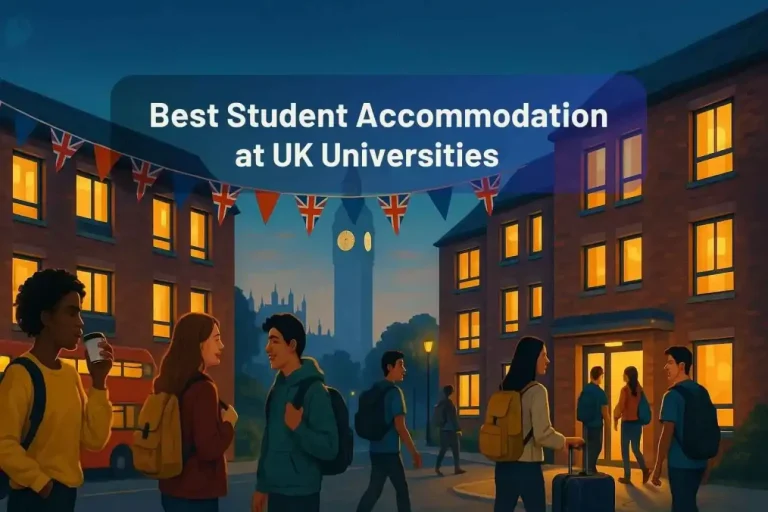
The Best Student Accommodation in UK Universities

Are you amid the transition between student accommodation ? Well, finding the right and flexible student accommodation is one of the biggest tasks in UK. And, to cure the curse, UK universities are dedicated to provide their own student halls for the students who are coming to UK for studies. But getting a university provided accommodation is like a war on its own. With so many applicants, there is quite some difference between demand and supply for student rooms.

Whether you prefer student flats, student housing, or modern student apartments, UK offers a wide variety of options designed to meet the budget and the need. In this blog, we are going to discuss some of the best student accommodation at UK universities. This is what Uninist does right? So, without any more delay, let’s get right into it.

Why Choosing the Right Student Accommodation is Important?

Before moving to the main topic, let’s see some pointer on why choosing the right student housing is important and why it matters more than you think:

  • It provides a safe and supportive environment for studying which is very important for students.
  • It offers access to campus facilities and student communities.
  • Student accommodation balances affordability with comfort and convenience.
  • Enhances your overall university experience in UK.

What Are the Types of Student Accommodation in UK?

You will find many types of student accommodation in UK. Here are some of them:

  • University Hall of Residence
  • Private Student Housing
  • Shared Student Flats
  • Purpose-Built Student Accommodation(PBSA)
  • Homestays

Let’s discuss each of them in a little more detail.

University Hall of Residence

  • This type of student residency is directly managed by the universities and it is typically furnished with utilities included.
  • You can find catered or self-catered options here and it is a great starting point for freshers students in UK.

Private Student Housing

  • Private student housing is run by private companies instead of universities and it includes student flats and student apartments with modern facilities.
  • These accommodations are often located in the city centre or near the campus. So, they are very convenient and nearby to many important spots like cafes, supermarkets, etc. Also, they come with extra amenities such as gyms, study lounge, etc.

Shared Student Flats

  • Shared flats are a budget-friendly choice where students share kitchens and living spaces. These flats encourage friendships and networking.
  • This type of student accommodation is perfect for students who want a balance between affordability and community.

Purpose-Built Student Accommodation (PBSA)

  • PBSA are designed specially for student needs and they are equipped with 24/7 security, high-speed Wi-Fi, laundry rooms, and communal study zones.
  • It offers both shared student rooms and private studio apartments and they are popular among international students for safety and convenience.

Homestays

  • In homestays students live with local families and it provides cultural immersion and home-like comfort.
  • In this type of student accommodation meals are often included which makes it cost-effective.

Which Are the Best Student Accommodation with Excellent Student Accommodation?

There are many world-class universities in UK which provide excellent accommodation. Here are some points related to it.

  • University of Oxford: The university is known for its historic student housing system. Plus, the accommodation is provided by Oxford University which ensures a close-knit community.
  • University of Cambridge: The university offers accommodation through its colleges and it includes both shared and single student rooms. This also provides easy access to libraries, dining halls, and sports facilities.
  • University of Manchester: Manchester is one of the largest selections of student accommodation in UK. The options include catered and self-catered halls. Also, Private student apartments are available near the city centre which makes it convenient for students who didn’t get university halls.
  • University of Edinburgh: The city has a wide range of affordable student accommodation options which includes both university-managed halls and private student flats. The University and city is popular among international students due to its central location.
  • University College London: The university is located in central London, offering modern student apartments and it is also partnered with private accommodation to provide more options for students. This university and city is best for students who want to experience city life.
  • University of Birmingham: The university offers a mix of on-campus halls and city-based student rooms. The University is well connected with transport links as well. The accommodation here also included en-suite rooms and shared facilities.
  • University of Glasgow: University of Glasgow provides both traditional halls and modern students flats which gives students plenty of options to choose from. The accommodation is close to campus and city attractions and it is known for safe,secure, and affordable options.

What are the Tips to Choose the Right Student Accommodation in UK?

Here are the some of the best tips to consider while choosing a student housing in UK:

  • Start searching for an accommodation as soon as possible to get the best deals, also apply for university halls as fast as you can.
  • Visit official university accommodation websites to get the latest information and other related things.
  • Use trusted platforms for booking private housing like Uninist.
  • Consider your lifestyle and then choose a student accommodation type. Make sure you know where you fit the most like student rooms or independent student flats.
  • Always make sure to read reviews from current and past students.

Conclusion

Choosing the right student accommodation in UK is essential for students to live their student life fully. This is just not about convenience, but also about creating a home away from your home. From traditional university halls and student housing to modern student apartments there is an option to fit every student’s lifestyle or budget.

Consider factors like location, budget, facilities, and personal preference before choosing any accommodation. You can find the best accommodation to make your student years enjoyable and stress-free. So, before taking any decision, do adequate research and then select a student accommodation where you want to live.

FAQ

  1. How many types of student accommodation are there in UK?

    You can find plenty of types of student accommodation options in UK. Here are some of them which are most popular:
    1. University hall of residence
    2. Private student housing
    3. Shared student flats
    4. Purpose-built student accommodation(PBSA)
    5. Homestays
    6. En-suite rooms
    7. Student apartments

  2. Is student accommodation in UK Expensive?

    The cost of student accommodation totally depends on the house type, location, amenities, etc. If the student accommodation is near the city centre or a popular college campus then it will be expensive. So, the cost of the student accommodation depends on several factors.

  3. How to apply for a University Hall?

    If you want to apply for university accommodation then you have to visit the universities website and fill the form or meet the eligibility to apply.

Top 10 Engineering Colleges in UK

0

Engineering is one of the most popular degrees in almost every country. And, when it comes to UK, they also follow the same trend. Engineers are needed everywhere and they are the core of infrastructure, innovation, development, and much more. Hundreds and thousands of students every year take admission in engineering degrees in UK. Moreover, many of them even secure jobs after their graduation because of the high demand for engineers.

Understanding the need of the hour, Uninist is here again with another blog for students to refer to. In this particular blog, we will be covering the 10 best engineering colleges in UK along with other details such as fees, nearby student accommodation and much more. So, why wait when the best awaits? Let’s get right into it.

Which Colleges Are the Best in UK for Engineering?

There are many great universities in UK that offer engineering courses. Here is the list of top 10 colleges for engineering:

  • University of Oxford
  • University of Cambridge
  • Imperial College London
  • University of Manchester
  • University College London
  • University of Edinburgh
  • University of Sheffield
  • University of Bristol
  • University of Nottingham
  • University of Exeter

You might be thinking that this is it? Obviously no! We never leave our readers with half information. So, we are going to discuss things like tuition fees, specialization, companies that hire and scope.

University of Oxford

  • Tuition Fees: The University of Oxford is one of the best engineering universities in UK. In fact, it is one of the best universities in the whole world. The tuition fees for international students is between £41,000 to £44,000 per year.
  • Specialisations: Civil, Mechanical, Electrical, Structural, Materials, Robotics, AI in engineering.
  • Companies Hiring: The companies that hire the most are Rolls-Royce, Dyson, Arup, BAE Systems, Google, consulting firms.
  • Scope: One of the best engineering programs in the world with top industrial placements and internships and high rate of global employability within 6–12 months of graduation. Also, Career paths into research, consulting, R&D and academia.

University of Cambridge

  • Tuition Fees: The Cambridge University is also one of the best. The tuition fees for international students is between £37,000 to £42,000 per year.
  • Specialisations: Mechanical, Aerospace, Civil, Materials, Bioengineering, Renewable Energy.
  • Companies Hiring: The companies that hire the most are BP, Jaguar Land Rover, Siemens, McLaren, Shell, Accenture.
  • Scope: Global recognition and extremely high ROI with strong industry network of alumni, high graduate starting salaries, and pathway to research or PhD programmes.

Imperial College London

  • Tuition Fees: The tuition fees of this engineering college for international students is between £37,000 to £42,000 for UG and £33,000 to £40,000 for PG.
  • Specialisations: Chemical, Mechanical, Electrical, Computing, Design Engineering, Materials.
  • Companies Hiring: The companies that hire the most are Boeing, Dyson, Rolls-Royce, BP, Google, Microsoft, McKinsey.
  • Scope: Top university for innovation and R&D, students hired by leading consulting and engineering companies, there are good opportunities in high-tech sector and startups, and good salaries for foreign graduates.

University of Manchester

  • Tuition Fee: The tuition fees of University of Manchester for international students is between £24,000 to £30,000 annually.
  • Specialisations: Electrical, Mechanical, Civil, Materials, Energy Systems, Robotics.
  • Companies Hiring: The companies that hire the most are Siemens, AstraZeneca, Arup, Shell, Jaguar Land Rover.
  • Scope: There are large numbers of international students, low cost compared to Oxbridge and London universities, High employability in UK as well as global markets, and good post-study work prospects with Graduate Route visa.

University College London

  • Tuition Fees: The tuition fees of this engineering college for international students is between £30,000 to £36,000 per year.
  • Specialisations: Civil, Environmental, Electrical, Biomedical, Computer Engineering.
  • Companies Hiring: The companies that hire the most are Atkins, Deloitte, PwC, Microsoft, infrastructure and biomedical companies.
  • Scope: The university is located in London which is near top employers, there are excellent career opportunities in consulting, design and technology. You can also see there is good research emphasis on biomedical and environmental engineering and it is a good choice for building connections in London business.

University of Edinburgh

  • Tuition Fees: The tuition fees of this engineering college for international students is between £24,000 to £35,000 per year.
  • Specialisations: Electronics, Energy Systems, Civil, Mechanical, Computing & AI.
  • Companies Hiring: The companies that hire the most are IBM, Siemens, Accenture, energy companies, research institutions.
  • Scope: There is high employability because of widespread global recognition, research grants and industrial collaborations opportunities, there is an increasing demand in the energy and sustainable systems field with strong career support for international students.

University of Sheffield

  • Tuition Fees: The tuition fees of this engineering college for international students is between £25,000 to £30,000 per year.
  • Specialisations: Mechanical, Aerospace, Civil, Automation, Systems Engineering.
  • Companies Hiring: The companies that hire the most are Rolls-Royce, Airbus, Boeing, Nissan, National Grid.
  • Scope: Scope in aerospace and automotive industries, it is popular for pragmatism, provides industry-oriented engineering, and lower costs of living than London with an excellent graduate employability rate in UK and Europe.

University of Bristol

  • Tuition Fees: The tuition fees of University of Bristol for international students is between £25,000 to £30,000 annually.
  • Specialisations: Aerospace, AI & Robotics, Civil, Mechanical, Electrical.
  • Companies Hiring: The companies that hire the most are Airbus, Dyson, BAE Systems, IBM, robotics start-ups.
  • Scope: Scope is extremely strong in aerospace and robotics research, evenly balanced cost vs career prospects, start-up opportunities and R&D, and excellent graduate employability in tech-related fields.

University of Nottingham

  • Tuition Fees: The tuition fees for international students is between £28,000 to £30,000 annually.
  • Specialisations: Chemical, Mechanical, Civil, Environmental, Sustainable Engineering.
  • Companies Hiring: The companies that hire the most are E.ON, Arup, Siemens, Jaguar Land Rover, sustainability consultancies.
  • Scope: Strong international partnerships and exchange programmes, growing demand in sustainability and green engineering, good balance between academic and industrial training, and numerous alumni in leading energy and infrastructure companies.

University of Exeter

  • Tuition Fees: The tuition fees for international students is between £22,000 to £30,000 annually.
  • Specialisations: Renewable Energy, Civil, Mechanical, Environmental Engineering.
  • Companies Hiring: The companies that hire the most are EDF Energy, Atkins, Environment Agency, renewable energy startups.
  • Scope: Renowned for renewable and environmental engineering, provides great opportunities in the sustainability sector, there is an increasing international demand for clean energy engineers, and good placement opportunities in government & private sectors.

Conclusion

The United Kingdom is famous for their engineering courses, from Oxford to Manchester. As a result, there are many good universities for engineering in UK that offer engineering courses. With high demand just like student accommodation in UK, getting into the best college can be a tricky job. However, when you get into an engineering college in UK, there is no stopping. Plus, it will not be that difficult to find jobs after engineering in UK. Many big companies from tech to consultancy hire engineers and there is a lot of scope in UK for engineers.

FAQ

Is Engineering colleges in UK Expensive?

Yes, the tuition fees for some of the best engineering colleges in UK is pretty high. The average tuition fees for international students for engineering in UK will be around £30,000 to £40,000 per year.

Is the University of Oxford good for Engineering?

Yes, University of Oxford is one of the best colleges in the entire world and has always maintained its rank under top 5 each year. So yeah, University of Oxford is not just good, but one of the best engineering colleges in UK.

Which is better for engineering: University of Oxford or Cambridge?

Both the universities are one of the best universities in the world with high world-rankings, but for engineering it is very subjective as both universities offer world class opportunities, facilities, etc. So, saying one is better than the other is very vague as it depends on the students as well.

Employability rate is high or low for engineers in UK?

The employability rate is very high for engineers in UK. The majority of students who complete their engineering from a UK university get hired pretty quickly if they have good marks or high knowledge of their subject. Just like every country, UK also needs competent engineers and the jobs for engineers are filled up pretty fast in UK.

Cost of Living in Scotland: A Comprehensive Guide for 2025

0

Scotland is one of the most popular destinations for students who want to study in the UK. With world-class universities like the University of Glasgow, beautiful weather, immense city experience and good job opportunities, the city attracts hundreds and thousands of students every year.

In this blog, we are going to cover the living cost in general and the living cost city wise as well and also have a look on some other important topics. After all, that’s what we do at Uninist, from finding flexible student accommodation to giving guides for students. So, let’s get in!

How much is the Cost of Living in Scotland?

The cost of living depends on the location, student housing, and spending habits. However, living in large cities such as Edinburgh, Glasgow, and Aberdeen will cost more than it would in smaller towns and the countryside. Here are some some basis on which living cost in decided:

  1. Food price
  2. Average rent
  3. Living cost

Let’s have a look at each of them in a little more detail.

1. Food Prices in Scotland

When it comes to food prices in Scotland, grocery expenses are a major portion of a student’s expenditure. On average, students will spend around £150-£250 monthly on groceries. This vary on your eating style like whether you cook at home, buy organic vegetables, etc. the Cost of Groceries in Scotland is:

  • A loaf of bread: £1.00
  • A liter of milk: £0.90
  • 1 kg rice: £1.30
  • 1 kg apples: £2.00
  • 1 kg chicken breasts: £6.00

For city-dwelling students such as in Glasgow or Edinburgh, local markets and value stores such as Tesco, Sainsbury’s, and Lidl provide affordable sources.

2. Average Rent in Scotland

The affordability of rent in Scotland is also one of the key issues for students. Rent is dependent on the city and the accommodation type. Here is a general guide to the average rent city wise:

  • Edinburgh: £700-£1,200 per month for a city-center one-bedroom flat.
  • Glasgow: £500-£800 per month for a one-bedroom flat.
  • Aberdeen: £500-£750 per month for a one-bedroom flat.

Living in student halls or shared flats can help lower rental expenses, with shared rooms costing between £250-£400 per month. Plus, if you are looking for something mid way, Glasgow is certainly your city.

3. Living Costs in Scotland

Aside from rent and food, there are several other living costs in Scotland to account for, such as utilities, transport, and leisure. On average, students spend £300-£500 per month on extra costs. The cost of living is:

  • Utility Bills (Electricity, Water, Gas, Internet): £100-£150 per month.
  • Public Transport in Scotland: A monthly bus pass is around £40-£60 depending on the city and a single bus journey costs around £1.50-£2.00.

Which Are the Cheapest Cities in Scotland for Students?

While cities like Edinburgh and Glasgow are popular student destinations, they tend to have higher living costs. If you’re looking for cheaper cities in Scotland to live in then here are some points for you:

  • Glasgow: The city is known for its affordability, offering affordable student accommodation in UK compared to other cities.
  • Stirling: It is a smaller city that offers lower housing costs and a more relaxed atmosphere while still being close to major cities.

If you are someone who is looking for cheap and affordable living in Scotland then these two cities are the best.

What is the Cost of Living in Scotland for International Students?

If you are an international student in UK, then you will need to factor in some extra costs, including visa application application charges, healthcare contributions such as the NHS surcharge, and overseas travel costs. The living cost in Scotland for an international student will be approximately £10,000-£15,000 annually depending on your lifestyle.

There are many universities that provide scholarships and international student financial aid such as The University of Edinburgh, University of Glasgow, and other Scottish universities that provide scholarships to cover tuition fees and living expenses. Two of them are:

  • Aga Khan Foundation Scholarship: This foundation provides financial support to students from certain countries who are seeking higher studies in the UK.
  • Chevening Scholarship: This UK government scholarship offers funds to exceptional students from all over the globe. So, if you are an exceptional student then Chevening scholarship will take care of your expenses.

What is the Cost of Living in Scotland City Wise?

In considering the cost of living in Scotland, it’s imperative to contrast living costs between various cities since costs differ considerably. The cost of living of Scottish cities we are going to discuss are:

  1. Edinburgh
  2. Glasgow
  3. Dundee
  4. Aberdeen

1. Edinburgh

  • Cost of living: The cost of living in Edinburgh is slightly higher than in other cities in Scotland, the cost of renting student housing in Edinburgh is between £700 and £1,200 per month and the cost depends on the area and nature of the accommodation.
  • Food: You have to spend around £150 to £250 a month, depending on what you eat.
  • Cost of utilities: The utilities like electricity, heating, water, and trash usually fall between £100 and £150 per month.
  • Public transportation: In Edinburgh it is relatively convenient with an average monthly pass ranging from £40 to £60.

2. Glasgow

  • Cost of living: The largest city in Scotland and living in Glasgow tends to be cheaper than Edinburgh, so it is a popular choice for students. The average student accommodation in Glasgow costs between £500 and £800 per month which is relatively cheap compared to Edinburgh.
  • Food: The city’s monthly food budget varies between £150 and £250, depending on individual choices.
  • Cost of utilities: It is between £100 and £150.
  • Public transport: Although the public transport is relatively inexpensive, it costs between £40 and £60 for a monthly pass.

3. Dundee

  • Cost of living: Dundee is the smallest city in Scotland and the price of living is one of the lowest. The rent of a one-bedroom apartment is usually between £400 and £600 a month.
  • Food: Monthly food costs in Dundee are also less which is between £120 and £200.
  • Cost of utility: Utility bills are also relatively low and costing between £80 and £120 a month.
  • Public transport: The cost of transportation is also cheaper with monthly public transport passes usually costing between £30 and £50.

4. Aberdeen

  • Cost of living: The largest city in Scotland and living in Glasgow tends to be cheaper than Edinburgh, so it is a popular choice for students. The average student accommodation in Glasgow costs between £500 and £800 per month which is relatively cheap compared to Edinburgh.
  • Food: The city’s monthly food budget varies between £150 and £250, depending on individual choices.
  • Cost of utilities: It is between £100 and £150.
  • Public transport: Although the public transport is relatively inexpensive, it costs between £40 and £60 for a monthly pass.

Conclusion

Every city in the UK has its own cost of living, some cities like Manchester, Birmingham are very expensive, but they still have some parts which are kinda affordable. Just like that Scotland also has some parts which are very expensive like Edinburgh and some parts that are very affordable like Glasgow. Overall, Scotland is pretty much affordable and the city centre is well connected with great universities and tourist spots. So, before going to Scotland just read this blog so you can get the idea of how the cost of living in Scotland is going to be.

FAQ

Which city in Scotland is the most affordable for students ?

The cities in Scotland which are most affordable for students are Dundee and Stirling.

Which city in Scotland is the most expensive?

The cities in Scotland which are most expensive are Edinburgh, Aberdeen, and Glasgow.

How much does a one-bedroom flat in Aberdeen cost?

The one-bedroom flat rents in Aberdeen vary between £500 and £750 every month.

Best Banks in the UK: Top 10 List

0

When it comes to managing finances, choosing the right bank is very important and it can be a game-changer. Whether you’re a domestic student, working professional, or international student in UK, a suitable and good bank in UK can make a big difference in your banking experience.

In this blog, we are going to discuss 10 banks in UK which are best in the game just for you. This is what Uninist does for students in UK, from finding suitable student accommodation in UK to providing a guide on best banks in UK, we cover it all! So, without any more delay, let’s get right into it!

Which Are the Best Banks in UK?

The United Kingdom has some of the best banks and a good and reliable bank is very important. Here is the list of best banks in UK:

  1. HSBC
  2. Barclay
  3. Lloyds banking group
  4. Santander Uk
  5. Natwest
  6. Royal Bank Scotland(RSB)
  7. Halifax
  8. TSB
  9. Metro bank
  10. Monzo

These are the top 10 banks in UK. Now let’s discuss each of them in a little more detail with key benefits as well.

1. HSBC

HSBC is one of the largest banks in UK and HSBC is renowned for its international presence and extensive financial services. The bank was established in 1865 and HSBC offers a comprehensive array of banking services, ranging from personal banking to business banking. Services catering to international clients as well. The bank is renowned for its dependable customer service and international presence, HSBC also has an array of student accounts for foreign students who wish to study in UK.

Key Benefits:

  • The bank provides international banking services.
  • It provides a comprehensive online banking platform.
  • HSBC has strong security features.

2. Barclays

Barclays is a major player in UK banking system and Barclays is a UK giant bank that provides an extensive portfolio of services such as personal banking, savings, investments, and business banking. Being a UK high street bank it operates through a large network of branches and ATMs across the UK. The bank is also famous for its cutting-edge digital products, making it a favorite among technology-savvy customers.

Key Benefits:

  • Barclays has competitive savings account interest rates.
  • There are several banking alternatives for students and global customers.
  • The bank’s mobile banking applications are easy to navigate.

3. Lloyds Banking Group

Lloyds is one of the high street banks in UK and flexes its long standing reputation for customer service. Providing student accounts, mortgages, and many personal banking services. The bank is especially renowned for its assistance to customers with differing financial requirements. Lloyds also provides competitive current accounts with online banking facilities which means that it is a popular option for many.

Key Benefits:

  • The bank has excellent customer support and service.
  • Great for student accounts with excellent benefits.
  • The bank provides flexible mortgage and savings choices.

4. Santander UK

With its aim to offer accessible banking services, Santander UK has become one of the United Kingdom’s top banks. Famous for offering great student banking options, including free overdrafts, Santander offers competitive loans, savings accounts, and credit cards. Santander’s student accounts are especially great, with a lot of incentives and excellent customer service.

Key Features:

  • The bank provides high student overdraft and rewards.
  • The online banking is very simple and straightforward.
  • Robust international presence for international students.

5. NatWest

NatWest has a strong heritage and it is the other large player in UK banking market with a long history dating back to 1968. With a huge presence on the high street and groundbreaking banking opportunities. NatWest is a customer favorite when it comes to personal and business banking. The bank provides great student accounts as well as student loans that are flexible.

Key Benefits:

  • The bank’s app is an award-winning mobile banking app.
  • The bank also provides special deals for students.
  • Strong financial services for business and personal banking.

6. Royal Bank of Scotland (RBS)

Being a part of the NatWest Group, Royal Bank of Scotland provides secure financial services, ranging from personal accounts to business banking. RBS is one of the most reliable banks in UK and it is known for providing exclusive student discounts and personalized account handling. It also offers customized banking facilities for international students in UK.

Key Advantages:

  • The bank has personalized customer handling.
  • There are also exclusive bank offers for students.
  • The bank is strongly established in Scotland and the UK.

7. Halifax

Halifax is best known for its low-cost services and accessible online banking options. It is one of the UK’s biggest banks and it provides everything from savings accounts to mortgages with a focus on keeping banking easy and accessible. It is especially popular among students because it has free student accounts with fantastic benefits and an extremely simple-to-use mobile platform.

Key Features:

  • Halifax provides free student accounts with fantastic benefits.
  • Competitive savings and loan rates.
  • The bank has an excellent mobile banking app which provides easy banking.

8. TSB

TSB is a bank based in UK with a reputation for personalized service and excellent rural and urban presence. TSB offers several financial products including student accounts, credit cards, and loans. The bank takes special interest in enabling its customers to meet their financial objectives with customized guidance.

Key Benefits:

  • TSB has excellent customer service.
  • Competitively priced loan and savings rates.
  • There are no-fee student accounts which help students a lot.

9. Metro Bank

Metro Bank is a new high street bank in UK, but one which has made a big impression already. Famous for its ‘customer comes first’ philosophy. Metro Bank has a range of accounts and services available, from student accounts to digital banking options. The bank has an aim of making banking easy and accessible, Metro Bank is a great choice for students seeking easy-to-use banking.

Key Benefits

  • Seven-day-a-week opening for customer convenience.
  • Pioneering in-branch and online banking services.
  • High customer satisfaction ratings.

10. Monzo

Monzo is a mobile-only bank that has proved very popular with the younger generations, including students. Having a streamlined mobile app, Monzo provides fee-free current accounts, instant alerts, and budgeting and monitoring of spending. Being one of the best British banks, it offers convenient banking without the requirement of a branch visit.

Key Benefits:

  • The bank has an innovative mobile app with an instant alert feature.
  • Fee-free student account and budgeting facility.
  • Easy-to-understand and transparent services.

Conclusion

There are many choices in UK’s banking system for students and professionals, ranging from mainstream high street banks like Barclays and HSBC to new-age digital banks like Monzo. The right bank is the one that suits your individual requirements, such as accommodation in university, discounts for students, and savings targets.

FAQ

Which bank in UK has the best online banking app?

The Bank in UK which has the best online banking app is Natwest and the bank has also been given an award for their mobile banking app.

Which bank in UK has low cost service?

The bank with the most low cost service is Halifax and it is known for its low-cost services and accessible online banking options.

Debt Management for Students: How to Get Out of Debt

0

Coming from a background where it is obvious that taking a loan is the only option for international education, debt management is an essential skill to learn. The day the students get on the plane is the day they get into debt because of tuition fees, cost of living, student accommodation and more.

After all, living away from family for studies, there are plenty of things to take care of. And, to take care of such things, students always end up taking loans a.k.a crushing debt. This is where we have got you an interesting aspect for you to know everything about debt management. So, why wait for more? Keep on reading to find what all you can expect as students in UK in terms of debt!

What is Student Debt?

Before solving the problem, you need to understand the basics, isn’t it? In the same way to get out of debt you have to understand what debt is. Here are some pointers you should know:

  • Student debt happens when students ask for student loans to pay the tuition fees, student housing, books, food, and other expenses. This usually creates financial pressure on students which often leads to borrowing money and this starts the cycle of student debt.
  • There are various types of student debts like student loans, credit card debts, overdrafts, or even personal loans.
  • Debt management is very important and without a strategy debts grow more due to interest, late payment, poor spending habits, etc.

How to Manage Debt as a Student in UK?

As you already know, managing debt is a very important skill just like knowing tips for budgeting. Here are some of the top strategies to manage your debt as a student in UK:

  1. Creating a realistic budget
  2. Differentiate between needs and wants
  3. Pay more than the minimum amount
  4. Use student discount for freebies
  5. Avoid high-interest borrowing
  6. Consolidate or refinance your debt
  7. Increase your income
  8. Build an emergency fund
  9. Prioritise high-interest debts first
  10. Seek financial guidance

Obviously this is not where our blog ends! So, let’s discuss each of these points in a little more detail.

Creating a Realistic Budget

  • Creating a budget is very important so your first step to debt management. You should be tracking your monthly expenses like allowance, part-time job, scholarship, etc. Make a list of your fixed expenses like rent, bills, tuition fees.
  • Allocate the fund for variable express like food, transport, social life, etc. You can also use budgeting apps like MInt, YNAB, or PocketGuard to stay disciplined regarding your budgeting.
  • As we already said, budgeting is the first step in debt management since it prevents overspending.

Differentiate Between Needs and Wants

  • To get out of your debt, you have to differentiate between your needs and wants. The needs usually include rent, tuition, groceries, and public transportation. Whereas, wants are clearly those things which give your happiness such as dining out, branded clothes, subscription, gadgets, etc.
  • Cut down on unnecessary expenses to free up money for debt repayment because this is how you will start getting out of your debt.
  • Establish a mindful spending habit because it is a sustainable way to get out of debt as a student.

Pay More Than the Minimum Amount

  • You must be thinking why pay more than I owe, but it doesn’t mean that. Minimum payments only cover interest, not the actual debt and paying extra each month reduces the principal amount.
  • A big misconception is small payments do not make any difference but even small additional payments help cut interest costs over time.
  • You can consider the snowball method which means paying the smallest debt first or you can also use the avalanche method which means paying highest interest debt first.

Use Student Discount for Freebies

  • Your student ID is like a weapon. So, take as much advantage as you can from it. Use free resources like university libraries instead of buying books.
  • You should also access free software through your university instead of paying for a subscription.
  • Every pound saved is a pound that can go towards debt management.

Avoid High-Interest Borrowing

  • Debt is like a trap and the deeper you go in that. That’s why knowing tips to debt management is necessary to avoid getting stuck more than you are. Pro Tip: Stay away from payday loans and unnecessary credit cards.
  • If you are in a situation where you have to borrow, then compare student-friendly loan options with lower interest rates.
  • Make sure to use overdraft wisely and only when necessary and managing interest effectively is crucial to control student debt.

Consolidate or Refinance your Debt

  • Debt consolidation means combining multiple debts into one manageable loan and refinancing can lower interest rates, reducing long-term costs.
  • You should also check if your student loan provider offers refinancing or forgiveness programs.
  • Make sure to always compare options before refinancing to avoid hidden fees.

Increase your Income

  • The best way to manage debt is to pay off your debt and to pay that you have to increase your income. Take up high paying jobs without a degree such as part-time jobs, freelance gigs, or tutoring. This usually helps a lot to cover expenses, search for a job which pays you and you have interest in that as well.
  • Explore online opportunities like content writing, graphic designing, or digital marketing. You can even join seasonal jobs during holiday and it can help in providing extra income.
  • The more you earn, the faster you can pay off your debt.

Build an Emergency Fund

  • Emergency fund means a fund which you can use in times of crises. After all, emergencies don’t call and come. This is basically about saving some money every month so that when you face any problem you can solve it. The best way to start is to start putting a small amount aside, let’s just say you start saving £10 every month.
  • Saving some money or keeping an emergency fund prevents you from relying on credit cards for unexpected expenses.
  • Having savings reduces financial stress while managing debt and emergency funds are a long-term tool for financial stability for students.

Prioritise High-interest Debts First

  • As we already said above, the avalanche method focuses on paying high-interest debt first. So, pay off debts with the highest interest rates like credit cards, personal loans, etc.
  • This can help you in preventing debt from snowballing unnecessarily.
  • Once you clear the high-interest debts, then you can focus on lower-interest student loans.

Seek Financial Guidance

  • Many universities often provide free financial counseling for students and act as your debt advisor. Speak to a financial advisor if debt feels unmanageable.
  • You can also seek help from online debt management tools and student support groups.
  • Guidance ensures you choose the best repayment plan for your situation.

What Are the Common Mistakes Students Make with Debt?

Many students make mistakes with debt which cause them more debt. Here are some of the top yet common mistakes you can avoid as students in UK:

  • Ignoring the debt until it grows uncontrollable.
  • Borrowing more than they needed.
  • Not keeping track of spending and wasting the money is unnecessary.
  • Relying heavily on credit cards.
  • Skipping payments, leading to penalties.

Conclusion

Debt doesn’t have to control your student life. With smart budgeting, prioritization, and disciplined repayment, you can control your debt and repay your debt even early. The earlier you adopt the strategies, the smoother your financial journey will be. Moreover, it is important to repay your debt in a timely manner. So, it doesn’t become a burden for you. Make sure to even borrow if it is actually needed.

And, to find affordable, flexible, and short-term student accommodation in UK, head to your favourite, Uninist today!

FAQ

  1. What are the debt management strategies?

    The debt management strategies that students can adopt are:
    1. Creating a realistic budget
    2. Differentiate between needs and wants
    3. Pay more than the minimum amount
    4. Use student discount for freebies
    5. Avoid high-interest borrowing
    6. Consolidate or refinance your debt
    7. Increase your income
    8. Build an emergency fund
    9. Prioritise high-interest debts first
    10. Seek financial guidance
    11. imit credit card usage
    12. Automate your payment
    13. Adopt 50/30/20 rule
    14. Utilise grants and scholarships

  2. What is the avalanche method?

    The avalanche method basically means paying highest interest debt first, so you can get freed from the high-interest debt first.

  3. What is the Snowballing method?

    The snowballing method basically means paying the smallest debt first and then coming to your high-interest debts, so you can reduce the number of debts you own.

  4. What are the mistakes to avoid in debt repayment?

    The common mistakes which you can avoid are:
    1. Ignoring the debt until it grows uncontrollable.
    2. Borrowing more than they needed.
    3. Not keeping track of spending and wasting the money is unnecessary.
    4. Relying heavily on credit cards.
    5. Skipping payments, leading to penalties.

We Would Love To Help You

Our accommodation expert will contact you at the earliest

By proceeding you agree to our T&C and Privacy Policy